Have you ever wondered how fast a jet plane can fly? Regarding speed, jets are some of the most incredible machines humans have ever built. They can soar through the air at unimaginable velocities, defying gravity and shrinking vast distances. But which jet holds the coveted title of the fastest jet in the world? This article will explore the world of ultra-fast planes and see who is vying to be the fastest. We’ll break down the different categories of jets and uncover the record holders that have pushed the boundaries of flight.
Reaching for Mach Speed: Understanding Jet Velocity
Mach is the most common unit of measurement for jet speeds, which is relative to the speed of sound. The speed of sound, defined as Mach 1, is approximately 1,225 kilometers per hour (767 miles per hour) at sea level. Aircraft rated at Mach 2 can exceed the speed of sound by two orders of magnitude, while those rated at Mach 3 can do so by three orders of magnitude.
Supersonic vs. Hypersonic: The Two Realms of Speed
There are two primary categories of high-speed jets: supersonic and hypersonic.

- Supersonic jets: As soon as these remarkable machines surpass the speed of sound, they will produce the audible sonic boom associated with them. This category encompasses many military fighter jets and some commercial airliners.
- Hypersonic jets: Taking things a step further, hypersonic jets travel at speeds exceeding Mach 5 or five times the speed of sound. This realm of flight is currently dominated by experimental aircraft, pushing the limits of what’s technologically possible.
The Contenders: Unveiling the Speed Demons
Now, let’s meet the record-breaking jets vying for the title of the fastest:
- NASA X-43: This experimental scramjet, a jet engine operating at hypersonic speeds, holds the current record for the fastest jet ever built. In 2004, the X-43 achieved a staggering speed of Mach 9.6, or nearly 12,000 kilometres per hour (7,500 miles per hour)! However, it’s important to note that the X-43 was an uncrewed research aircraft, not a practical operational jet.
- Lockheed SR-71 Blackbird: This legendary reconnaissance aircraft, retired in 1999, still holds the record for the fastest operational plane ever flown. The SR-27 Blackbird could cruise at speeds exceeding Mach 3.2, or roughly 3,500 kilometres per hour (2,200 miles per hour). Its incredible speed allowed it to outpace enemy missiles and capture critical intelligence during the Cold War.
- Mikoyan-Gurevich MiG-25 Foxbat: This Soviet-era interceptor remains the fastest fighter jet in service. The Foxbat can reach speeds of Mach 3.2, making it a formidable aerial defence weapon.
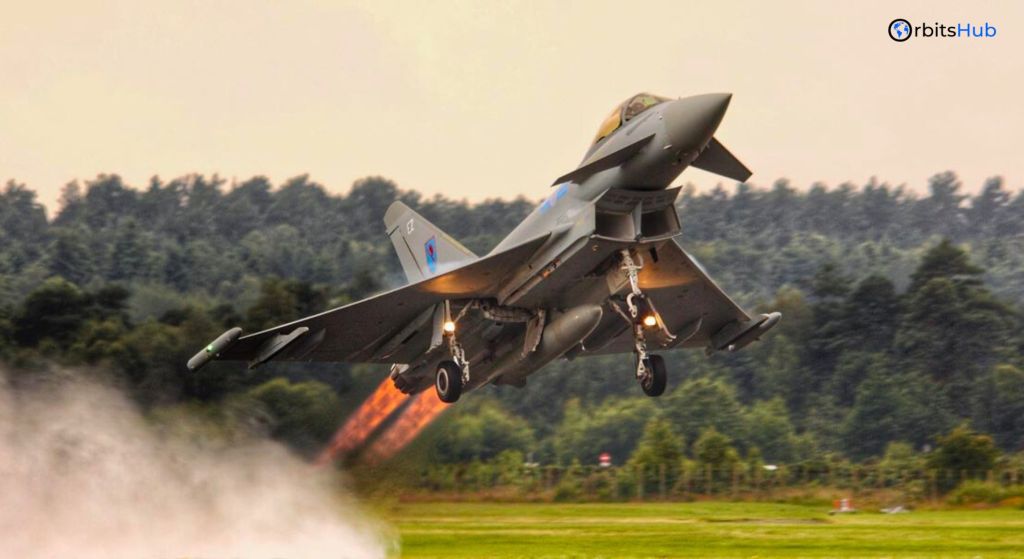
- F-22 Raptor: This American stealth fighter boasts a top speed of Mach 2.25, making it one of the most advanced and agile fighter jets today. While not the absolute fastest, its speed, stealth, and manoeuvrability make it a dominant force in modern air combat.
Beyond Military Might: The Race for Faster Commercial Jets
While supersonic speeds are commonplace in the military, commercial airliners prioritize efficiency and comfort over raw speed. However, constant research and development are being conducted to create faster passenger jets. Concepts like supersonic business jets and even hypersonic passenger travel are being explored to reduce travel times between continents drastically.
The Challenges of Supersonic Flight
Supersonic flight offers undeniable advantages in terms of speed, but it also comes with its own set of challenges:
- Sonic Boom: One major hurdle is the sonic boom, a loud explosive sound generated when an aircraft surpasses the speed of sound. This boom can disrupt communities on the ground, posing a significant barrier to widespread supersonic passenger travel. Research is ongoing to develop quieter supersonic jets that could mitigate this issue.
- Fuel Efficiency: Supersonic flight typically requires more fuel compared to subsonic flight. This can translate to higher operating costs for airlines and potentially higher ticket prices for passengers. Advancements in engine technology are crucial for making supersonic travel more commercially viable.
- Heat Generation: Friction from air resistance increases significantly at supersonic speeds, leading to intense heat buildup on the aircraft’s exterior. To guarantee the security and stability of supersonic jets, it is crucial to create heat-resistant materials and effective cooling systems.
The Future of Flight – Faster, Higher, Further
The quest for faster jets continues to push the boundaries of aviation technology. From the record-breaking X-43 to the next generation of commercial jets, the future promises even more incredible feats of speed and engineering.
Are you curious about the ever-evolving world of maritime and aviation technology? orbitshub.com, a leading consultancy services company, can help you stay informed and navigate the complexities of this exciting industry. Explore orbitshub.com to learn more about their services and how they can assist you.