In the rapidly evolving landscape of air combat, the F-35 aircraft is a testament to advanced technology and innovation. Developed by Lockheed Martin, the F-35 Lightning II is not just another fighter jet; it represents a quantum leap in multirole fighter capabilities. This delves into the remarkable features of the F-35 aircraft, its strategic advantages, and its implications for future air combat scenarios.
What Makes the F-35 Aircraft Stand Out?
Advanced Stealth Technology
One of the most significant attributes of the F-35 aircraft is its advanced stealth technology. The aircraft’s design minimizes radar cross-section, making it nearly invisible to enemy radar systems. This stealth capability allows the F-35 to operate in hostile environments with a reduced risk of detection, providing a strategic advantage in modern warfare.
Superior Sensor Fusion
The F-35 aircraft is equipped with a sophisticated sensor fusion system. This technology integrates data from various onboard sensors to provide pilots with a comprehensive picture of situational awareness. The information is displayed on a helmet-mounted display, allowing pilots to make informed decisions rapidly. This capability enhances the F-35’s operational effectiveness and survivability.
Versatile Multirole Capabilities
The F-35 is designed to perform various missions, making it a versatile asset for any air force. It can conduct air-to-air combat, air-to-ground strikes, intelligence, surveillance, and reconnaissance (ISR) missions. The aircraft’s ability to adapt to different combat scenarios makes it an invaluable tool for military planners.
Strategic Advantages of the F-35 Aircraft
Enhanced Interoperability
The F-35 aircraft is designed to operate seamlessly with allied forces. Its interoperability allows integrated operations with other NATO aircraft, enhancing joint mission effectiveness. This capability is crucial in coalition warfare, where coordination and communication between different forces are paramount.
Cost-Effective Maintenance
Despite its advanced technology, the F-35 aircraft is designed with cost-effective maintenance in mind. The aircraft’s Autonomic Logistics Information System (ALIS) streamlines maintenance procedures, reducing downtime and operational costs. This focus on affordability ensures that the F-35 remains a sustainable option for air forces worldwide.
Future-Proof Design
A look into the future informed the design of the F-35 fighter jet. Because of its modular design, it is simple to update and incorporate new technology. Thanks to its futuristic design, the F-35 can adapt to new threats and technology without losing relevance.
The Role of the F-35 in Future Air Combat
Dominance in Contested Environments
The F-35 aircraft’s stealth and advanced avionics make it well-suited for operations in contested environments. It can penetrate enemy defenses, gather critical intelligence, and deliver precise strikes, ensuring dominance in any combat scenario.
Force Multiplication
The F-35 acts as a force multiplier by enhancing the capabilities of other assets on the battlefield. Its advanced sensor suite and communication systems can relay valuable information to allied forces, improving overall mission effectiveness. This synergy between different assets is crucial in modern warfare, where information superiority is critical.
Deterrence and Strategic Impact
A formidable deterrence to would-be enemies is the very sight of an F-35 fighter. Its advanced capabilities and reputation for excellence send a clear message about the military strength and technological prowess of the nations that operate it. This strategic impact can prevent conflicts and maintain stability in volatile regions.
Innovative Design Features of the F-35
- Aerodynamic Efficiency: The F-35’s sleek design optimizes aerodynamic efficiency, reducing drag and enhancing speed and maneuverability.
- Composite Materials: Using advanced composite materials in the airframe decreases weight while increasing durability and stealth characteristics.
- Integrated Avionics: The F-35s are seamlessly integrated, allowing advanced data processing and superior situational awareness.
- Reduced Radar Cross-Section: The aircraft’s unique shape and materials significantly reduce its radar cross-section, enhancing stealth capabilities.
- Multi-Function Display: The cockpit features a state-of-the-art multi-function display, providing pilots with critical information in a user-friendly format.
Operational Flexibility and Mission Adaptability
- Multirole Capability: The F-35 can perform various missions, including air superiority, ground attack, and reconnaissance.
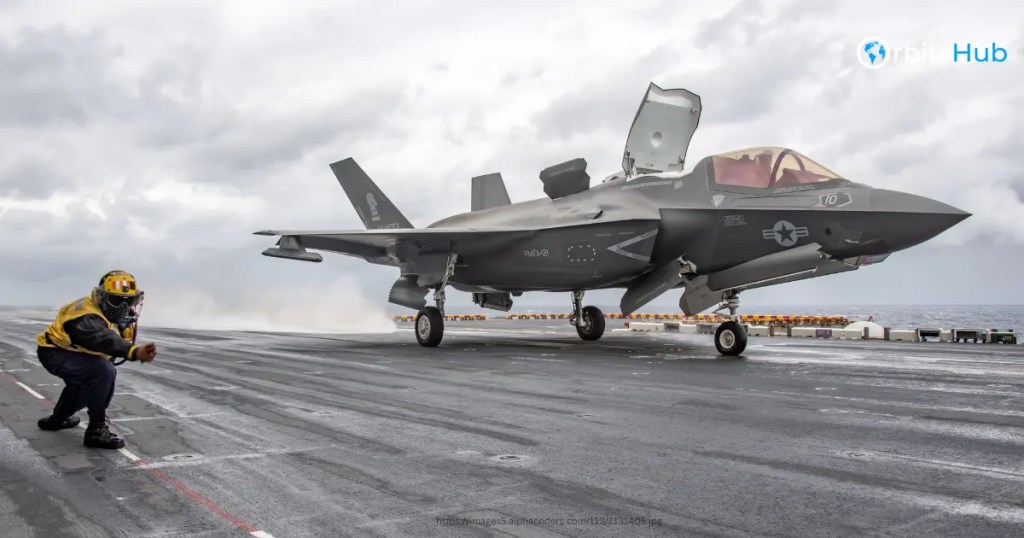
- Carrier and Short Takeoff Versions: Variants like the F-35B (short takeoff/vertical landing) and F-35C (carrier-based) offer operational flexibility for different environments.
- Interoperability with Allies: Designed to operate alongside allied forces, the F-35 enhances joint mission capabilities.
- Adaptable Payloads: The aircraft can carry diverse weapons and sensors tailored to specific mission requirements.
- Rapid Mission Reconfiguration: Its systems allow quick reconfiguration between missions, maximizing operational readiness.
Global Impact and Adoption of the F-35 Aircraft
- International Collaboration: The F-35 program involves multiple nations, fostering global defense cooperation.
- Wide Adoption: Over a dozen countries have adopted the F-35, strengthening their air forces and defense postures.
- Economic Impact: The production and maintenance of the F-35 create significant financial benefits, including job creation and technological advancement.
- Strategic Partnerships: The F-35 enhances strategic partnerships among allies, improving collective security.
- Standardization of Equipment: The widespread use of the F-35 among NATO and allied forces standardizes equipment and tactics, facilitating smoother operations.
Technological Advancements and Upgrades
- Continuous Software Updates: The F-35’s avionics and systems are regularly updated with new software, enhancing capabilities over time.
- Next-Gen Radar and Sensors: Cutting-edge radar and sensor technologies keep the F-35 ahead of emerging threats.
- Autonomous Capabilities: Ongoing research aims to integrate more autonomous features, improving mission efficiency and safety.
- Enhanced Communication Systems: Upgraded communication systems enable better coordination with other assets and forces.
- Future-Proof Architecture: The F-35’s design allows for easy integration of new technologies and upgrades, ensuring long-term relevance.
Training and Simulation for F-35 Pilots
- Continuous Skill Development: Ongoing training ensures that pilots remain proficient and updated on the latest tactics and technologies.
- Advanced Simulators: F-35 pilots train on sophisticated simulators replicating real combat scenarios, enhancing preparedness.
- Virtual Reality Training: VR technologies provide immersive training experiences, improving pilot skills and reaction times.
- Comprehensive Training Programs: Pilots undergo extensive training programs covering all F-35 operation and mission planning aspects.
- Joint Training Exercises: Regular joint exercises with allied forces help pilots adapt to coalition operations.
The F-35 aircraft represents the pinnacle of modern air combat technology. Its advanced stealth, superior sensor fusion, and versatile multirole capabilities make it a formidable asset in any air force’s arsenal. Maintaining air superiority and safeguarding peace will remain crucial in the future, thanks to the F-35’s future-proof architecture and strategic advantages.
Explore more insights on advanced aviation technology and strategic air combat capabilities by visiting Orbitshub . To delve deeper into the world of cutting-edge aviation and maritime consultancy.