
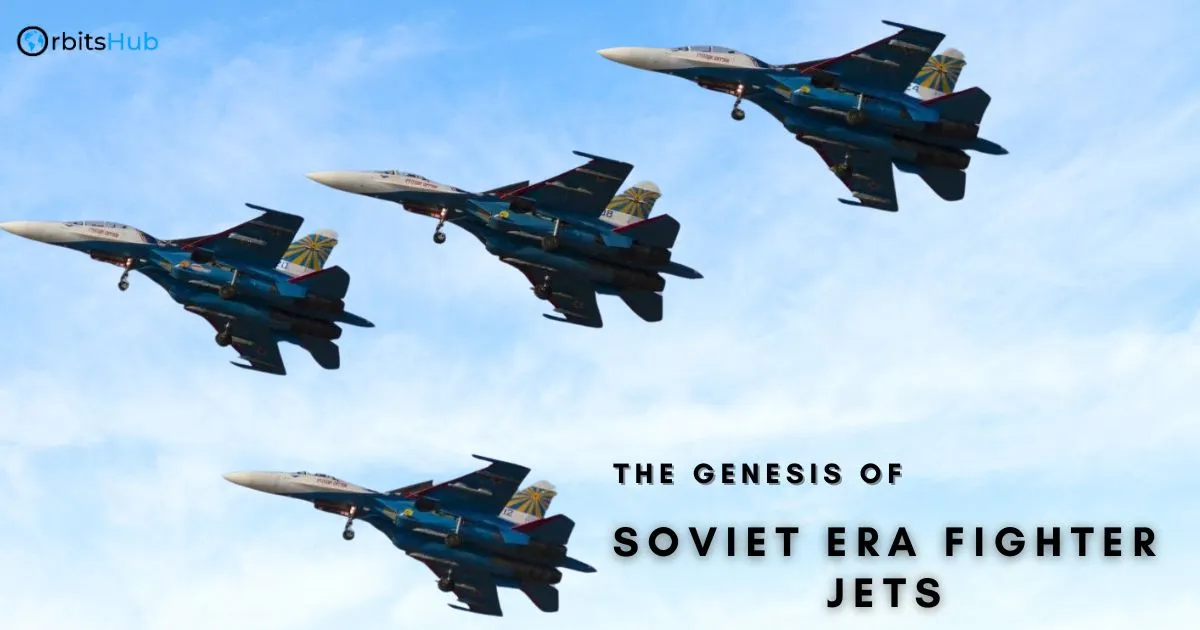
The Soviet Union’s aviation industry was one of the most formidable in the world, especially during the Cold War era. Soviet-era fighter jets were pivotal in defining aerial combat, influencing military strategies, and shaping the geopolitical landscape of the 20th century. From the early designs post-World War II to the advanced jets that dominated the skies during the Cold War, these aircraft played a critical role in the Soviet Union’s military might.
The Early Beginnings: Post-World War II Development
The Soviet Union’s fighter jets originated in the years following WWII. During this period, the Soviet Union recognized the importance of air superiority in modern warfare. The experiences of World War II highlighted the need for advanced aircraft capable of not just defending Soviet airspace but also projecting power beyond its borders.
Influence of German Technology
At the end of World War II, the Soviet Union captured a significant amount of German technology, including jet engine designs and advanced aeronautics. This technological windfall was instrumental in jump-starting the Soviet jet fighter program. The Soviet engineers studied and reverse-engineered German aircraft, particularly the Messerschmitt Me 262, the world’s first operational jet-powered fighter aircraft. This knowledge laid the foundation for developing the Soviet Union’s jet fighters.
The Birth of the MiG Series
The first significant product of this newfound expertise was the Mikoyan-Gurevich MiG-15. Introduced in the late 1940s, the MiG-15 was one of the first successful jet fighters for the Soviet Union. It played a crucial role in the Korean War, proving to be a formidable adversary to American aircraft such as the F-86 Sabre. The MiG-15 was known for its speed, agility, and firepower, making it a feared aircraft in the skies.
Cold War Tensions and Technological Advancements
The Cold War era saw an arms race between the Soviet Union and the United States, with each superpower striving to outdo the other in military technology. Fighter jets became a symbol of national power, and the Soviet Union invested heavily in developing more advanced and capable aircraft.
The Rise of the MiG-21
One of the most recognizable Soviet fighter jets was the Mikoyan-Gurevich MiG-21, which debuted in the 1950s. It was a versatile aircraft used by many countries worldwide due to its reliability and effectiveness in combat. The MiG-21 was fast, with a top speed of over 1,300 mph, and could reach altitudes of 62,000 feet. Its delta wing design and simple yet effective radar systems made it a favorite among Soviet and Allied pilots.
The Development of the Su-27
In response to the development of advanced American fighters like the F-15 Eagle, the Soviet Union introduced the Sukhoi Su-27 in the late 1970s. The Su-27 was designed to establish air superiority and was equipped with advanced avionics, powerful engines, and an array of weaponry. It could carry a variety of air-to-air missiles and had a sophisticated radar system that could track multiple targets simultaneously. The Su-27’s agility and long-range capabilities made it a formidable aircraft that could challenge any Western fighter.
Soviet Fighter Jets in Global Conflicts

Soviet fighter jets were not just limited to the Soviet Union’s airspace; they were also exported to allied countries and saw action in various global conflicts. These planes proved how effective Soviet aviation technology was and were pivotal in deciding the results of the wars.
The Vietnam War
The MiG-17 and MiG-21 were among the several fighter jets provided to North Vietnam by the Soviet Union during the Vietnam War. These aircraft were used extensively in combat against American forces. Despite being outnumbered and often technologically inferior to American jets, North Vietnamese pilots used the agility and maneuverability of their Soviet-built aircraft to their advantage, scoring numerous victories in dogfights.
The Middle East Conflicts
Soviet fighter jets also saw extensive use in the Middle East, particularly in the conflicts between Israel and its Arab neighbors. The MiG-21, in particular, was widely used by Egypt, Syria, and Iraq. Although these jets often faced challenges from more advanced Western aircraft, they were instrumental in several key battles, demonstrating the resilience and effectiveness of Soviet aviation technology.
The Legacy of Soviet Era Fighter Jets
The legacy of Soviet-era fighter jets extends beyond the Cold War. These aircraft have continued influencing modern fighter jet designs and are still used in various countries worldwide. The principles of design, engineering, and combat effectiveness developed during the Soviet era continue to be relevant in the current generation of fighter jets.
Influence on Modern Russian Aviation
Much of the design philosophy and technology improvements made by Soviet-era jets are inherited by modern Russian fighter jets like the Sukhoi Su-57. The emphasis on speed, maneuverability, and advanced avionics that characterized Soviet jets has been carried forward into the 21st century. The Su-57, for instance, incorporates stealth technology, advanced radar systems, and supercruise capabilities, making it a direct descendant of the Soviet aviation legacy.
Continuing Global Impact
Even today, Soviet-era fighter jets remain in service in several countries, particularly the developing world. The MiG-21, for instance, is still operational in several air forces more than 60 years after its introduction. These jets are often upgraded with modern avionics and weaponry, extending their service life and maintaining their relevance in modern warfare.
The genesis of Soviet-era fighter jets is a story of innovation, technological advancement, and geopolitical strategy. From the early days of reverse-engineering German technology to the development of iconic aircraft like the MiG-21 and Su-27, these jets played a pivotal role in the Cold War and beyond. Their legacy continues to influence modern aviation, with their design principles still evident in today’s most advanced fighter jets.
As we look back at the history of Soviet fighter jets, it becomes clear that these aircraft were more than just machines of war; they were symbols of Soviet technological prowess and military might. For those interested in exploring more about the evolution of military aviation or needing consultancy services related to aviation, Orbitshub offers expert insights and solutions tailored to your needs.


Comment(01)