0The Iron Dome Defence System is a game-changing technology that has significantly enhanced worldwide nations’ security and defence capabilities. This advanced system is designed to intercept and destroy short-range rockets, artillery, and mortars, providing a protective shield against aerial threats. The Iron Dome Defence System will be covered in detail in this overview, including its background, technology, efficacy, and potential for the future. Suppose you are interested in defence and technology or want to know more about military advances. This article will provide all the information you need on the Iron Dome.
The Origins of the Iron Dome
The Need for a Defence System
The need for an effective defence system became evident in the early 2000s when regions such as southern Israel faced frequent rocket attacks from hostile territories. The existing defence mechanisms did not provide the necessary protection, leading to the loss of lives and property. This urgent need catalysed the development of the Iron Dome.
Development and Deployment
Israel’s Ministry of Defence initiated the Iron Dome project with Rafael Advanced Defence Systems and Israel Aerospace Industries. Development began in 2007, and the system was operational by 2011. The rapid growth and deployment showcased the urgency and importance of this defence system in safeguarding civilian lives.
How the Iron Dome Works
Components of the Iron Dome
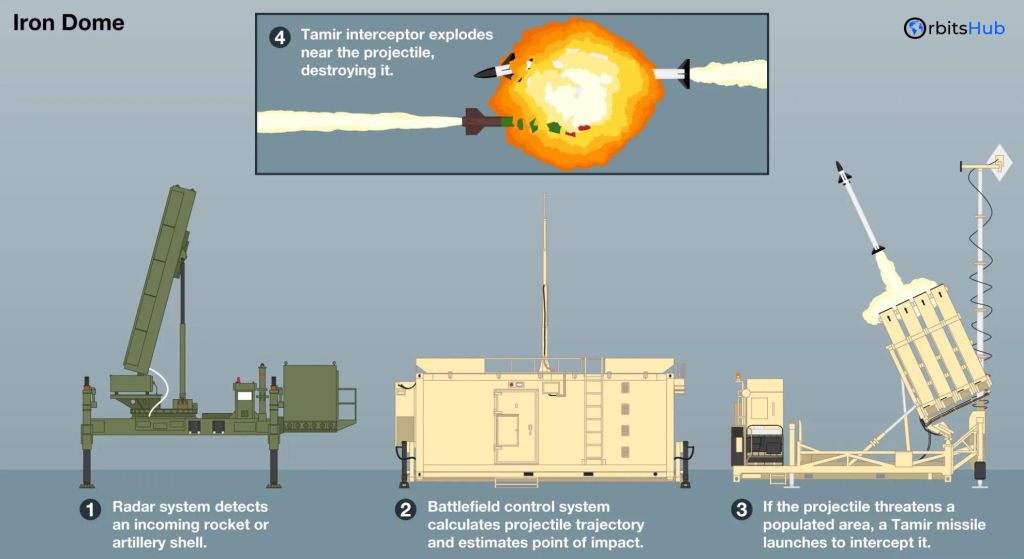
The Iron Dome Defence System comprises three main components:
- Detection and Tracking Radar: This radar identifies and tracks incoming threats, providing real-time data on their speed, trajectory, and impact points.
- Battle Management and Control System: This centralised unit processes the data from the radar, determining the threat level and whether to intercept the incoming projectile.
- Missile Firing Unit: This unit launches the Tamir interceptor missiles to neutralise the identified threats.
Interception Process
The Iron Dome’s interception process is highly efficient. Once the radar detects an incoming threat, the control system calculates its trajectory. If the threat is projected to hit a populated area, the system launches an interceptor missile. The Tamir missile intercepts the threat mid-air, neutralising it before it can cause damage.
Effectiveness and Achievements: Iron Dome Defence System
Real-world Performance
Since its deployment, the Iron Dome has been credited with intercepting thousands of rockets and missiles, significantly reducing casualties and property damage. Its success rate of over 90% in real-world scenarios underscores its effectiveness.
Global Impact
The Iron Dome’s success has fortified Israel’s defence capabilities and attracted international attention. Several countries have shown interest in adopting similar systems to enhance their defence infrastructure. The Iron Dome’s proven track record makes it a benchmark in modern defence technology.
Technological Innovations
Advanced Radar Systems
The Iron Dome utilises cutting-edge radar technology that provides real-time tracking and high accuracy. These radar systems can distinguish between various types of projectiles, ensuring precise targeting and interception.
Interceptor Missiles
The Tamir interceptor missiles the Iron Dome uses are equipped with advanced guidance systems. These missiles are designed to manoeuvre towards the target and destroy it with pinpoint accuracy. Their agility and precision are critical factors in the system’s high success rate.
Integration with Other Defence Systems
One of the standout features of the Iron Dome is its ability to integrate with other defence systems. This interoperability enhances the overall defence capability, allowing for a multi-layered defence approach. The Iron Dome can work with other missile defence systems, providing comprehensive protection.
Challenges and Limitations; Iron Dome Defence System

High Operational Costs
Despite its effectiveness, the Iron Dome has challenges. The high operational cost is one of the primary concerns. Tens of dollars go into each interceptor missile, so ongoing operations may become pricey.
Limited Range
The Iron Dome can deflect missiles from short ranges, usually no more than 70 kilometres. This limitation means it cannot address long-range ballistic missiles, requiring complementary systems for comprehensive protection.
Dependence on Continuous Upgrades
To maintain its effectiveness, the Iron Dome requires continuous technological upgrades. The system must evolve to counter these threats as adversaries develop more sophisticated attack methods, which adds to the operational costs.
Future Prospects of Iron Dome
Technological Advancements
Thanks to ongoing research and development, the future of the Iron Dome looks promising. Future upgrades aim to enhance the system’s range, accuracy, and cost-effectiveness. These advancements will ensure that the Iron Dome remains a pivotal component of modern defence strategies.
Expanding Global Adoption
Given its success, more countries will likely adopt the Iron Dome or similar systems. Nations facing similar threats can benefit from this technology, enhancing their defensive capabilities. The global interest in the Iron Dome highlights its relevance in modern warfare.
Integration with AI and Machine Learning
Integrating artificial intelligence (AI) and machine learning with the Iron Dome could further enhance its capabilities. AI can improve threat detection, decision-making processes, and interception accuracy, making the system even more robust and efficient.
The Iron Dome Defence System is a remarkable achievement in military technology. Its ability to protect civilian lives and property from aerial threats is unparalleled. While it faces high operational costs and limited range, continuous technological advancements promise to address these issues. The future of the Iron Dome looks bright, with potential for global adoption and integration with advanced technologies. We can be sure that the Iron Dome will remain an integral part of contemporary defensive systems.
Explore more about cutting-edge defence systems and technologies by visiting the OrbitsHub website. OrbitsHub is a leading maritime and aviation consultancy offering expert insights and services to enhance your knowledge and capabilities in these fields.