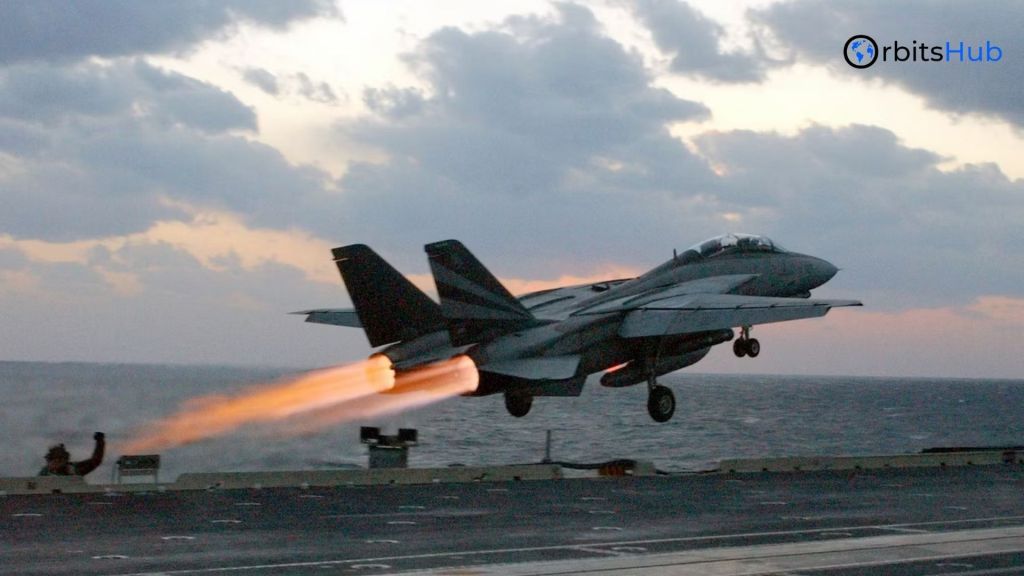
The Grumman F-14 Tomcat is one of the most iconic fighter aircraft in the history of aviation. Known for its distinctive variable-sweep wings and formidable combat capabilities, the F-14 Tomcat played a crucial role in the defence strategies of the United States Navy. The 1986 film “Top Gun” gave this plane a prominent cultural position, and the public and aviation enthusiasts alike were captivated by its dominance in the sky. The Grumman F-14 Tomcat’s background, characteristics, operational importance, and lasting impact will be examine.
History of the Grumman F-14 Tomcat
Development and Design
Grumman designed the F-14 Tomcat in the late 1960s to replace the F-4 Phantom II. The US Navy chose Grumman Aircraft Engineering Corporation to design and build the plane. The Navy obtained the F-14 in 1974 after its December 21, 1970 debut. Design-wise, the F-14 was pioneering. Its variable-sweep wings maximized flight at different speeds and altitudes. This arrangement made the F-14 great at air-to-air combat and long-range strikes. Two Pratt & Whitney TF30 turbofans propelled the plane supersonic.
Key Features and Specifications
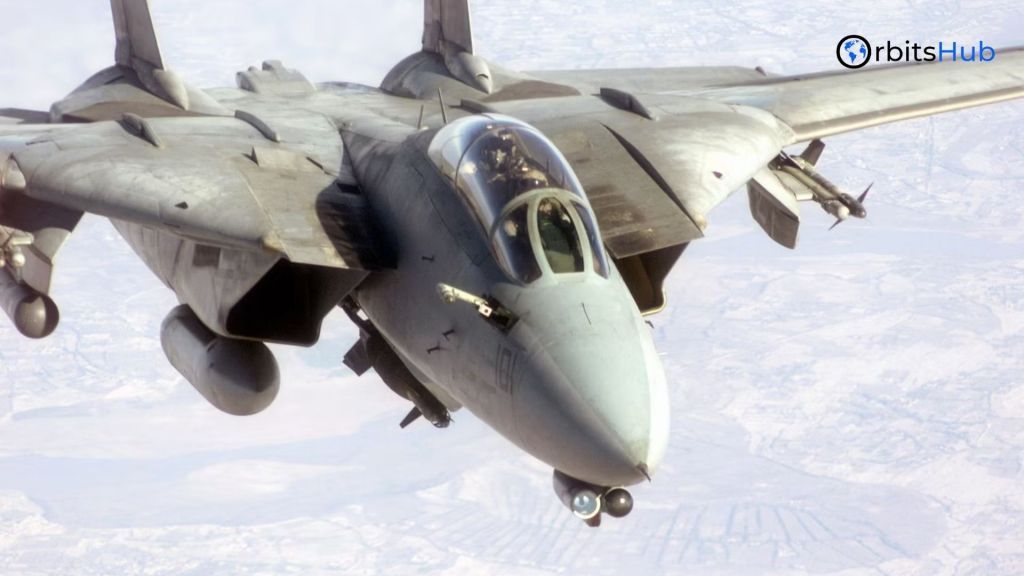
The F-14 Tomcat was equip with advance avionics and weaponry, making it a formidable adversary in combat. Some of its key features include:
- Variable-Sweep Wings: These wings could be adjust between 20 and 68 degrees, allowing the aircraft to perform optimally in various flight conditions.
- AN/AWG-9 Radar System: This powerful radar system could simultaneously track up to 24 targets and engage six of them with AIM-54 Phoenix long-range missiles.
- Weaponry: In addition to a 20mm M61 Vulcan cannon, the F-14 was equipped with a variety of missiles, including as the AIM-54 Phoenix, AIM-7 Sparrow, and AIM-9 Sidewinder.
- Crew: The F-14’s combat effectiveness was maximized by its two-person crew, which included a pilot and a radar intercept officer (RIO).
Operational History
The F-14 Tomcat saw extensive service with the United States Navy from the mid-1970s until its retirement in 2006. It was pivotal in several major conflicts and military operations, such as:
- Cold War Era: The F-14 was a critical component of the Navy’s air superiority strategy during the Cold War, deterring potential adversaries with its advanced capabilities.
- Operation Enduring Freedom: The F-14 continued to serve in the post-9/11 era, participating in missions over Afghanistan and Iraq.
The Grumman F-14 Tomcat in Popular Culture
“Top Gun” and Public Perception
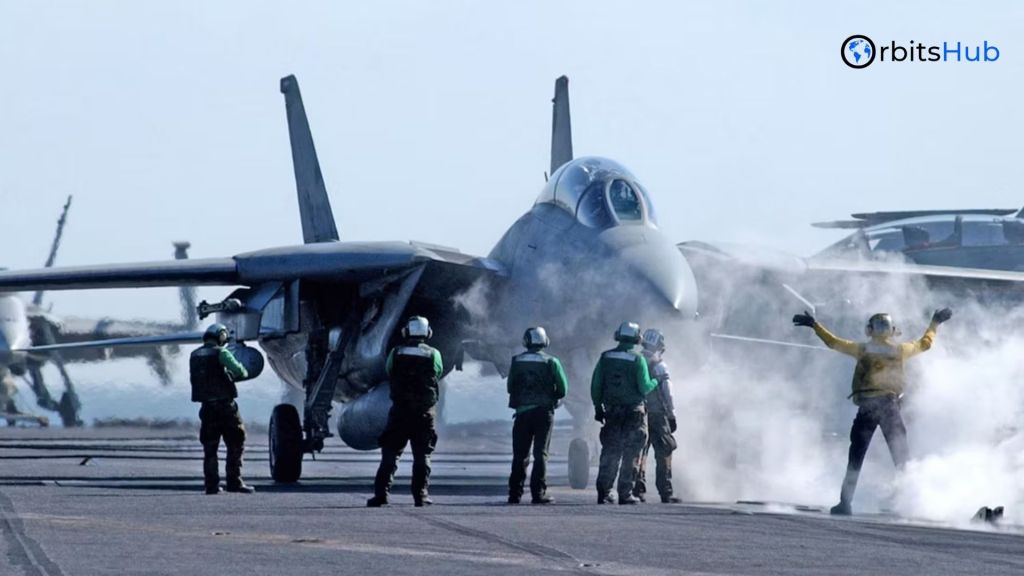
The Grumman F-14 Tomcat’s most significant cultural impact came with its starring role in the 1986 film “Top Gun”. The film featured Tom Cruise as a hotshot Navy pilot and showcased the F-14’s capabilities and glamorous image, boosting its popularity among the general public. The movie’s success led to a surge in interest in naval aviation and inspired many young people to pursue careers as fighter pilots.
Media and Merchandise
Beyond “Top Gun,” the F-14 Tomcat appeared in various other media, including television shows, video games, and documentaries. Its attractive appearance and remarkable functionality made it a popular topic for various forms of consumer goods, including model kits, toys, and more. The plane’s iconic status continue solidifying its position in aviation history long after it was retired.
Technological Innovations of Grumman F-14 Tomcat
Advanced Avionics
The F-14 Tomcat was a pioneer in integrating advanced avionics systems into a fighter aircraft. Its AN/AWG-9 radar system was one of the most powerful of its time, providing the F-14 with exceptional target tracking and engagement capabilities. The radar’s ability to guide the AIM-54 Phoenix missile over long distances was a game-changer in aerial combat.
Variable-Sweep Wings
The variable-sweep wing design was a major technological innovation that set the F-14 apart from other aircraft of its era. This feature allowed the aircraft to adapt its wing configuration for optimal performance in different flight regimes, from high-speed intercepts to low-speed carrier landings. The success of this design influenced the development of future aircraft with similar capabilities.
Weapons Systems
Thanks to its cutting-edge weapon systems, the F-14 had a formidable and adaptable arsenal . With its M61 Vulcan cannon, long-range and short-range missiles, and other capabilities, the F-14 successfully engaged a diverse array of targets. With a range of up to 100 miles, the AIM-54 Phoenix missile stood out as capable of engaging enemy aircraft.
The Legacy of the F-14 Tomcat
Influence on Modern Fighter Aircraft
The innovations and lessons learned from the development and operation of the F-14 Tomcat have had a lasting impact on modern fighter aircraft design. Advanced avionics, variable-sweep wings, and sophisticated weapons systems have become standard in many of today’s frontline fighters. Aircraft such as the F/A-18 Hornet and the F-22 Raptor owe a part of their design heritage to the F-14.
Preserving the F-14’s Heritage
Although the F-14 Tomcat was officially retired from service in 2006, its legacy lives on. Many F-14s are preserved in museums and aviation displays worldwide, allowing future generations to appreciate their historical significance. Enthusiastics and former pilots continue to share their stories and memories of flying the F-14, ensuring that the aircraft’s legacy is not forgotten.
The F-14’s Role in Aviation History
The Grumman F-14 Tomcat was one of the most advanced and capable fighters in aviation history. Its iconic design, excellent performance, and military contributions have made it a legend. Its impact on aircraft design and appeal in popular culture emphasize the F-14’s importance.
The Grumman F-14 Tomcat is more than just a fighter aircraft; it symbolizes technological innovation, military prowess, and cultural impact. From its inception in the 1970s to its retirement in 2006, the F-14 played a vital role in the defence strategy of the United States Navy and inspired countless individuals worldwide. A great legend in the aviation industry, its legacy is still acknowledged and honor today.
Please explore our website’s fascinating stories and insights about aviation and maritime history. Visit Orbitshub today!