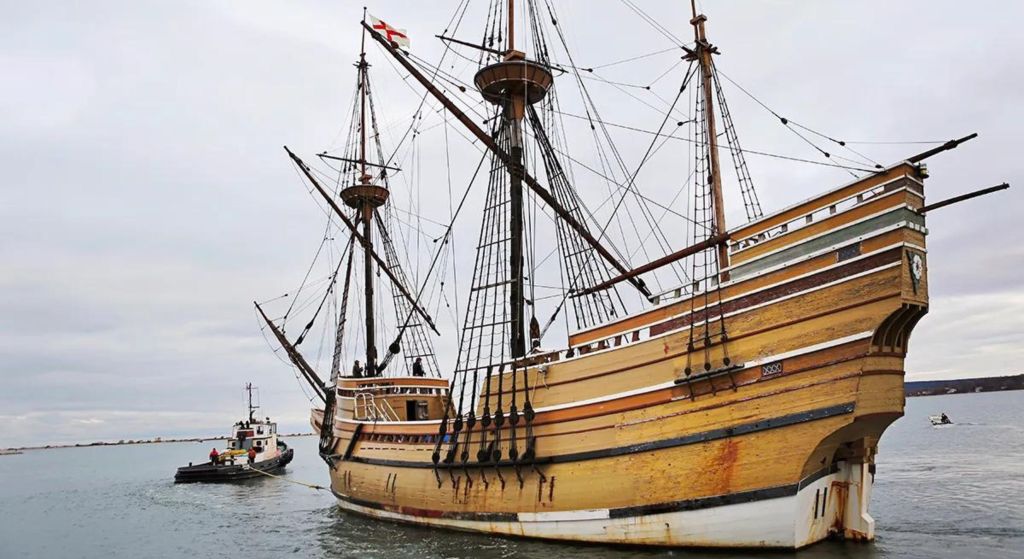
The Mayflower, an iconic English sailing ship, embarked on a historic journey in 1620. A group of English families, the Pilgrims, transported them from England to the New World. This voyage marked a pivotal moment in American history, shaping the future of a fledgling colony. Let’s delve into the fascinating story of the Mayflower ship and its significance.
The Mayflower’s Origins and Specifications
The Mayflower was no ordinary vessel. Here are the key details:
- Origin: The Mayflower was a Dutch cargo ship fluyt known for its cargo-carrying capacity. It belonged to Captain Christopher Jones, who owned a quarter of the boat.
- Dimensions: The ship measured approximately 80–90 feet (24–27.5 meters) on deck and 100–110 feet (3F–33.5 meters) overall. With a tonnage of 180 tons, it was a sturdy vessel for its time.
- Decks: The Mayflower had around four decks: the upper deck, gun deck, and cargo deck. Each deck served specific purposes during the voyage.
The Pilgrims’ Quest for Religious Freedom

The Pilgrims were a congregation of approximately 400 English Protestants living in exile in Leiden, Holland. Dissatisfied with the Church of England’s failure to reform, they lived as Separatists in religiously tolerant Holland. By 1620, they were determined to cross the Atlantic to establish their colony in what they considered a “new Promised Land.”
The Harrowing Journey
The Pilgrims initially hoped to reach America using two ships, but delays and complications led them to rely solely on the Mayflower. On November 21, 1620, after ten weeks at sea, the vessel, which had 102 passengers and approximately thirty crew members, dropped anchor on the Massachusetts coast of Cape Cod. They had arrived in a harsh winter, unprepared for the challenges ahead.
Survival and Cooperation
Only half of the original Pilgrims survived that first brutal winter at Plymouth. Their survival was thanks, in part, to the help of local indigenous peoples—the Wampanoag Native Americans. These indigenous allies taught the Pilgrims essential skills like food gathering and survival techniques.
The Mayflower Compact
Before disembarking, the Pilgrims drafted and signed the Mayflower Compact. This agreement established a rudimentary government, emphasizing collective responsibility for the maritime safety and welfare of the planned settlement. It was a crucial step toward self-governance in the New World.
Legacy and Thanksgiving
The Mayflower’s significance extends beyond its physical voyage. As one of the earliest colonial vessels, it has become a cultural icon in American history. The Pilgrims’ first fall harvest, celebrated with 90 Wampanoag Native Americans, is now recognized as the first American Thanksgiving.
The Mayflower’s Crew and Passengers
The Mayflower’s voyage was about the ship itself and the people on board. Let’s explore the crew, passengers, and their diverse backgrounds:
The Crew
- Captain Christopher Jones: The experienced captain who navigated the Mayflower across treacherous waters.
- Officers and Sailors: The crew members responsible for sailing, maintaining the ship, and ensuring its safety.
- Crew Challenges: Harsh conditions, cramped quarters, and the constant threat of storms tested their resilience.
The Passengers
- The Pilgrims: An autonomous religious movement that rejects the authority of the Church of England. It was their faith and resolve that propelled them on their journey.
- Strangers: Non-Pilgrim passengers, including merchants, artisans, and adventurers. They joined the voyage for various reasons.
- Women and Children: The Mayflower carried women, children, and infants, each facing unique challenges during the journey.
Life Aboard the Mayflower
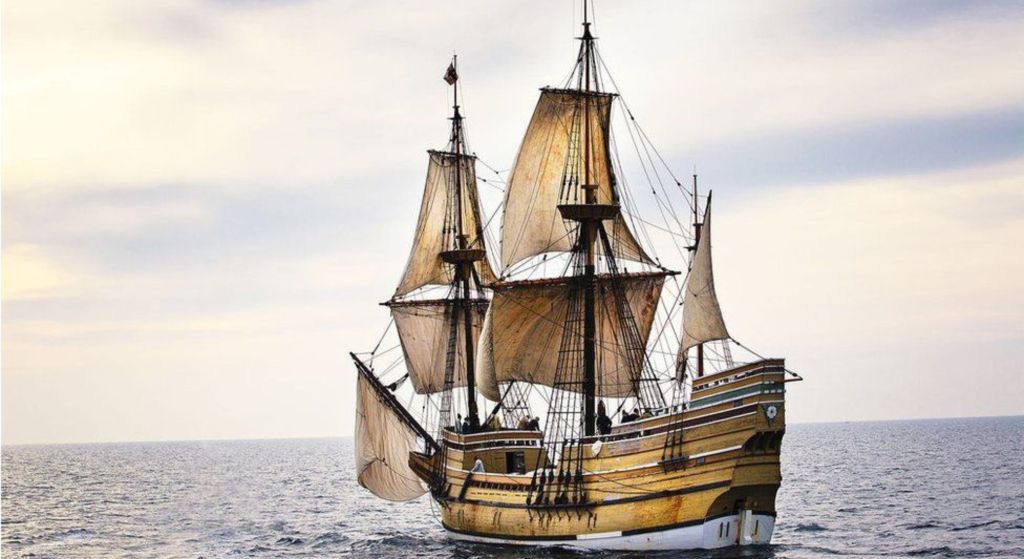
The ship was both home and vessel during the arduous journey. Let’s delve into daily life on the Mayflower:
Accommodations
- Tight Quarters: Over 100 people shared limited space: bunks, hammocks, and benches served as sleeping areas.
- Basic Amenities: No private cabins or bathrooms. Chamber pots and communal wash basins were essential.
- Meals: Simple fare—hardtack, salted meat, dried peas, and cheese. Fresh food was scarce.
Challenges
- Seasickness: Many suffered from seasickness due to rough seas and constant motion.
- Storms and Waves: Violent storms tested the ship’s structure and the passengers’ endurance.
- Boredom and Anxiety: Weeks at sea meant monotony and uncertainty. Passengers coped with storytelling, prayer, and camaraderie.
Impact on Indigenous Communities
- The interactions between the Pilgrims and the Wampanoag Native Americans.
- How the Wampanoag aided the Pilgrims in survival, and what this collaboration signifies in American history.
- The lasting impact of this relationship on Indigenous communities and their perspectives on the Mayflower’s legacy.
Historical Context and Significance
- The broader historical context leading up to the Mayflower voyage, including England’s religious and political climate at the time.
- The significance of the Mayflower Compact as an early document of self-governance in the New World and its influence on later American political development.
- How the Mayflower’s journey and the establishment of Plymouth Colony contributed to shaping colonial America and the narrative of American exceptionalism.
FAQ’s
1. When did the Mayflower embark on its historic voyage to the New World?
The Mayflower set sail from Plymouth, England, on September 6, 1620, and arrived at Cape Cod on November 11, 1620.
2. How many passengers were aboard the Mayflower during its journey to the New World?
The Mayflower carried 102 passengers, including Pilgrims seeking religious freedom and other individuals in pursuit of new opportunities.
The Mayflower ship voyage was more than a maritime adventure; it was a testament to human resilience, cooperation, and the pursuit of freedom. The tenacity and bravery that gave rise to the USA are echoed in its lasting impact.