
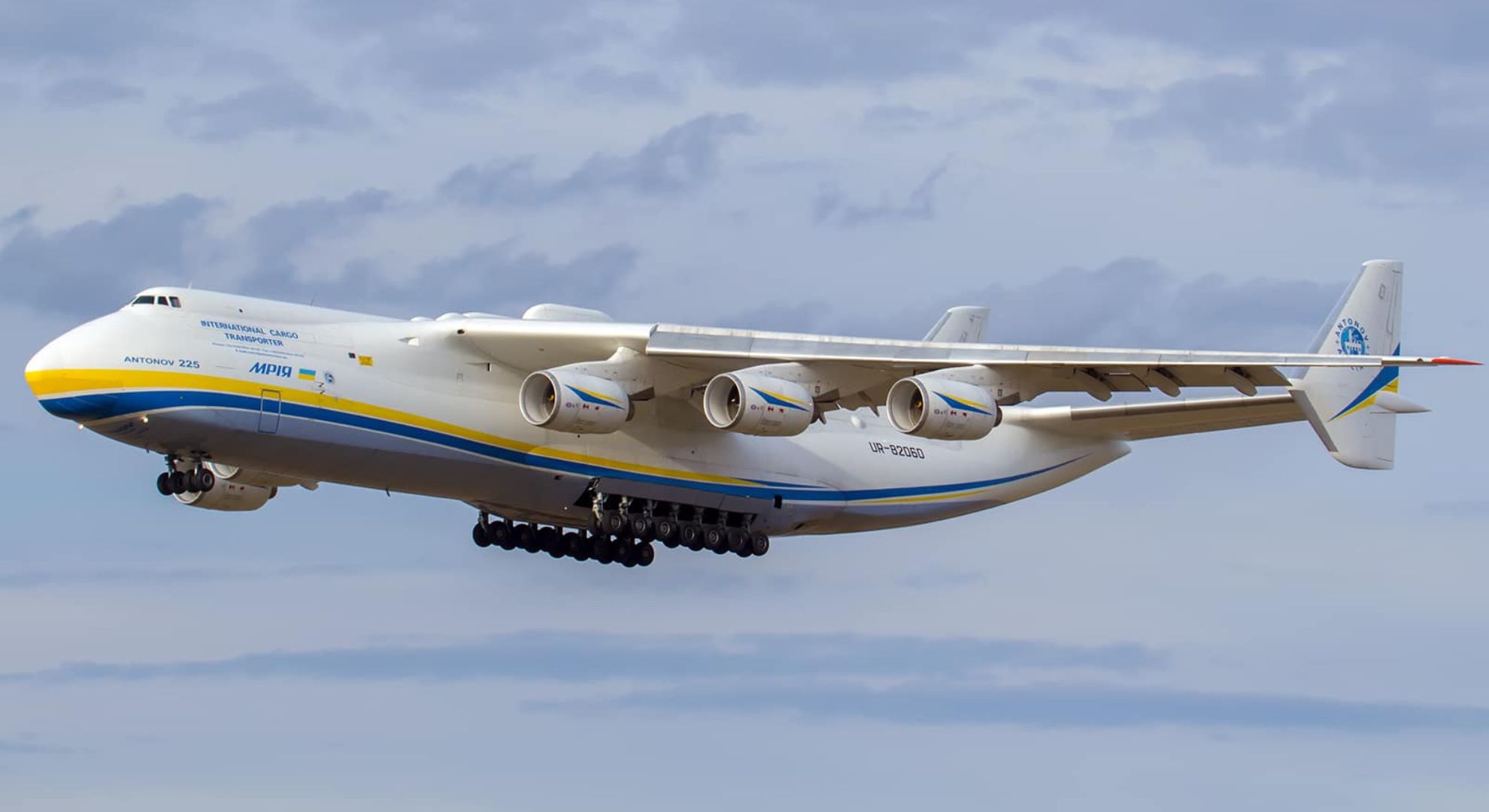

The AN-225 cargo plane, colloquially known as the Mriya, has left an indelible mark on the aviation landscape. Its unparalleled payload capacity and distinctive design have earned it a near-legendary status among aviation enthusiasts and professionals. This article delves into this iconic aircraft’s rich history, unique specifications, and remarkable achievements.
Historical Background
The genesis of the AN-225 cargo plane traces back to the space race era between the United States and the Soviet Union in the 1960s and 70s. With the need to transport the Buran spacecraft, a Soviet Union’s response to NASA’s Space Shuttle, from the assembly sites to the Baikonur Cosmodrome in Kazakhstan, there arose a necessity for an aircraft capable of such a feat. The task of creating such an aircraft fell upon the Kyiv-based Antonov company. The result was the creation of the AN-225, a machine that would later earn the title of the heaviest aircraft ever constructed. The first flight of the AN-225 took place in 1988, marking the beginning of its illustrious service.
Unmatched Specifications
The AN-225 is a marvel of engineering. It is powered by six ZMKB Progress Lotarev D-18T turbofan engines, each producing a whopping 51,590 pounds of thrust. This prodigious power allows the Mriya to achieve a maximum takeoff weight (MTOW) of 700 tons.
Incomparable Cargo Capabilities
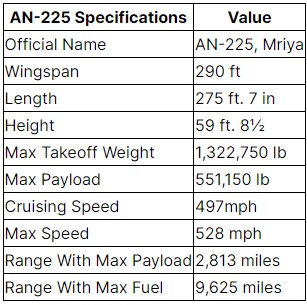
The AN-225 cargo plane is renowned for its impressive cargo capabilities. It can carry a maximum payload of over 250 tons and has a cargo hold capacity of 1,100 cubic meters. Even the landing gear of this considerable aircraft is designed to be robust, with 32 wheels evenly distributing its enormous weight.
Unique Design
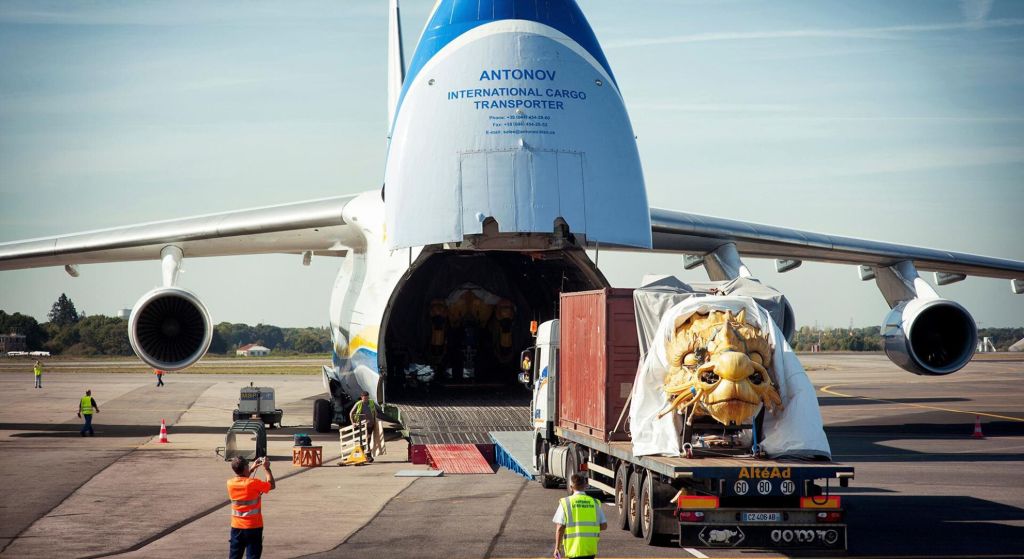
The AN-225’s design is as unique as its capabilities. The aircraft’s pressurized cargo compartment is massive, measuring 44.32m in length, 6.4m in width, and 4.4m in height. This design allows the AN-225 Mriya to carry large and hefty loads inside and on its back.
The aircraft’s robust structure enables it to carry payloads of up to 250 metric tons, making it the heaviest cargo aircraft in the world. Its strategic airlift capabilities have been crucial in transporting oversized cargo, including spacecraft, industrial equipment, and humanitarian aid, showcasing the AN-225’s versatility and significance in heavy air transportation.
Noteworthy Achievements
Over the years, the AN-225 cargo plane has been instrumental in numerous large cargo charter projects. It has transported 232 tons of oil and gas equipment to Abu Dhabi, 140 tons of compressors from South Korea to France, and even its first-ever flight into South America.
Role in Humanitarian Aid
The AN-225 has also played a significant role in humanitarian missions. After the 2010 Haitian earthquake, it transported aid to the affected areas. During the early days of the Covid pandemic, it was leveraged to transport medical supplies to affected areas.
Areas ravaged by typhoons and floods received relief supplies from the AN-225. Its immense cargo and long-range capabilities made it indispensable in quickly reaching remote and inaccessible areas. Additionally, the aircraft has been utilized to transport large-scale humanitarian aid, including food, water, and shelter materials, to regions facing crises, contributing to international relief efforts around the globe.
Contribution to the Space Industry
The AN-225 is an aviation marvel and a significant contributor to the space industry. The Airspace Industry Corporation of China (AICC) has inked a deal with Antonov to design and develop a new type of AN-225 with enhanced lifting capabilities. The Chinese plan to utilize the AN-225 to transport satellites into space, tapping into the lucrative satellite launch industry.
Emotional Impact
The AN-225 cargo plane has left an emotional impact on the aviation world. Its destruction during the Russian invasion of Ukraine was met with profound sadness and dismay among aviation enthusiasts. However, the indomitable spirit of the Ukrainian people was evident in their resolve to rebuild the Mriya, a symbol of their national pride.
The Engineering Challenges and Innovations of the AN-225
Development and Design Innovations
- The development of the AN-225 involved numerous engineering challenges that required innovative solutions. The Antonov Design Bureau had to create a structure capable of withstanding enormous loads while maintaining stability and performance. Key innovations included the six-engine configuration, the unique landing gear system with 32 wheels, and the ability to kneel for more effortless cargo loading.
Materials and Construction Techniques
- The AN-225’s construction utilized advanced materials and techniques for strength and durability. Lightweight composites and high-strength aluminium alloys were extensively used. Additionally, the aircraft’s modular design facilitated easier maintenance and repairs, a critical feature for a plane of size and complexity.
The Future of Heavy Lift Aviation Post-AN-225
Emerging Technologies in Cargo Aviation
- With technological advancements, the future of heavy-lift aviation looks promising. Some innovations being investigated include advanced aerodynamics, electric and hybrid propulsion systems, and the ability to fly autonomously. These technologies aim to improve efficiency, reduce environmental impact, and enhance the overall capability of cargo aircraft.
Potential Successors to the AN-225
- As the aviation industry evolves, several projects aim to create potential successors to the AN-225. Companies and governments are investing in developing new heavy-lift aircraft that can carry on the AN-225’s legacy. These future aircraft are expected to offer increased payload capacities, improved fuel efficiency, and greater operational flexibility, ensuring that the need for massive air transport solutions continues to be met.
FAQ’s
1. What is the AN-225 Cargo Plane?
The AN-225, also known as Mriya, is a strategic airlift cargo aircraft designed by the Antonov Design Bureau in the Soviet Union. It’s recognized as the largest airplane in the world.
2. How many AN-225 planes exist?
As of my knowledge cutoff in April 2023, there was only one operational AN-225. It was unique due to its size, design, and lifting capacity.
3. What is the cargo capacity of the AN-225?
The AN-225 has a maximum payload capacity of approximately 250 metric tons, which makes it ideal for transporting oversized and super-heavy items.
4. What is the wingspan of the AN-225?
The wingspan of the AN-225 is about 88.4 meters (290 feet), which is among the largest for any aircraft in operational service.
5. Can the AN-225 carry space shuttles?
Yes, the AN-225 was explicitly designed to airlift the Energia rocket’s boosters and the Buran space shuttle for the Soviet space program.
6. How many engines does the AN-225 have?
The AN-225 can transport its hefty payloads to great heights with its six turbofan engines.
7. What makes the AN-225 unique compared to other cargo planes?
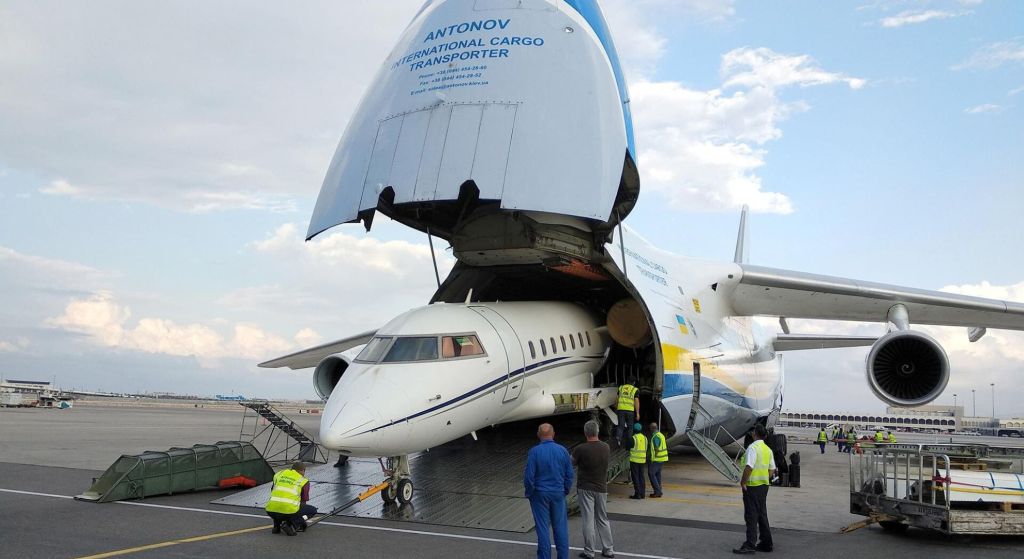
The AN-225’s sheer size, payload capacity, and ability to carry oversized cargo on its back set it apart from other cargo planes. It also has a pressurized cargo area and can kneel to facilitate cargo loading and unloading.
8. Has the AN-225 set any records?
The AN-225 has set numerous world records, including those for airlifting the heaviest cargo and transporting the most extended cargo.
9. Can the AN-225 land at any airport?
Due to its size and runway requirements, the AN-225 can only land at some airports. Airports must have a runway long enough to accommodate their takeoff and landing and the infrastructure to handle their weight.
10. Is the AN-225 still in service?
As of my knowledge cutoff in April 2023, the AN-225 had been damaged in early 2022 during the conflict in Ukraine. Its status might have changed since then, and for the latest information, one would need to check the latest sources.
The AN-225 cargo plane Mriya is not just an aircraft but a symbol of human ingenuity, resilience, and the spirit of exploration. Despite challenges and setbacks, Mriya’s legacy inspires future engineers and aviation enthusiasts. A testament to this is Ukraine’s resolve to restore the Mriya, demonstrating that while physical structures may be damaged, the dream they represent can never be destroyed.


Comment(01)