The MQ-9 Reaper drone has transformed modern warfare and surveillance, and it is also called the Predator B. It is an uncrewed aerial vehicle (UAV). Developed by General Atomics Aeronautical Systems for the United States Air Force (USAF), the MQ-9 Reaper drone is a remotely piloted aircraft designed for long-endurance, high-altitude missions. This will delve into the history, features, and strategic importance of the MQ-9 Reaper drone, providing a comprehensive overview for enthusiasts and professionals alike.
History of the MQ-9 Reaper Drone
Origins and Development
The MQ-9 Reaper drone’s development began in the early 2000s, following the success of its predecessor, the MQ-1 Predator. The need for a more advanced UAV with greater payload capacity, endurance, and offensive capabilities led to the creation of the MQ-9. General Atomics Aeronautical Systems was awarded the contract, and the first flight of the MQ-9 Reaper took place in February 2001. By 2007, the USAF had officially introduced the drone into its fleet.
Evolution Over the Years
Since its introduction, the MQ-9 Reaper has undergone numerous upgrades to enhance its performance and capabilities. These upgrades include improved sensors, communication systems, and weapons integration. The drone has also been adopted by various international militaries, solidifying its position as a critical asset in modern aerial warfare.
Features of the MQ-9 Reaper Drone
Design and Specifications
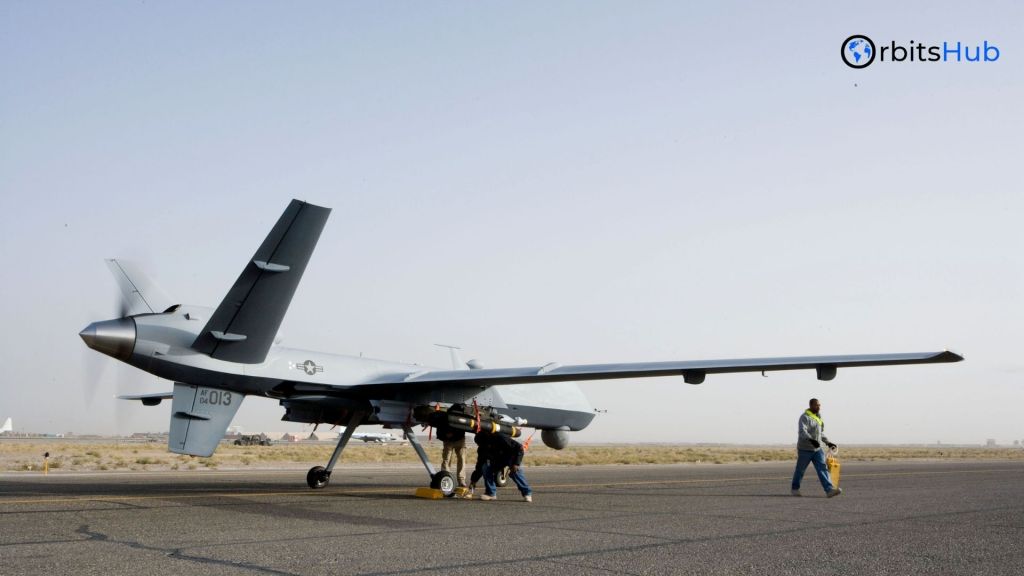
Modern technology and a streamlined appearance define the MQ-9 Reaper. It can lift 10,500 pounds during takeoff and has a length of 36 feet and a wingspan of 66 feet. Drone altitudes of up to 50,000 feet and speeds of up to 300 mph are made possible by the Honeywell TPE331-10 turboprop engine. Its capacity to stay airborne for up to 27 hours is very remarkable, demonstrating its endurance.
Payload and Armament
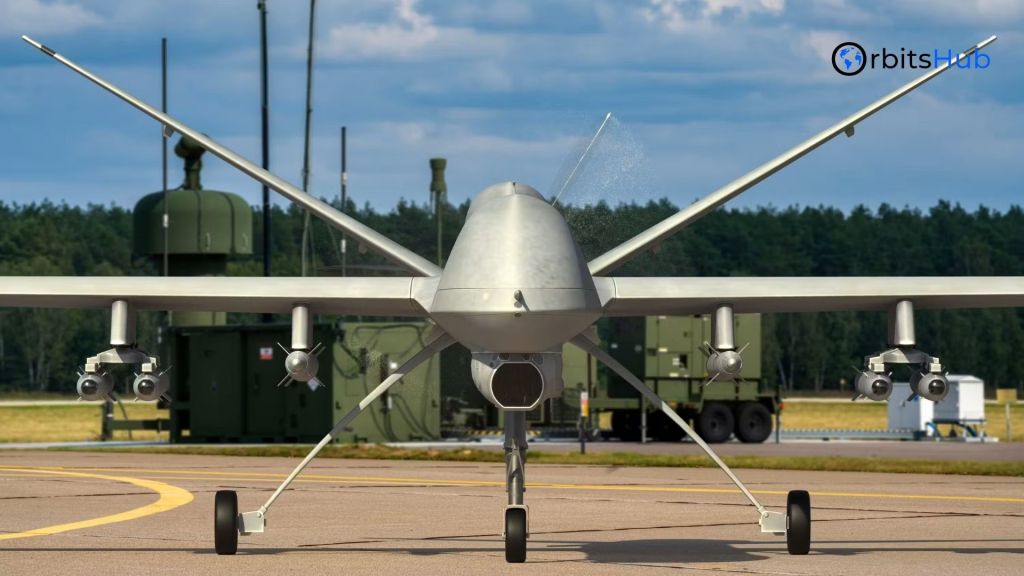
One of the MQ-9 Reaper’s standout features is its impressive payload capacity. The drone can carry up to 3,750 pounds of external stores, including sensors, fuel tanks, and weapons. Its armament options include Hellfire missiles, GBU-12 Paveway II laser-guided bombs, and GBU-38 Joint Direct Attack Munitions (JDAMs). This versatility enables the Reaper to perform various missions, from precision strikes to intelligence, surveillance, and reconnaissance (ISR) operations.
Advanced Sensors and Communication
The MQ-9 Reaper has state-of-the-art sensors and communication systems that enhance its operational capabilities. Its Multi-spectral Targeting System (MTS-B) includes infrared sensors, colour/monochrome daylight TV cameras, image-intensified TV cameras, and laser range finders/designators. These sensors allow the drone to identify and track targets with high precision. Additionally, the Reaper has a satellite communication system that enables real-time data transmission and remote piloting from ground control stations.
Strategic Importance of the MQ-9 Reaper Drone
Role in Modern Warfare
Due to its versatility and effectiveness, the MQ-9 Reaper has become an indispensable asset in modern warfare. It has been extensively used in counterterrorism operations, providing critical ISR support and conducting precision strikes against high-value targets. Its ability to loiter for extended periods and strike with pinpoint accuracy has made it a preferred choice for offensive and defensive missions.
Impact on Surveillance and Reconnaissance
In addition to its combat capabilities, the MQ-9 Reaper plays a vital role in surveillance and reconnaissance missions. Its advanced sensors and communication systems enable it to gather real-time intelligence over vast areas, making it an invaluable tool for military commanders. The Reaper’s high-altitude capabilities also allow it to monitor and track movements across borders and conflict zones, providing crucial situational awareness.
Cost-Effectiveness and Operational Efficiency
The MQ-9 Reaper is effective and cost-efficient compared to human-crewed aircraft. Its unmanned nature reduces the risk to human pilots and allows more extended missions without fatigue. Additionally, the Reaper’s operational costs are significantly lower, making it a sustainable option for continuous surveillance and strike operations.
Technological Advancements and Future Upgrades
Emerging Technologies in UAVs
There has been a stir in the unmanned aerial vehicle market due to the dizzying pace of drone technological advancement. More autonomy is on the list of potential future upgrades for the MQ-9 Reaper, allowing the drone to do more challenging missions with less human supervision. Additionally, AI and machine learning algorithms are used to improve target recognition and decision-making even more.
Future Upgrades for the MQ-9 Reaper
The MQ-9 Reaper is expected to undergo several upgrades to maintain its edge in modern warfare. Potential enhancements include improved stealth features to reduce its radar signature, advanced electronic warfare capabilities to counter enemy defences, and increased payload capacity for more diverse weaponry and sensors. Additionally, integrating advanced propulsion systems could extend its endurance and operational range even further.
International Operators and Global Impact
Countries Using the MQ-9 Reaper
The MQ-9 Reaper has been adopted by several countries beyond the United States, including the United Kingdom, Italy, France, Spain, and the Netherlands. These nations have recognized the drone’s value in various military operations, from counterterrorism to border security. Each country has customized the Reaper to meet specific operational requirements, demonstrating the drone’s versatility.
Global Impact and Ethical Considerations
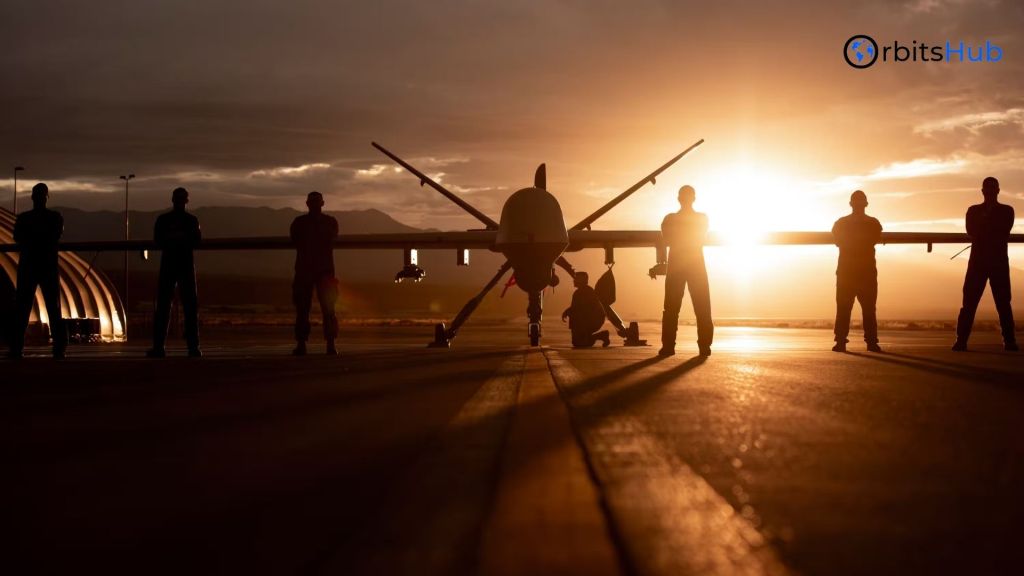
Concerns over the morality of utilizing armed drones have arisen in response to the widespread use of the MQ-9 Reaper. There are continuing discussions in the international community about issues including civilian casualties, the legitimacy of targeted assassinations, and the psychological impact on drone operators. To guarantee responsible and ethical deployment of UAVs, addressing these problems as their use grows is critical.
The MQ-9 Reaper drone has undoubtedly transformed the landscape of modern warfare and surveillance. The Reaper is a critical asset for military forces worldwide with its advanced technology, impressive payload capacity, and strategic versatility. As we look to the future, the evolution and potential upgrades of the MQ-9 Reaper will likely further enhance its capabilities, solidifying its role as a critical player in aerial operations.
For more in-depth insights and updates on the MQ-9 Reaper drone and other cutting-edge aviation technologies, explore our OrbitsHub, your trusted source for comprehensive maritime and aviation consultancy services.