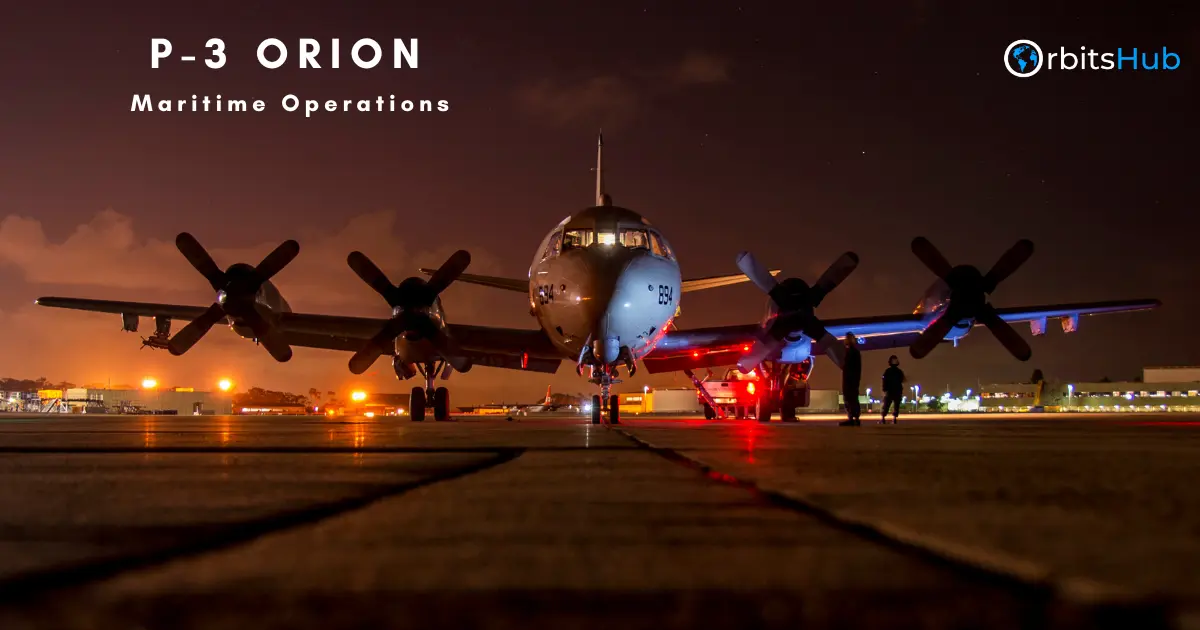
The P-3 Orion is a legendary maritime patrol aircraft that has served navies around the world for decades. Known for its versatility and reliability, the P-3 Orion has become a cornerstone of maritime operations, offering a multifaceted approach to surveillance, anti-submarine warfare, and reconnaissance missions. This explores the diverse capabilities of the Orion, highlighting its critical role in ensuring maritime security.
The P-3 Orion: A Brief Overview
The Lockheed Martin Orion has been in service since the 1960s. It meets maritime patrol and anti-submarine warfare needs by adapting the Lockheed Electra design. Four turboprop engines give the aircraft range and endurance for long-duration maritime missions.
Surveillance and Reconnaissance Capabilities
Advanced Radar Systems
One of the primary functions of the Orion is maritime surveillance. The aircraft is equipped with advanced radar systems capable of detecting and tracking surface vessels over vast areas. These radar systems can operate in various modes, including search, track, and target acquisition, making the P-3 Orion an invaluable asset for monitoring maritime traffic and identifying potential threats.
Electro-Optical/Infrared Sensors
In addition to radar, the Orion features electro-optical and infrared (EO/IR) sensors. These sensors provide high-resolution imagery and video, allowing operators to conduct detailed visual inspections of targets. The EO/IR sensors are particularly useful for identifying small, fast-moving vessels that might evade radar detection.
Anti-Submarine Warfare (ASW)
Sonobuoys and Magnetic Anomaly Detection
The P-3 Orion excels in anti-submarine warfare, utilizing a combination of sonobuoys and magnetic anomaly detection (MAD) equipment. Sonobuoys are deployed from the aircraft and can detect underwater sounds, such as those produced by submarine engines. The MAD system detects minute magnetic field changes induced by submarines, allowing the Orion to precisely locate and track underwater threats.
Torpedoes and Depth Charges
Following a submarine detection, the Orion can engage it with torpedoes and depth charges. These bombs are deployed from the bomb compartment and directed by the aircraft’s systems. This allows the P-3 Orion to neutralize undersea threats, protecting maritime environments.
Maritime Patrol and Search and Rescue
Long-Endurance Missions
The P-3 Orion’s long-range and endurance capabilities make it ideal for extended maritime patrol missions. The aircraft can remain airborne for up to 12 hours, covering vast areas of the ocean and providing continuous surveillance. This capability is essential for monitoring shipping lanes, fishing zones, and exclusive economic zones (EEZs), ensuring compliance with international laws and regulations.
Search and Rescue Operations
In addition to its military roles, the Orion plays a vital part in search and rescue (SAR) operations. The aircraft’s sensors and communication systems enable it to locate distressed vessels and coordinate rescue efforts. The P-3 Orion can drop survival kits, including life rafts and supplies, to assist those in need until rescue teams arrive. This humanitarian role underscores the versatility and importance of the Orion in maritime operations.
The P-3 Orion’s Role in Modern Conflicts
Intelligence, Surveillance, and Reconnaissance (ISR)
In modern conflicts, the Orion continues to prove its worth in intelligence, surveillance, and reconnaissance (ISR) roles. The aircraft’s ability to gather and relay real-time information about enemy movements and activities is crucial for mission planning and execution. This information dominance allows military forces to make informed decisions and achieve strategic objectives with greater precision.
Multi-Mission Flexibility
The P-3 Orion can handle many missions due to its versatility. The aircraft can easily switch between ASW, ISR, and SAR missions, supporting naval and air forces. Multiple missions make the Orion a cost-effective and efficient tool for many maritime operations.
P-3 Orion’s Electronic Warfare Systems

The Orion is equipped with advanced electronic warfare (EW) systems that enhance its operational capabilities in contested environments. These systems are design to detect, intercept, and counteract enemy radar and communication signals, providing a significant tactical advantage.
- Radar Warning Receivers (RWR): These systems alert the crew to the presence of hostile radar, allowing for evasive maneuvers or countermeasures.
- Electronic Countermeasures (ECM): ECM systems can jam enemy radar and communications, disrupting adversarial operations and protecting friendly forces.
- Signal Intelligence (SIGINT): The Orion’s SIGINT capabilities enable it to gather and analyze enemy electronic emissions, providing valuable intelligence for mission planning.
- Self-Protection Systems: These include chaff and flare dispensers, which can deceive incoming missiles and protect the aircraft from being target.
The integration of these electronic warfare systems ensures that the Orion can operate effectively even in high-threat environments, maintaining its critical role in maritime operations.
Enhancing Maritime Domain Awareness with P-3 Orion
Maritime Domain Awareness (MDA) is crucial for maintaining security and stability in the world’s oceans. The P-3 Orion plays a vital role in enhancing MDA through its comprehensive surveillance and monitoring capabilities.
- Persistent Surveillance: The Orion’s long endurance allows for continuous monitoring of vast maritime areas, ensuring no suspicious activities go unnoticed.
- Data Fusion: The aircraft integrates data from multiple sensors and sources, providing a comprehensive picture of the maritime domain.
- Real-Time Information Sharing: The Orion can relay critical information to command centers and other assets in real time, enabling swift decision-making.
- Identification and Tracking: The aircraft’s advance sensors can identify and track vessels of interest, ensuring maritime traffic is monitored and controlled.
- Illegal Activity Detection: From piracy to illegal fishing, the Orion is instrumental in detecting and deterring unlawful activities at sea.
By enhancing MDA, the P-3 Orion contributes significantly to maritime security, supporting efforts to safeguard international waters.
Technological Upgrades and Future Developments of P-3 Orion
To maintain its edge in modern warfare, the Orion has undergone numerous technological upgrades and continues to evolve with future developments.
- Avionics Modernization: Upgraded avionics systems improve the aircraft’s navigation, communication, and mission management capabilities.
- Sensor Enhancements: New and improved sensors increase the Orion’s surveillance, reconnaissance, and targeting accuracy.
- Network-Centric Warfare: Integration into network-centric warfare environments enables the P-3 Orion to operate seamlessly with other assets, enhancing joint operations.
- Engine Upgrades: Improved engines provide greater fuel efficiency, range, and reliability, ensuring the P-3 Orion remains operational for extended periods.
These upgrades and future developments ensure that the Orion remains a formidable asset in maritime operations, adapting to new challenges and technological advancements.
Collaborative International Missions Involving P-3 Orion
The P-3 Orion’s capabilities have made it a key player in numerous collaborative international missions, fostering global maritime security and cooperation.
- Joint Exercises: The P-3 Orion participates in multinational exercises, enhancing interoperability with allied forces and strengthening international partnerships.
- NATO Operations: As a key asset in NATO’s maritime strategy, the Orion contributes to joint surveillance and reconnaissance missions, ensuring collective security.
- Anti-Piracy Missions: International efforts to combat piracy off the coast of Somalia and other regions often involve the P-3 Orion, which helps monitor and deter pirate activities.
- Environmental Monitoring: Collaborative missions for environmental monitoring and protection of marine ecosystems benefit from the Orion’s advanced surveillance capabilities.
- Disaster Response: International disaster response efforts, such as those following tsunamis or hurricanes, often see the P-3 Orion working alongside other nations to provide aid and support.
The P-3 Orion’s multifaceted approach to maritime operations highlights its enduring value to navies around the world. With advanced surveillance and reconnaissance capabilities, unparalleled anti-submarine warfare systems, and a vital role in search and rescue missions, the Orion remains a critical asset for ensuring maritime security. As threats continue to evolve, the Orion’s adaptability and reliability will keep it at the forefront of maritime defense.
Interested in learning more about the capabilities of the P-3 Orion and other advanced maritime and aviation solutions? Visit our website at Orbitshub for expert consultancy and insights tailored to your needs.