The P-47 Thunderbolt, affectionately nicknamed the “Jug” by its pilots, was a force to be reckoned with in the skies of World War II. This American-built fighter aircraft wasn’t just another pretty face. It was a rugged, powerful workhorse that was pivotal in the Allied victory. This blog delves into the history, capabilities, and lasting legacy of the P47 Tunderbolt.
From Drawing Board to Dogfighter: The Birth of the P47
The P-47’s story begins in the late 1930s. The United States Army Air Corps (USAAF) was looking for a new interceptor aircraft that could climb quickly and engage enemy bombers at high altitudes. Republic Aviation, led by the brilliant aircraft designer Alexander Kartveli, answered the call.
Their initial concept was for a lightweight interceptor, but as the design evolved, it became clear this plane was destined for more. The P-47 boasted a massive Pratt & Whitney R-2800 Double Wasp radial engine, the most powerful of its time. This engine pumped over 2,000 horsepower, giving the Thunderbolt exceptional speed and climb rate.
However, this power came at a cost. The P-47 was a hefty aircraft, the most prominent single-engine fighter of the war. But its robust construction and powerful engine made it incredibly tough. Pilots loved its stability and praised its ability to absorb punishment and keep flying.
A Jack of All Trades: The P47’s Diverse Roles
The P-47’s versatility proved to be its greatest strength. While initially intended as an interceptor, it excelled in various roles throughout the war:
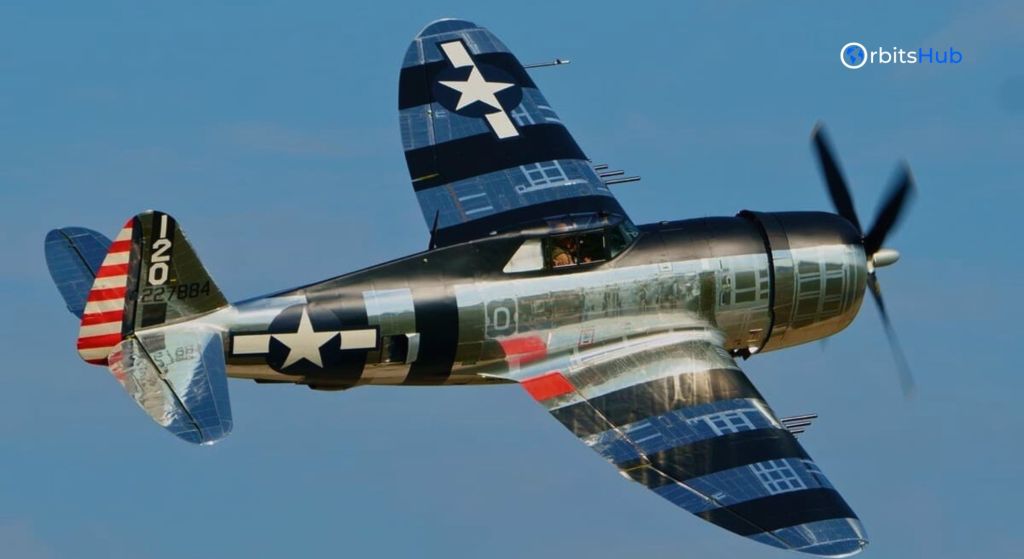
High-Altitude Escort: The Thunderbolt’s powerful engine and long range made it an ideal escort for heavy bombers like the B-17 Flying Fortress. The P-47s could shield these bombers from enemy fighters deep into German airspace.
Ground Attack: The P-47’s sturdy build and eight .50 calibre machine guns made it a devastating ground-attack aircraft. It could rain down fire on enemy tanks, troops, and infrastructure, disrupting their operations and turning the tide of land battles.
Rocket Launcher: Later variants of the P-47 sported underwing rocket launchers, adding even more punch to its ground attack capabilities.
Recon and Photo Reconnaissance: The P-47’s impressive range also made it suitable for reconnaissance missions, gathering vital intelligence about enemy positions.
The P-47’s diverse skillset made it a critical component of Allied airpower. No matter the mission, the “Jug” proved it could do the job.
Legacy of a Legend: The P47’s Enduring Impact
Over 15,600 P-47 Thunderbolts were produced during World War II, making it the most-produced American fighter aircraft of the war. It served with distinction in every major theatre – Europe, the Pacific, and the Mediterranean.
While overshadowed in popular culture by its sleek cousin, the P-51 Mustang, the P-47’s contribution to Allied victory cannot be understated. Here are some of its lasting impacts:
- Paved the Way for Future Fighters: The P-47’s powerful engine and rugged design laid the groundwork for future generations of fighter jets.
- Boosted Pilot Morale: Pilots adored the P-47’s reliability and toughness. Knowing they could take a hit and keep fighting gave them confidence.
- Symbolized American Airpower: The P-47’s imposing silhouette and raw power symbolized American air dominance during the war.
Facing Off Against the Luftwaffe: The P-47 in the European Theater
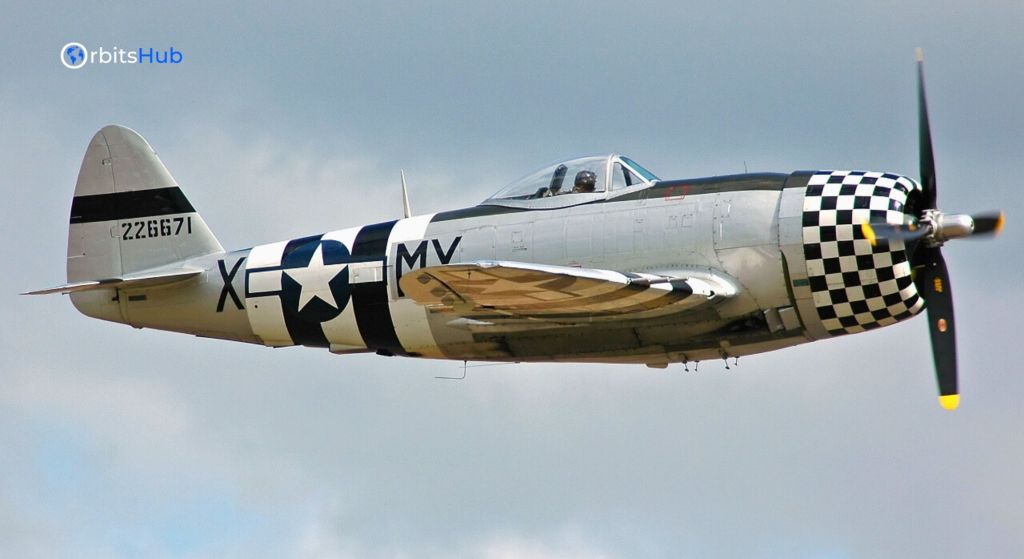
The P-47 saw extensive action in the European theatre, battling the formidable German Luftwaffe. Here’s a closer look at its role:
- Escorting the B-17: The P-47’s high-altitude performance made it the perfect escort for the B-17 Flying Fortress. They could escort these bombers deep into German airspace, fending off enemy fighters like the Messerschmitt Bf 109.
- D-Day Invasion: P-47s played a crucial role in the D-Day invasion, providing close air support to Allied troops storming the beaches of Normandy. Their firepower helped suppress German defences and pave the way for Allied advancement.
- Dueling with Aces: The P-47 faced off against some of the Luftwaffe’s most skilled pilots, including aces like Franz Schiefer and Erich Hartmann. While not the most agile fighter, the P-47’s firepower and durability made it a formidable opponent in a dogfight.
The P47 Tunderbolt – A Testament to Innovation and Ingenuity
The P47 Tunderbolt represents American innovation and engineering prowess during World War II. This versatile and robust aircraft played a critical role in securing Allied victory.
Are you intrigued by the history of aviation and maritime technology? OrbitsHub, a leading marine and aviation consultancy services company, can help you explore further. We cover everything from analysis and research to consultancy and strategic planning. Visit OrbitsHub today to learn how we can empower your next aviation or maritime venture.