The relentless pursuit of technological innovation has always been a defining characteristic of military aviation. From the Wright Brothers’ first tentative flight to the supersonic jets that dominate the skies today, fighter jets have consistently pushed the boundaries of what’s possible. But with so many contenders vying for the title of “most advanced,” which jet truly reigns supreme? This isn’t just a question of raw power and speed. Modern fighter jets are marvels of engineering, integrating cutting-edge technologies like stealth, advanced avionics, and artificial intelligence (AI). These advancements not only influence the outcome of aerial battles but also reshape the very nature of warfare.
Contenders for the Crown: A Look at Most Advanced Fighter Jet
Several modern aircraft could be considered the most advanced fighter jets. Here are a few of the top contenders:
- F-35 Lightning II (USA): This multirole fighter boasts stealth capabilities, advanced avionics, and a powerful engine. Its sleek design minimizes radar signature, making it difficult for enemies to detect. The F-35 also features a helmet-mounted display system that provides pilots with 360-degree situational awareness, giving them a significant edge in dogfights.
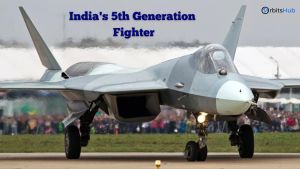
- Sukhoi Su-57 (Russia): The Su-57, also known as the Felon, is Russia’s answer to the F-35. This fighter jet boasts a unique design with forward-canted wings, which enhance its manoeuvrability. Additionally, the Su-57 is equipped with advanced sensors and avionics, allowing it to track and engage multiple targets simultaneously.
- Chengdu J-20 (China): China’s J-20, or “Mighty Dragon,” is another stealthy fighter jet with a formidable presence. While details about its capabilities remain somewhat shrouded in secrecy, the J-20 is believed to possess advanced radar-evading technology and a powerful weapon system.
These are just a few examples, and the debate about the most advanced fighter jet will likely continue for years. Each aircraft has its strengths and weaknesses, and the “best” fighter ultimately depends on the specific needs and priorities of the air force operating it.
Beyond Brute Force: Technology’s Role in Modern Warfare

Modern fighter jets are engineering marvels, but raw power isn’t the only factor determining their effectiveness. Here are some of the crucial technological advancements that are shaping the future of air combat:
- Artificial Intelligence (AI): AI rapidly transforms how wars are fought. Future fighter jets may incorporate AI systems to assist pilots with tasks like threat detection, target acquisition, and even autonomous flight in high-risk situations.
- Hypersonic Weapons: The advent of hypersonic missiles, which may reach speeds greater than Mach 5 (five times the speed of sound), has the potential to alter aerial warfare completely. These weapons can pierce through traditional air defences, making them a significant force multiplier.
- Cybersecurity: As fighter jets increasingly rely on advanced computer systems, cybersecurity becomes paramount. Protecting these systems from hacking attempts is crucial in ensuring the integrity and effectiveness of modern air forces.
These advancements, along with many others, are reshaping aerial warfare. Fighter jets are no longer just high-performance aircraft; they are complex flying weapon systems that rely on cutting-edge technology to achieve dominance in the skies.
Dogfight vs. Beyond Visual Range (BVR) Combat: How Technology is Changing Tactics
This can delve into the evolving nature of aerial combat. Traditionally, fighter jets engaged in close-quarters dogfights, relying on manoeuvrability and pilot skill. However, advancements in radar technology and long-range missiles have shifted the focus towards BVR combat, where pilots engage targets from much greater distances. Explore how technology is impacting aerial combat tactics, discussing concepts like:
- Fire-and-forget missiles lock onto targets before launch, allowing pilots to disengage after firing.
- Active electronically scanned array (AESA) radars provide superior target detection and tracking capabilities, crucial for BVR engagements.
- Data fusion: Fighter jets integrate information from various sensors, giving pilots a comprehensive picture of the battlespace.
The Ethical Considerations of Advanced Fighter Jets

This can address the ethical questions surrounding developing and using advanced fighter jets. Discuss topics such as:
- The potential for autonomous weapons: With AI integration, the possibility of autonomous fighter jets raises concerns about accountability and unintended consequences.
- The cost of development: These jets come at a hefty price tag, sparking discussions about resource allocation and priorities.
- The risk of escalation: Highly advanced fighter jets may lower the threshold for conflict, increasing the risk of war.
The race to develop the most advanced fighter jet is a testament to the power of human ingenuity. Due to the extraordinary rate at which technology is advancing, we should anticipate the introduction of even more advanced and breathtaking aircraft shortly. The impact of these advancements extends far beyond the battlefield. The research and development into creating these fighter jets often leads to breakthroughs in civilian aviation and other fields. Fueled by technological innovation, the pursuit of aerial supremacy ultimately benefits humanity.
Do you want to learn more about cutting-edge aviation and maritime technology advancements? OrbitsHub, a leading consultancy service company specializing in these domains, can be your one-stop shop. Explore OrbitsHub to discover how their expertise can empower your organization.