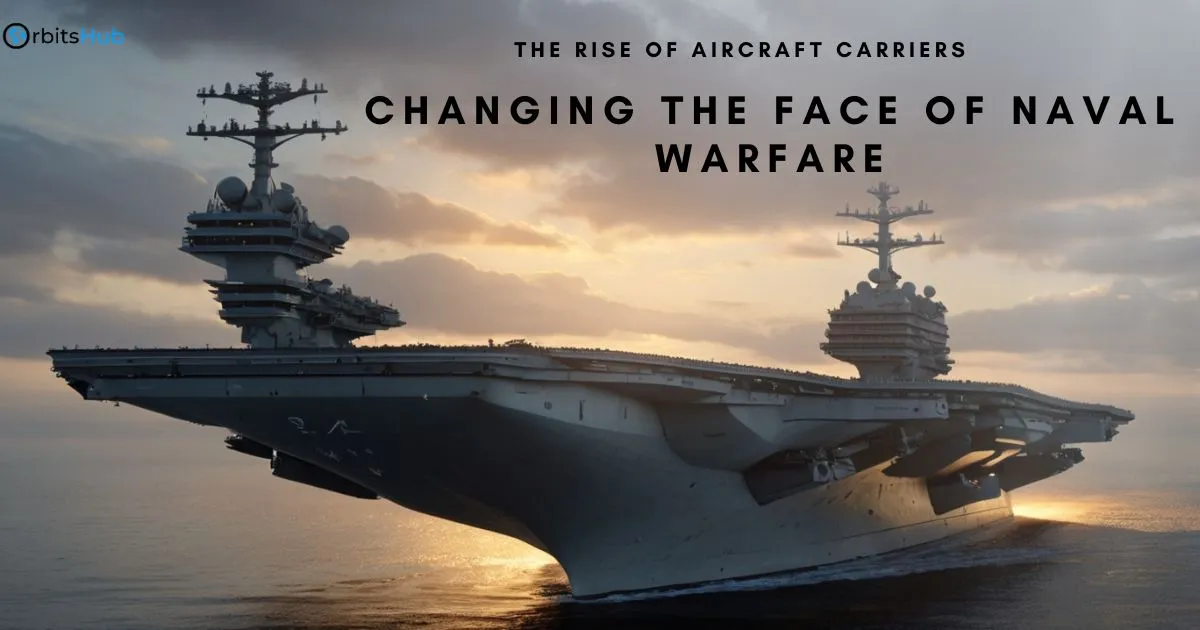
Each new technological development has pushed the limits of maritime might and strategy, leading to a tremendous evolution in naval combat throughout the centuries. Among the most significant developments in maritime history is the rise of the aircraft carrier. These floating airbases have transformed naval operations, offering unprecedented power projection and versatility on the high seas.
The Origins of Aircraft Carriers
They were using ships to launch aircraft dating back to the early 20th century. Initially, aircraft were used for reconnaissance and artillery spotting, but it soon became apparent that they could play a much more significant role in naval warfare. The HMS Argus, commissioned by the British Royal Navy in 1918, was the first aircraft carrier. It featured a full-length flight deck, allowing aircraft to take off and land directly on the ship. This innovation marked the beginning of a new era in naval warfare.
The Development and Deployment of Aircraft Carriers
The interwar period saw significant advancements in aircraft carrier design and capability. Countries like the United States, Japan, and the United Kingdom recognized the potential of these vessels and began investing heavily in their development. By the time World War II erupted, aircraft carriers had become the centerpiece of naval strategy.
World War II and the Aircraft Carrier’s Dominance
World War II was the proving ground for the aircraft carrier’s dominance in naval warfare. Japanese carrier-launched aircraft proved their lethal power during the 1941 Pearl Harbor attack. The subsequent battles in the Pacific Theater, such as the Battle of Midway, underscored the importance of carriers in determining the outcome of naval engagements. Aircraft carriers allowed for rapid deployment of air power, enabling navies to strike targets far beyond the range of traditional battleships.
The Shift from Battleships to Carriers
Before the rise of aircraft carriers, battleships were the pride of every navy, symbolizing naval supremacy. However, the effectiveness of carriers during World War II led to a fundamental shift in maritime strategy. The ability to project air power across vast distances and strike at enemy fleets from beyond the horizon made carriers the new capital ships of the world’s navies. Once considered the pinnacle of naval power, battleships were gradually relegated to secondary roles or scrapped altogether.
Aircraft Carriers in the Cold War Era
The Cold War further cemented the aircraft carrier’s role in modern naval warfare. The United States, in particular, invested heavily in carrier groups to project power and deter potential adversaries. Aircraft carriers became symbols of American military might, capable of launching strikes anywhere worldwide at a moment’s notice.
The Evolution of Carrier Technology
As technology advanced, so did the capabilities of aircraft carriers. Introducing nuclear-powered airlines like the USS Enterprise allowed extended deployments without refueling. The development of advanced radar and missile systems enhanced the carrier’s defensive capabilities, making them formidable platforms for offense and defense.
The Role of Aircraft Carriers in Modern Conflicts
Aircraft carriers have been pivotal in international battles since the Cold War ended. From the Gulf War to the War on Terror, carriers have provided the United States and its allies with the ability to conduct airstrikes, support ground operations, and enforce no-fly zones. Their versatility and mobility make them indispensable assets in conventional and asymmetric warfare.
Carrier Strike Groups: The Modern Naval Powerhouse
Modern aircraft carriers operate with others. Carrier strike groups (CSGs) are led by these ships and augmented by destroyers, cruisers, and submarines. These groups protect the carrier and enhance its offensive and defensive capabilities. The synergy between these vessels allows for a multi-dimensional approach to naval warfare, combining air, surface, and subsurface operations.
The Future of Aircraft Carriers

As we look to the future, aircraft carriers’ role in naval warfare will likely evolve further. Advances in technology, changing geopolitical dynamics, and new threats will shape the development and deployment of these vessels in the coming decades.
The Impact of Unmanned Aerial Vehicles (UAVs)
Drones and other unmanned aerial vehicles (UAVs) have become increasingly common in contemporary conflict. Among the many benefits offered by these systems are decreased operational expenses, increased endurance, and reduced risk to human pilots. As UAV technology advances, aircraft carriers will likely be equipped with more drones, enhancing their surveillance, strike, and electronic warfare capabilities.
The Challenge of Hypersonic Missiles
While aircraft carriers remain dominant on the seas, they face new challenges from emerging technologies. Hypersonic missiles, which travel at speeds greater than five times the speed of sound, pose a significant threat to carrier strike groups. These missiles are difficult to detect and intercept, making them formidable adversaries. As a result, navies are investing in advanced defensive systems, such as laser weapons and electronic countermeasures, to protect their carriers from this new generation of threats.
The Role of Carriers in Great Power Competition
In this resurgent excellent power competition age, national defense tactics will still heavily rely on aircraft carriers. Countries like China and Russia are expanding their naval warfare capabilities, including developing carrier fleets. This has led to an arms race, with nations seeking to maintain or establish dominance on the high seas. The United States, with its fleet of nuclear-powered supercarriers, remains the global leader, but the competition is fierce.
The rise of aircraft carriers has undeniably changed the face of naval warfare. From their humble beginnings in the early 20th century to their current status as the centerpiece of modern maritime strategy, carriers have revolutionized how wars are fought at sea. Their ability to project power, provide air support, and adapt to new technologies ensures that they will remain a crucial component of naval forces for the foreseeable future.
As we move into an era of advanced technology and shifting geopolitical landscapes, the role of aircraft carriers will continue to evolve. Navies worldwide must adapt to new threats and opportunities, ensuring these floating fortresses remain at the cutting edge of military capability.
For more insights into naval warfare and maritime strategy, explore the expertise offered by Orbitshub, a leading maritime services company. Whether you’re seeking consultancy services or in-depth analysis of naval trends, Orbitshub is your go-to source for all things maritime.