Aircraft go to the skies at breakneck speeds thanks to technological wonders known as Jet engines. Understanding how these engines work is a fascination for aviation enthusiasts and a fundamental aspect of appreciating the technology behind air travel. This delves into the science behind jet engines’ operation, breaking down complex concepts into easily digestible explanations.
How Jet Engines Work
Components of a Jet Engine

A jet engine comprises several key components working in harmony to generate thrust:
- Intake System
- Purpose: Air enters the engine through the intake, which is compressed before entering the combustion chamber.
- Function: The intake system ensures a steady airflow into the engine, which is crucial for efficient operation.
- Compressor
- Purpose: The compressor squeezes the incoming air to increase pressure and prepare it for combustion.
- Types: Discuss axial and centrifugal compressors, highlighting their differences in efficiency and application.
- Efficiency Considerations: Explain how modern compressors are designed to achieve higher compression ratios for improved engine performance.
- Combustion Chamber
- Purpose: Fuel is injected into the compressed air and ignited, creating a controlled explosion.
- Process: Explain the combustion process, including fuel injection and ignition systems.
- Materials and Design: Discuss the materials used in combustion chambers to withstand high temperatures and pressures.
- Turbine
- Purpose: The turbine converts the energy from hot, high-pressure gases into mechanical energy to drive the compressor and other engine components.
- Types: Differentiate between high-pressure and low-pressure turbines, emphasizing their roles in engine performance.
- Blade Design: Explore the aerodynamics of turbine blades and their impact on engine efficiency.
- Exhaust Nozzle
- Purpose: The exhaust nozzle directs the high-speed exhaust gases to generate thrust.
- Design: Discuss variable geometry nozzles and their effects on thrust efficiency at different speeds and altitudes.
- Noise Reduction: Explain how nozzle design reduces engine noise levels, crucial for commercial and residential areas near airports.
Types of Jet Engines
Turbojet Engines
Turbojet engines are the simplest form of jet engine, consisting of a compressor, combustion chamber, turbine, and nozzle. They are known for their high speeds but are less fuel-efficient than other types.
Turbofan Engines
The commercial aviation industry relies heavily on turbofan engines. They operate on the same principles as turbojets but have an additional fan at the front that bypasses some air around the engine core. This bypass airflow increases efficiency and reduces noise, making them ideal for long-distance flights.
High-bypass vs Low-Bypass Turbofans
- High-Bypass Turbofans: Explain how these engines are optimized for fuel efficiency and lower noise levels, making them suitable for passenger jets.
- Low-Bypass Turbofans: Discuss their application in military aircraft and smaller commercial jets, focusing on their higher thrust-to-weight ratio.
Turboprop Engines
Turboprop engines are similar to turbofans but use turbine power to drive a propeller instead of directly generating jet thrust. They are commonly found on smaller aircraft and provide excellent lower-speed efficiency.
The Science Behind Thrust Generation
Newton’s Third Law of Motion
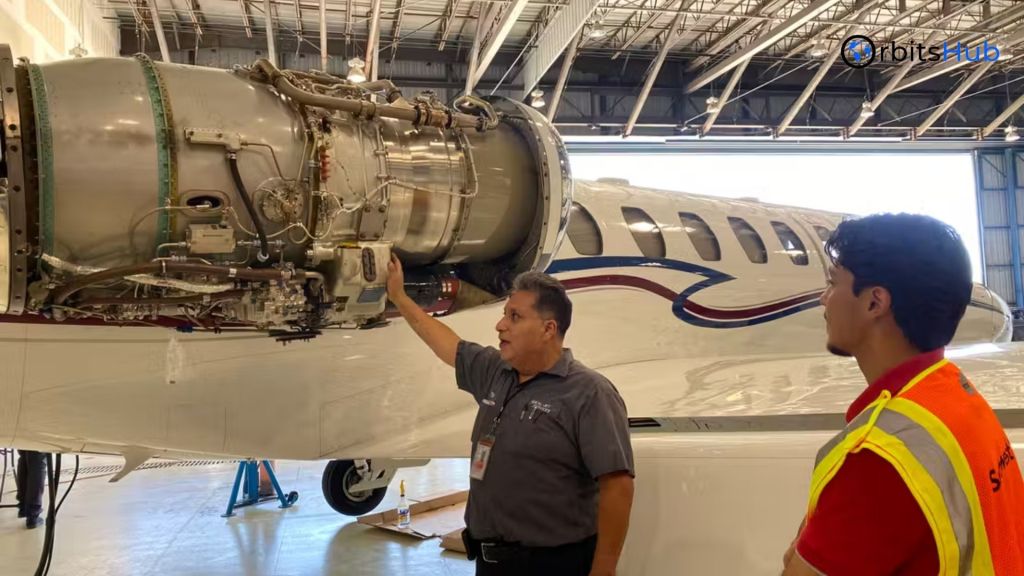
The fundamental principle behind jet engine thrust is Newton’s third law of motion, which states that there is an equal and opposite reaction for every action. In the case of a jet engine, the action is the expulsion of high-speed exhaust gases, and the reaction is the forward movement of the aircraft.
Efficiency and Performance Factors
- Thermal Efficiency: Discuss how modern jet engines optimize fuel combustion to achieve higher thermal efficiency, reducing fuel consumption and emissions.
- Propulsive Efficiency: Explain the concept of propulsive efficiency, considering factors like airspeed, altitude, and engine design.
Environmental Impact and Future Developments
- Emissions Control: Explore technologies and regulations to reduce jet engine emissions, such as advanced fuel injection systems and exhaust treatment technologies.
- Future Trends: Discuss ongoing research and development in jet engine technology, including advancements in materials, propulsion systems, and hybrid-electric propulsion.
Jet Engine Performance Metrics
- Thrust-to-Weight Ratio: Explain how this ratio impacts aircraft performance and efficiency.
- Specific Fuel Consumption: Discuss the measurement and significance of SFC in evaluating engine efficiency.
- Power Output and Efficiency: Explore how power output and efficiency metrics are calculate and their importance in aircraft operations.
Advanced Technologies in Jet Engine Design
- Composite Materials: Discuss the use of composite materials in jet engine components and their benefits.
- Geared Turbofan Engines: Explain how geared turbofan engines improve fuel efficiency and reduce noise.
- Variable Cycle Engines: Explore the concept of variable cycle engines and their potential impact on future aviation technology.
Impact of Jet Engines on Aviation and Global Connectivity
- Historical Context: Explore how the advent of jet engines revolutionized air travel in the mid-20th century.
- Economic Impact: Discuss the benefits of faster air travel enabled by jet engines, such as increased trade and tourism.
- Global Connectivity: Analyze how jet engines have facilitated worldwide connectivity and cultural exchange.
Maintenance and Safety Considerations in Jet Engine Operations
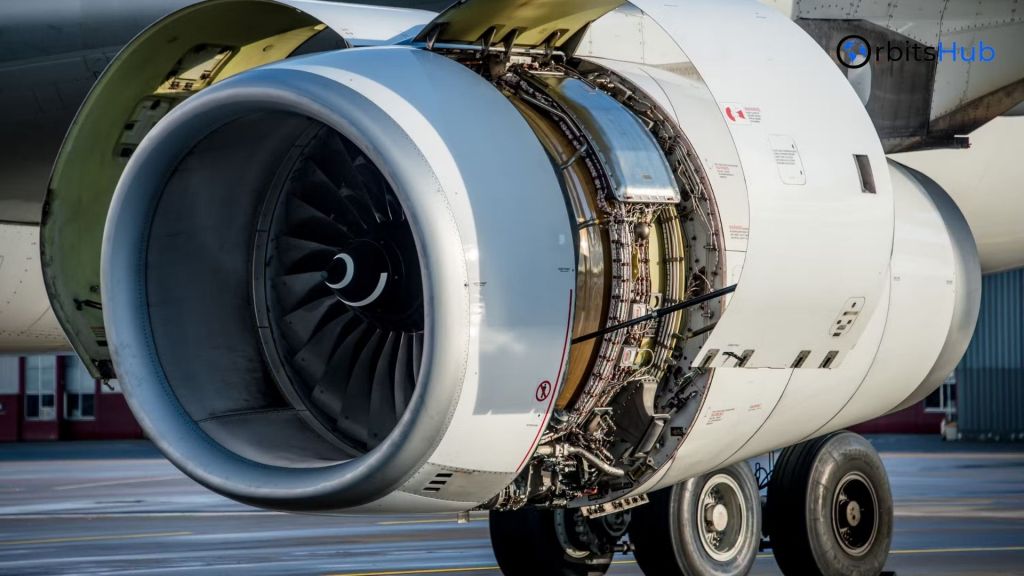
- Routine Maintenance Practices: Explain standard maintenance procedures required for jet engines to ensure reliability and safety.
- Safety Standards: Discuss the rigorous safety standards and regulations governing jet engine design, manufacturing, and operation.
- Emerging Technologies: Explore innovative technologies such as predictive maintenance and real-time diagnostics to enhance jet engine reliability.
Jet engines represent the pinnacle of aerodynamic engineering, enabling rapid global transportation and military superiority. By understanding the intricate workings of these engines—from intake to exhaust—we gain a deeper appreciation for the complexity and efficiency of modern aviation technology.
To explore the fascinating world of aviation and technology, visit our website, OrbitsHub.