Few stories captivate the imagination in the annals of maritime history quite like that of the unsinkable ship. It’s a tale that speaks to human ambition, technological prowess, and the unforgiving nature of the sea. Our story begins in the bustling shipyards of Belfast, where dreams of grandeur take shape in steel and rivets.
The Birth of a Legend
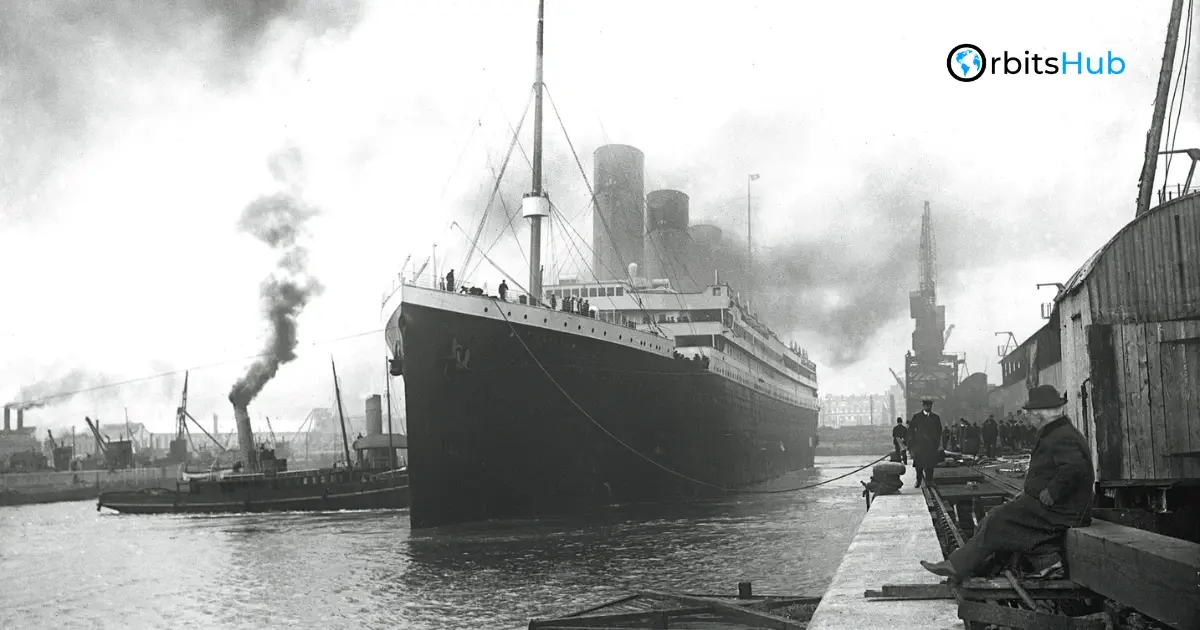
The year is 1909, and the race for transatlantic supremacy is in full swing. White Star Line, determined to outdo its rivals, commissions a trio of Olympic-class ocean liners. A colossus that will soon capture the world’s attention stands among them—the RMS Titanic.
As workers toil day and night, hammering and welding, a buzz grows around this maritime marvel. Rumors about its unparalleled grandeur and opulence quickly disseminate. “She’s unsinkable,” they say, a claim that will echo through time with tragic irony.
The Titanic stretches an impressive 882 feet long and towers 175 feet high. The Titanic’s unsinkable reputation stems from her hull, which divides into sixteen supposedly watertight compartments. Engineers boast that even if four of these compartments flood, the ship will remain afloat. This bold claim feeds into the hubris surrounding the vessel.
Titanic: By the Numbers
To truly grasp the scale of the Titanic and the tragedy that unfolded, let’s examine some key statistics:
Titanic: By the Numbers
These numbers paint a stark picture of the Titanic’s immense size, the scale of the disaster, and the harsh conditions faced by those aboard during its final hours.
A Monument to Luxury
As construction progresses, the Titanic transforms into a floating palace. First-class suites rival the finest hotels on land. The grand staircase, adorned with ornate carvings and topped by a magnificent glass dome, becomes the ship’s crown jewel. Even third-class accommodations surpass the standards of the day.
The ship’s amenities are equally impressive. A swimming pool, Turkish baths, a squash court, and a gym cater to the well-heeled passengers’ every whim. The Titanic isn’t just a means of transportation; it’s a statement of human achievement and luxury.
The Maiden Voyage

April 10, 1912 Southampton is excited as the Titanic prepares for her maiden voyage. Crowds gather to witness history in the making. The passenger list resembles a roster of prominent figures from early 20th-century society. Millionaires, aristocrats, and dreamers board the ship, all eager to be part of this historic journey.
As the Titanic pulls away from the dock, few can imagine the fate that awaits her. The atmosphere onboard is electric. Passengers marvel at the ship’s luxury, secure in the knowledge that they’re traveling on the safest vessel ever built.
Hubris Meets Ice
Four days into the voyage, on April 14, the Titanic steams full speed ahead through the North Atlantic. Despite warnings of ice in the area, Captain Edward Smith maintains course and speed. The night is clear and calm, and the sea is like glass—perfect conditions for spotting icebergs. Yet, overconfidence reigns.
At 11:40 PM, lookout Frederick Fleet spots an iceberg dead ahead. “Iceberg, right ahead!” he shouts. First Officer William Murdoch orders a swift turn to port and engines full astern. But it’s too late. A silent giant of ice confronts the unsinkable ship.
Titanic Collision Analysis
Watertight Compartments Status
Collision Timeline
The collision is more of a glancing blow than a head-on crash. Many passengers, tucked away in their cabins, barely notice. However, beneath the waterline, the Titanic’s fate becomes irreversible. The iceberg tears holes along her starboard side, breaching six of her sixteen waterproof compartments.
The Unthinkable Happens
As water pours into the ship, disbelief turns to panic. The unsinkable ship is sinking. Captain Smith recognizes the seriousness of the situation and directs the preparation of the lifeboats. But there’s a problem—the Titanic carries only enough lifeboats for about half of those onboard.
The following two hours and forty minutes unfold in chaos and eerie calm. As the bow dips lower into the frigid Atlantic, the stark reality of the situation becomes clear. The lifeboats prioritize women and children, while many men face the grim prospect of sinking with the ship.
The band plays on a poignant soundtrack to the unfolding tragedy. Acts of heroism and cowardice play out on the tilting decks. Some passengers refuse to believe the Titanic could sink, staying inside until it’s too late. Others fight desperately for a spot on the lifeboats.
The Final Plunge
At 2:20 AM on April 15, 1912, the unsinkable ship did the unthinkable. With a thunderous roar, the Titanic broke in two and plunged into the depths of the North Atlantic. The sea claimed the lives of over 1,500 souls, victims of nature’s might and human hubris.
As dawn breaks, the rescue ship Carpathia arrives on the scene. They find a handful of lifeboats bobbing in the calm sea, carrying just over 700 survivors. The world awakens to news of the disaster, struggling to comprehend how the unsinkable ship now lies at the bottom of the ocean.
Lessons Written in Ice
The sinking of the Titanic sends shockwaves through society. People launch investigations, point fingers, and ask hard questions. How could this happen? The answers reveal a confluence of hubris, oversight, and unfortunate circumstances.
The disaster led to significant changes in maritime safety, and ships had to carry enough lifeboats for all passengers. The establishment of the International Convention for the Safety of Life at Sea (SOLAS) establishes new standards for ship design and safety equipment.
The legend of the unsinkable ship becomes a cautionary tale, a reminder of the dangers of overconfidence and the importance of humility in the face of nature’s power. The Titanic’s story continues to fascinate, a testament to human ambition and a sobering reminder of its limits.
Legacy of the Unsinkable

In the years following the disaster, the Titanic became more than just a shipwreck. She transformed into a cultural icon, a symbol of the grandeur and folly of the Edwardian era. Books, movies, and documentaries kept her story alive, each generation finding new meaning in the tale of the unsinkable ship.
Explorers and scientists, driven by curiosity and advancing technology, eventually located and explored the Titanic’s wreck. The discovery in 1985 reignited public interest and provided new insights into the disaster. The ship’s remains, slowly succumbing to the ocean’s embrace, serve as a haunting memorial to those lost.
The story of the Titanic continues to resonate. It is a powerful reminder of the consequences of hubris and the unpredictable nature of life. It stands as a testament to human ingenuity and ambition and a stark warning against the dangers of overconfidence.
The Human Stories
Behind the grand narrative of the Titanic’s sinking lie countless personal stories of tragedy and survival. These individual accounts bring the disaster into sharp focus, reminding us of the human cost behind the statistics.
Consider the tale of Isidor and Ida Straus, co-owners of Macy’s department store. When offered a place on a lifeboat, Ida refused to leave her husband’s side, saying, “Where you go, I go.” As the ship plummeted, we last saw them arm in arm on the deck.
Then there’s the story of Charles Joughin, the ship’s baker, who claimed to have survived the frigid waters by drinking copious amounts of whiskey before the boat sank. Whether it was the alcohol or sheer luck, Joughin managed to survive in the icy water for hours before receiving rescue.
Margaret Brown, later known as the “Unsinkable Molly Brown,” took charge of her lifeboat, keeping spirits high and even threatening to throw the crewmen overboard if they didn’t return to search for survivors.
These stories, and many others like them, humanize the disaster. They remind us that behind every statistic was a person with hopes, dreams, and loved ones left behind.
The Titanic’s Impact on Popular Culture
The sinking of the Titanic has left an indelible mark on popular culture. It has inspired countless books, films, plays, and songs, each offering its own interpretation of the tragedy.
James Cameron’s 1997 epic “Titanic” brought the disaster to life for a new generation, combining historical accuracy with a fictional love story. The film’s success reignited public fascination with the ship and its fate.
Museums dedicated to the Titanic have sprung up worldwide, from Belfast to Branson, Missouri. These institutions allow visitors to return in time and experience the ship’s luxury and the terror of its final hours.
The disaster has spawned its own subgenre of alternative history, with writers imagining scenarios where the ship doesn’t sink or where its sinking changes the course of world events.
The Titanic Today
More than a century after its sinking, the Titanic captures our imagination. Expeditions to the wreck site have yielded new discoveries and insights, raising concerns about preserving this underwater memorial.
Recent surveys have shown that the Titanic is deteriorating rapidly. Saltwater and metal-eating bacteria are slowly consuming the ship, leading some experts to predict that the wreck could disappear entirely within a few decades.
Debates about whether to recover artifacts from the wreck or leave them undisturbed as a memorial to those who perished have sprung from this race against time.
Titanic II, a nearly exact replica of the original ship with modern safety features, was the subject of plans announced in 2020. This project, while controversial, speaks to the enduring fascination with the original vessel and its tragic story.
The Unsinkable Legacy
The tale of the Titanic serves as a powerful metaphor for human ambition and its limitations. It reminds us that nature always has the final say, no matter how advanced our technology or how confident our predictions are.
The disaster significantly improved maritime safety, potentially saving countless lives in the century since. In this way, the tragedy of the Titanic continues to protect seafarers.
Perhaps most importantly, the story of the unsinkable ship that sank is a humbling reminder of our fallibility. It serves as a warning against the perils of arrogance and fosters a healthy reverence for the laws of nature.
As we continue to push the boundaries of technology and exploration, the lesson of the Titanic remains relevant. It teaches us to temper our ambition with caution, our confidence with humility, and our pursuit of progress with respect for the unpredictable forces that shape our world.
In the end, the Titanic’s legacy is not just one of tragedy but of resilience, innovation, and the indomitable human spirit that drives us to learn from our mistakes and strive for a safer, more enlightened future.
Frequently Asked Questions
The Titanic carried 2,224 passengers and crew on her maiden voyage. Of these, more than 1,500 lost their lives when the ship sank. Although there has been debate over the exact numbers, these figures have gained widespread acceptance. The passenger manifest included some of the wealthiest people in the world, as well as hundreds of emigrants from Great Britain and Ireland, Scandinavia, and elsewhere in Europe seeking a new life in the United States.
The Titanic was considered unsinkable due to its advanced design and safety features. It had a double bottom and 16 waterproof compartments. Up to four compartment breaches could not prevent the ship from staying afloat. This led to Shipbuilder magazine declaring her “practically unsinkable.” However, this claim was more marketing hyperbole than scientific fact. Six compartments sustained damage from the iceberg, surpassing the ship’s design capacity. The waterproof bulkheads did not extend to the upper decks, allowing water to spill from one compartment to another once the bow was low enough. The ship’s overconfidence in its design contributed to the disaster by carrying insufficient lifeboats and failing to implement proper emergency procedures.