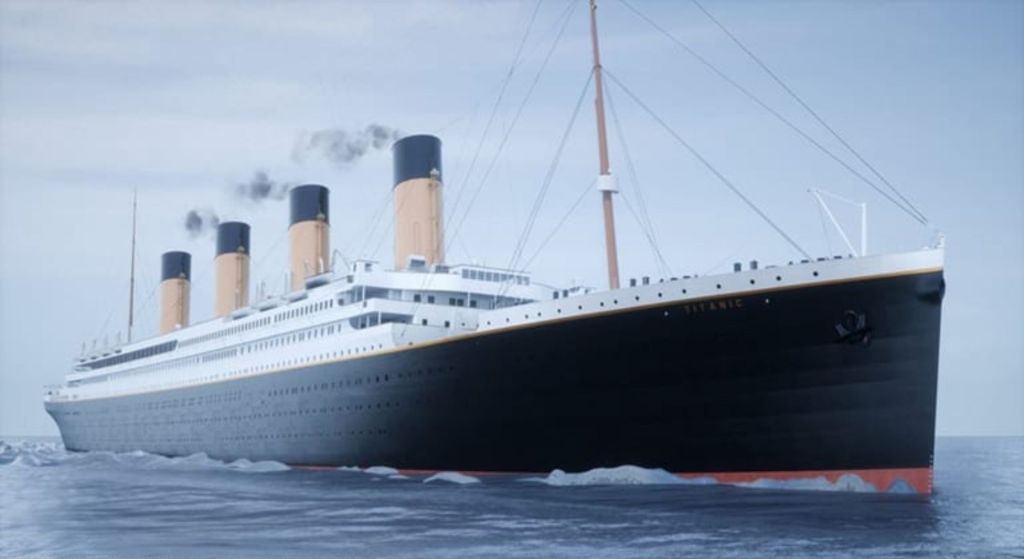
Replicated in modern times, the Titanic 2 Ship is a modern take on the famous ocean liner RMS Titanic, which sank in the North Atlantic Ocean in 1912. The new vessel will have a gross tonnage of 56,000 and a diesel-electric propulsion system, functioning as a working copy of the original Titanic. As the flagship of the projected cruise line Blue Star Line Pty. Ltd. of Brisbane, Australia, Australian billionaire Clive Palmer unveiled the idea in April 2012. The original plan was to start in 2016. However, it was postpone until 2018 and 2022. After a halt in 2015 due to a financial disagreement affecting the $500 million project, the project’s work was again underway in November 2018.
Design and Construction
At a projected cost of $500 million, CSC Jinling, located in Nanjing, China, is building the Titanic 2. The old ship was approximately 46,000 gross register tons (GRT), but the new ship will have a gross tonnage 56,000. 269.15 meters (883.0 feet) long, 32.2 meters (105 feet 8 inches) wide, and 53.35 meters (175.0 feet) high will be the dimensions of the new boat. With two Wärtsilä 12V46F and two Wärtsilä 8L46F diesel-electric engines, it will have ten decks and 48,000 kW (64,000 hp) of combined power. The ship can go as fast as 24 knots, or 44 km/h (28 mph). With 900 crew members, the Titanic 2 ship can accommodate 1,680 passengers (double capacity) and 2,435 passengers (maximum).

Comparison with the Original RMS Titanic
The Titanic 2 Ship replicates the original RMS Titanic, with several modifications to meet modern safety standards. The new ship will have modern passenger evacuation systems, digital navigation, the latest radar systems and satellite communications, Helideck, and top-deck gardens. The original steam plant (base on coal-fired boilers and steam engines) is replace by a diesel powerplant and diesel-electric propulsion. The new ship will be nearly identical to the RMS Titanic 2 Ship, with a length of 883 ft (270 m), just 2 inches longer than the original and 12 ft (3,7 m) more expansive to increase stability.
Criticism
There have been some who have criticized the Titanic 2 Ship. Some surviving passengers’ relatives criticized the replica ship effort as being inappropriate. But the public has also shown great interest in the project; Blue Star Line has received a deluge of inquiries from prospective clients, some of whom offer up to GBP 640,000 to reserve a spot on Titanic 2’s inaugural cruise.
What are the safety features of Titanic 2?
The Titanic 2 Ship is design with modern safety features that meet or exceed contemporary maritime regulations. The ship will have advanced navigation systems, technologically enhanced lifeboats, and other safety measures. The boat is being built with the lessons learn from the tragic sinking of the original Titanic, making it a safer vessel for the modern era. Unfortunately, I could not find more detailed information on the safety features of the Titanic 2 Ship.
Power Plant and Propulsion
The Titanic 2 Ship will be power by a diesel-electric propulsion system, unlike the original Titanic, which had a steam plant based on coal-fired boilers and engines. The new ship will have two Wärtsilä 12V46F and two Wärtsilä 8L46F diesel-electric engines, producing a combined power of 48,000 kW (64,000 hp). The boat can go as fast as 24 knots, or 44 km/h (28 mph).
Interior
The Titanic 2 Ship is design to be as similar to the Titanic as possible in internal and external appearance. The ship will have modern passenger evacuation systems, digital navigation, the latest radar systems and satellite communications, Helideck, and top-deck gardens. The vessel will have 840 passenger staterooms, with passengers picking first, second, or third-class tickets.
The Titanic 2 will feature state-of-the-art safety protocols, including advanced lifeboat and life raft systems and comprehensive emergency response procedures. The ship’s design will incorporate lessons learned from maritime disasters, ensuring the highest passenger safety and security standards are met.
FAQ’s
1. What is the Titanic 2 Ship?
A functional contemporary emulation of the Olympic-class RMS Titanic, the Titanic 2 Ship is a projected passenger ocean liner.
2. Who is building the Titanic 2 Ship?
The Titanic 2 Ship in China is being construct by the CSC Jinling Shipyard, following the construction plans and specifications of the original Titanic 2.
3. When will the Titanic 2 Ship be launched?
The launch date for the Titanic 2 Ship has yet to be announced. The original plan was to set sail in 2016, but the build never got off the ground due to financial disputes. Design work and wave testing on an ocean liner model reportedly started during the fall of 2018.
4. What is the cost of the Titanic 2 Ship?
The Titanic 2 Ship will reportedly cost about $500 million.
5. What is the itinerary of the Titanic 2 Ship?
Passengers will travel from Southampton, England, to New York City on the new ship, following the same itinerary as the Titanic. According to some accounts, it will make its maiden voyage from Dubai to Southampton and then to New York City, after which it would regularly revert to the original Titanic route.
6. How many passengers and crew members can the Titanic 2 Ship accommodate?
Like the original, the Titanic 2 Ship will accommodate 2,400 passengers and 900 crew members.
7. What are the features of the Titanic 2 Ship?
The Titanic 2 Ship will have an identical cabin layout and the same architecture, interiors, and luxury finishes as Titanic. Even the same class categories – First, Second, and Third – will be made available. The new ocean liner will have modern navigation tools, a wider hull for extra stability, and enough lifeboats and vests.

The Titanic 2 Ship is a modern-day replica of the iconic ocean liner RMS Titanic, with several modifications to meet modern safety standards. The 56,000-ton Titanic replica will use diesel-electric power. The boat is being built by CSC Jinling, Nanjing, China, and is expected to cost $500 million. The Titanic 2 will carry 1,680 people (double capacity) and 2,435 (maximum) with 900 crew. The new ship is expect to enter service in 2024 or 2025.