Imagine a place vaster than a small city, a colossal hub where thousands of people flow through every day and where journeys begin and end – that’s the world of a large airport. These behemoths of the aviation industry handle a staggering volume of passengers and cargo, serving as vital links connecting continents and cultures. Today, we embark on a voyage of discovery to explore the top 10 biggest airports in the world based on land area. Buckle up and get ready to be amazed by the sheer scale of these incredible facilities! Here’s a glimpse into the top 10 largest airports globally, ranked by land area:
1. King Fahd International Airport (Dammam, Saudi Arabia)

Taking the crown for the world’s biggest airport is King Fahd International Airport (DMM) in Dammam, Saudi Arabia. The land size of this enormous enterprise is an astounding 780 square kilometres or 301 square miles! Five passenger terminals, a large cargo facility, and a Royal Terminal reserved for the Saudi royal family are all part of DMM, which has been there since 1999. King Fahd International Airport is a significant hub for Saudi Arabian Airlines and caters to domestic and international destinations.
2. Denver International Airport (Denver, Colorado, USA)

The “Mile High City” of Denver, Colorado, houses the United States’ biggest airport – Denver International Airport (DEN). Spanning an impressive 135.7 square kilometres (52.8 sq mi), DEN is a central hub for United Airlines and Frontier Airlines. Opened in 1995, the airport has been the subject of intrigue due to its unusual design and conspiracy theories surrounding its construction. However, there’s no denying its status as a vital passenger and cargo gateway for the central United States.
3. Dallas/Fort Worth International Airport (Dallas-Fort Worth, Texas, USA)

When it comes to airports, Texas is unmatched. Third on our list is the vast 79 square kilometres (30.5 sq mi) of Dallas/Fort Worth International Airport (DFW) in Texas. This behemoth is a central hub for American Airlines and a significant passenger and cargo aircraft traffic centre. DFW is known for its six parallel runways, allowing for a high volume of aircraft operations.
4. Orlando International Airport (Orlando, Florida, USA)
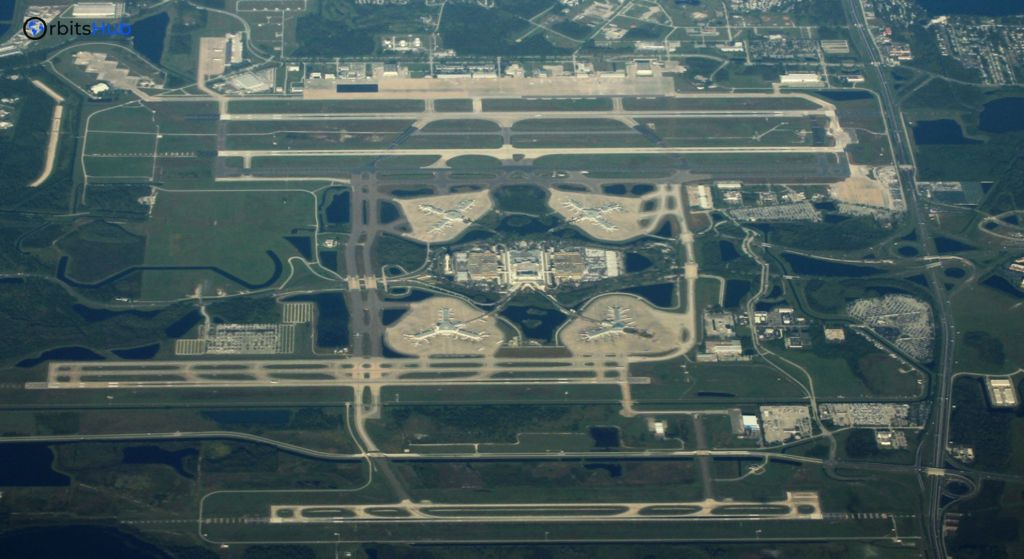
Florida’s “Sunshine State” is a popular tourist destination, and Orlando International Airport (MCO) reflects that reality. A significant entry point for Walt Disney World, Universal Orlando, and other famous tourist destinations, this expansive airport encompasses 53.8 square kilometres (20.8 sq mi). MCO is a hub for several airlines, including Southwest Airlines, Spirit Airlines, and JetBlue Airways.
5. Washington Dulles International Airport (Washington D.C., USA)
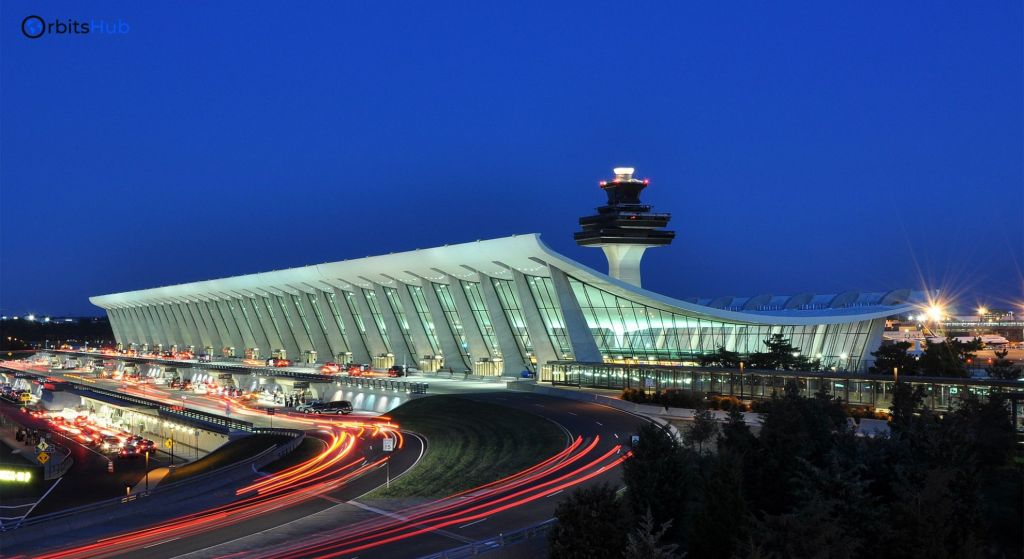
The nation’s capital, Washington D.C., is well-connected by air thanks to Washington Dulles International Airport (IAD). This airport, encompassing 48.6 square kilometres (18.8 sq mi), is a central hub for United Airlines and is a vital link for international travellers arriving in the United States. IAD is known for its modern facilities and efficient operations.
6. Beijing Daxing International Airport (Beijing, China)

China’s rapid economic growth is reflected in its world-class infrastructure, and Beijing Daxing International Airport (PKX) is a prime example. This colossal airport, spanning 46.6 square kilometres (18 sq mi), features a stunning starfish-shaped terminal design and is a central hub for China Eastern Airlines and China Southern Airlines. When it opens in 2019, Beijing Daxing International Airport will significantly participate in air travel worldwide.
7. George Bush Intercontinental Airport (Houston, Texas, USA)

Covering 44.5 square kilometres (17.2 sq mi), IAH is a central hub for United Airlines and a critical gateway for the energy industry concentrated in Houston. The airport is known for its extensive international connections and focus on passenger comfort and amenities.
8. Cairo International Airport (Cairo, Egypt)

As the busiest airport in Africa, Cairo International Airport (CAI) in Egypt is crucial in connecting the continent to the rest of the world. Spanning 37 square kilometres (14.3 sq mi), CAI is a central hub for EgyptAir and serves numerous international airlines. As the region’s air travel needs grow, the airport is experiencing major modernization projects.
9. Suvarnabhumi Airport (Bangkok, Thailand)
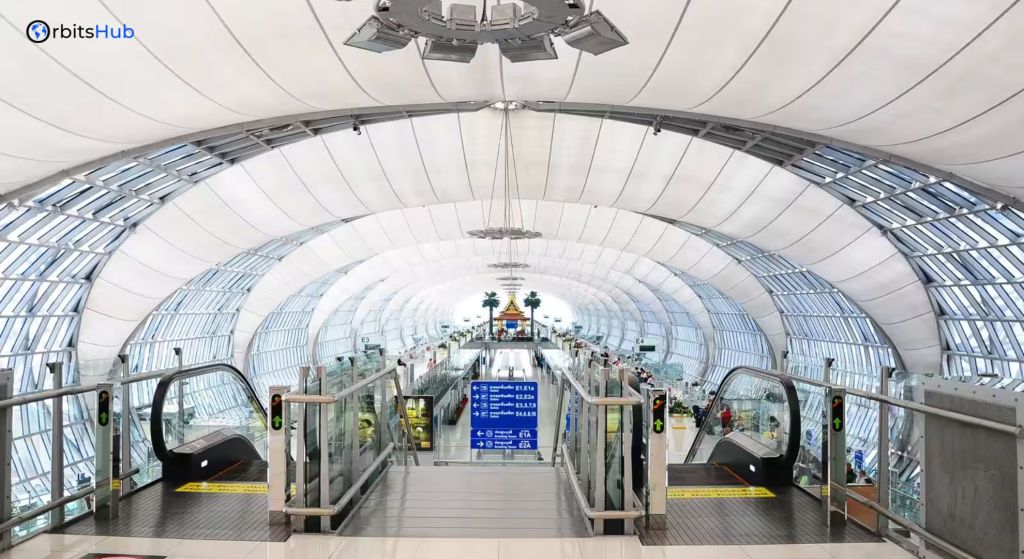
Bangkok, a popular tourist destination in Southeast Asia, is served by Suvarnabhumi Airport (BKK). This airport, which covers approximately 32 square kilometres (12.4 sq mi), is a significant hub for Thai Airways International and a key gateway to Southeast Asia. Suvarnabhumi Airport is known for its modern facilities, duty-free shopping options, and efficient passenger handling.
10. Shanghai Pudong International Airport (Shanghai, China)
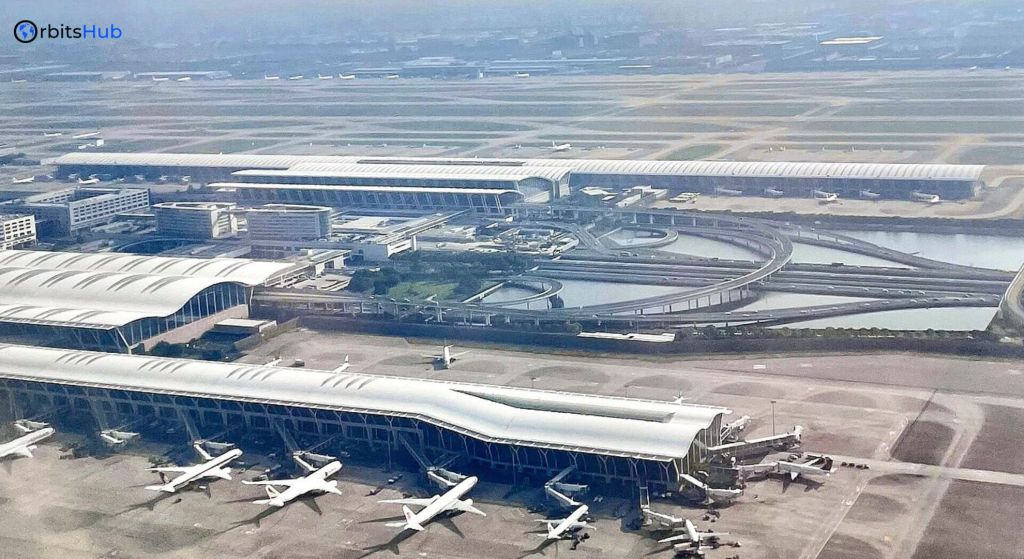
China’s economic powerhouse, Shanghai, boasts a major international airport – Shanghai Pudong International Airport (PVG). Encompassing 40 square kilometres (15.4 sq mi), PVG is a central hub for China Eastern Airlines and Shanghai Airlines. The airport is also a significant centre for cargo traffic, ranking among the busiest cargo airports globally. Pudong International Airport is a vital link connecting Shanghai to the world and plays a crucial role in China’s economic growth.
Beyond Size: The Importance of Airport Efficiency
While size is a fascinating aspect of these mega-airports, their true significance lies in their ability to handle a massive volume of passengers and cargo efficiently. These aviation industry giants play a critical role in global trade, tourism, and international connectivity.
Are you intrigued by the complexities of global air travel and airport operations? OrbitsHub, a leading maritime and aviation consultancy, can be your guide. Our group of professionals knows a lot about the aircraft business. You can learn a lot about how to run airports, how air traffic control works, and what the future holds for flying. Explore to learn more about how OrbitsHub can empower your understanding of the ever-evolving world of aviation.