

Port of Miami: The World’s Cruise Capital
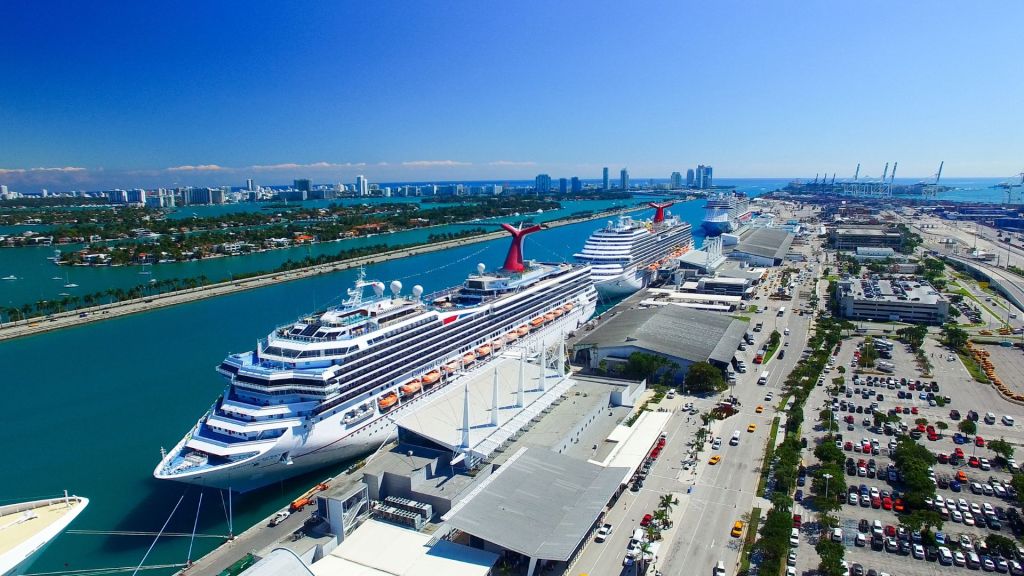
The Port of Miami, located at the southeastern tip of Florida, is a vital gateway to the Americas. Known as the “Cruise Capital of the World,” it is one of the busiest ports globally, catering to millions of passengers and significant cargo volumes each year. This bustling port serves as a major hub for international trade, connecting the United States to Latin America and beyond. The Port of Miami is still an important part of the region’s economy and growth because it has modern buildings and is in a good spot.
History: Port of Miami
The Port of Miami, officially established in 1926, evolved from a shallow natural harbor to become one of the world’s busiest ports. Initially focused on cargo, it expanded significantly post-World War II and embraced the cruise industry in the 1970s, earning the nickname “Cruise Capital of the World.” Through continuous development, including deeper channels and modernized facilities, the port has become a major economic driver for Miami-Dade County and Florida, balancing cargo operations with a thriving cruise business while implementing environmental initiatives in recent years.
Infrastructure
The Port of Miami, also known as PortMiami, is a major seaport located in Biscayne Bay, Florida. Key infrastructure elements include:
- Cargo facilities: Features multiple gantry cranes and a large container yard.
- Cruise terminals: Houses several modern cruise terminals to accommodate large passenger ships.
- Channel depth: Maintains a 52-foot deep channel, allowing access for Post-Panamax vessels.
- On-dock rail: Offers direct rail access via the Florida East Coast Railway.
- Roadway connections: Connected to the mainland by the PortMiami Tunnel and bridges.
- Security: Utilizes advanced security systems and follows ISPS Code regulations.
Key Features and Statistics
- Cargo Tonnage: Over 10 million tons (2022)
- Container Throughput (TEUs): 1.25 million+ (2022)
- Cruise Passengers: Estimated to exceed 6 million (2022)
- Economic Impact: Estimated to exceed $43 billion (2022)
- Employment: Over 334,500 jobs supported (likely higher in 2022)
- Vessels Handled Annually: Information not readily available, but likely consistent with previous years
- Cargo Diversity: Containerized cargo (major focus), breakbulk, vehicles, and refrigerated cargo.
- Cruise Industry: World’s busiest cruise port, home to major cruise lines.
- Infrastructure: Deepwater access, on-dock rail, intermodal connections, multiple cargo and cruise terminals.
- Governance: Miami-Dade County
Port Everglades: South Florida’s Powerhouse

Port Everglades, situated in Fort Lauderdale, Florida, is a crucial trade hub in the southeastern United States. It is known for having deep-water access and world-class facilities, and it handles a lot of cargo, such as oil, containers, and cruise guests. Port Everglades is one of the busiest ports in Florida. It is very important for foreign trade, especially with Latin America and the Caribbean. It is an important economic engine for the area because of its strategic location and efficient operations.
History: Port Everglades
Port Everglades, located in Broward County, Florida, was officially established in 1927. Originally a shallow, mangrove-fringed inlet, it was dredged and developed into a deep-water port. The port’s name comes from the “ever-glades” to the west. It grew rapidly during World War II as a naval base and continued to expand in the post-war era. Port Everglades became a major petroleum import hub and later developed into a significant cargo and cruise port.
Infrastructure
In Fort Lauderdale, Florida, Port Everglades is a very important harbor. Its infrastructure has evolved significantly since its establishment in the 1920s:
- Cargo facilities: Features multiple deep-water berths and a large container yard with state-of-the-art gantry cranes.
- Cruise terminals: Houses several modern cruise terminals, reflecting its growth as a major cruise port since the 1960s.
- Petroleum handling: Includes dedicated petroleum handling facilities, a legacy of its early focus ooil trade.
- Channel depth: Maintains a 48-foot deep channel, recently deepened to accommodate larger vessels.
- Intermodal connections: Offers on-port rail access and direct highway connections, developed over decades to improve logistics.
- Foreign Trade Zone: Encompasses a large Foreign Trade Zone, enhancing its role in international commerce.
- Environmental initiatives: Implements various green initiatives, including shore power capabilities, showcasing its adaptation to modern environmental concerns.
Key Features and Statistics
- Economic Impact: $26.5 billion
- Employment: Supports 10,778 direct local jobs and 192,688 jobs statewide
- Cruise Passengers: 3.6 million (estimated)
- Container Throughput (TEUs): 1 million+
- Cargo Tonnage: 7.3 million tons
- Cargo Diversity: Containerized cargo, petroleum, cement, steel, sugar, molasses
- Cruise Industry: Ranked among the top three busiest cruise homeports globally.
- Infrastructure: Deepwater access, on-dock intermodal rail, multiple terminals for cargo and cruise operations
- Governance: Broward County Port Everglades Department
Port of Tampa Bay: Central Florida’s Maritime Nexus
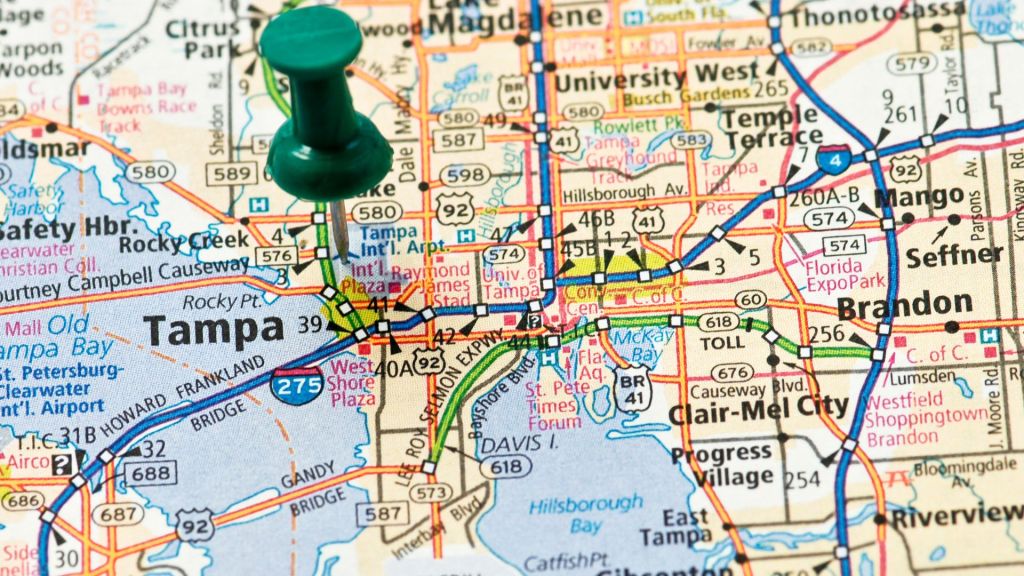
The Port of Tampa Bay, located on Florida’s Gulf Coast, is a major economic lifeline for the region. As Florida’s biggest port by volume, it deals with a wide range of goods, such as oil, fertilizers, and consumer goods. Its strategic position allows it to serve as a critical gateway for trade between the United States, Mexico, and Central America. With its expansive facilities and robust infrastructure, the Port of Tampa Bay supports a wide array of industries, fueling economic development and regional prosperity.
History: Port of Tampa Bay
The Port of Tampa Bay, officially established in 1924, evolved from a phosphate shipping point in the 1880s to Florida’s largest port by cargo volume. It was very important during World War II, and since then it has grown to handle different kinds of goods and cruises. The port has become a major economic driver for the region, supporting multiple industries while continuously adapting to global trade changes and technological advancements.
Infrastructure
The Port of Tampa Bay is the biggest port in Florida by both cargo volume and land area. It is in the city of Tampa. Key infrastructure elements include:
- Cargo facilities: Features over 5,000 linear feet of berth space and multiple cargo terminals handling various types of cargo including containers, bulk, and break-bulk.
- Petroleum and liquid bulk: Houses significant petroleum and liquid bulk handling facilities, including storage tanks and pipelines.
- Cruise terminal: Includes three cruise terminals capable of handling large cruise ships.
- Channel depth: Maintains a 43-foot deep channel in Tampa Bay, with some berths having deeper drafts.
- Intermodal connections: Offers on-dock rail service and direct access to major interstate highways (I-4 and I-75).
- Refrigerated storage: Features substantial cold storage facilities for perishable goods.
- Ship repair: Houses two large dry docks for ship repair and maintenance.
- Specialized facilities: Includes dedicated facilities for handling phosphate, a major export commodity.
- Foreign Trade Zone: Encompasses Foreign Trade Zone No. 79, facilitating international trade.
- Environmental initiatives: Implements various sustainability programs, including air quality monitoring and wildlife protection measures.
Key Features and Statistics
- Annual Cargo Tonnage: 37 million short tons (2022)
- Economic Impact: $17.2 billion annually
- Employment: Supports over 85,000 jobs
- Vessels Handled Annually: Over 2,000
- Cargo Diversity: Handles bulk, breakbulk, containers, liquid bulk, and roll-on/roll-off cargo.
- Cruise Industry: Florida’s largest cruise port, serving major cruise lines.
- Governance: Tampa Port Authority
Port Canaveral: Space Coast’s Maritime Marvel

Port Canaveral is a busy hub for both cruise passengers and cargo. It is located on the east side of Florida. Known for its proximity to the Kennedy Space Center, it is one of the busiest cruise ports in the world, welcoming millions of passengers annually. In addition to its thriving cruise industry, Port Canaveral handles a diverse array of cargo, including automotive, petroleum, and bulk commodities. Its strategic location and modern facilities make it a vital hub for tourism and trade, driving economic growth and connectivity in the region.
History: Port Canaveral
Port Canaveral, located on Florida’s Space Coast, was dedicated in 1953 and opened for business in 1955. Initially a small fishing port, it grew rapidly alongside nearby Cape Canaveral’s space program. The port expanded its cargo operations in the 1960s and entered the cruise industry in the 1970s. Today, it’s one of the busiest cruise ports in the world, a key cargo gateway, and supports commercial space operations. Port Canaveral continues to grow, balancing maritime commerce with its role in space exploration support.
Infrastructure
The cruise, cargo, and military port of Port Canaveral is in Brevard County, Florida. Its key infrastructure elements include:
- Cruise terminals: Features seven modern cruise terminals, making it one of the busiest cruise ports in the world.
- Cargo piers: Houses multiple cargo piers handling various types of cargo, including containers, bulk, and break-bulk.
- Channel depth: Maintains a 44-foot deep channel, allowing access for large cruise ships and cargo vessels.
- Intermodal connections: Offers direct access to major highways and is connected to the Florida East Coast Railway via the Port Canaveral Rail Extension.
- Petroleum handling: Includes dedicated petroleum handling facilities with pipeline connections.
- Space industry support: Features specialized facilities to support nearby space industry operations, including SpaceX booster recovery.
- Recreational facilities: Includes marinas, parks, and fishing areas, reflecting its role as a community port.
- Naval presence: Houses a U.S. Navy submarine base.
- Foreign Trade Zone: Encompasses Foreign Trade Zone No. 136, enhancing international trade capabilities.
- Environmental initiatives: Implements various environmental programs, including manatee protection and sea turtle conservation efforts.
Key Features and Statistics
- Annual Cargo Tonnage: Over 4 million short tons (2022)
- Cruise Passengers: 4.07 million (2022)
- Economic Impact: $3.8 billion annually
- Employment: Supports over 26,000 jobs
- Vessels Handled Annually: Over 4,000
- Cargo Diversity: Handles bulk (petroleum, aggregates, salt), breakbulk, project cargo, and containers.
- Cruise Industry: World’s busiest cruise port, home to major cruise lines and a growing space industry.
- Governance: Canaveral Port Authority
JAXPORT: Northeast Florida’s Economic Engine
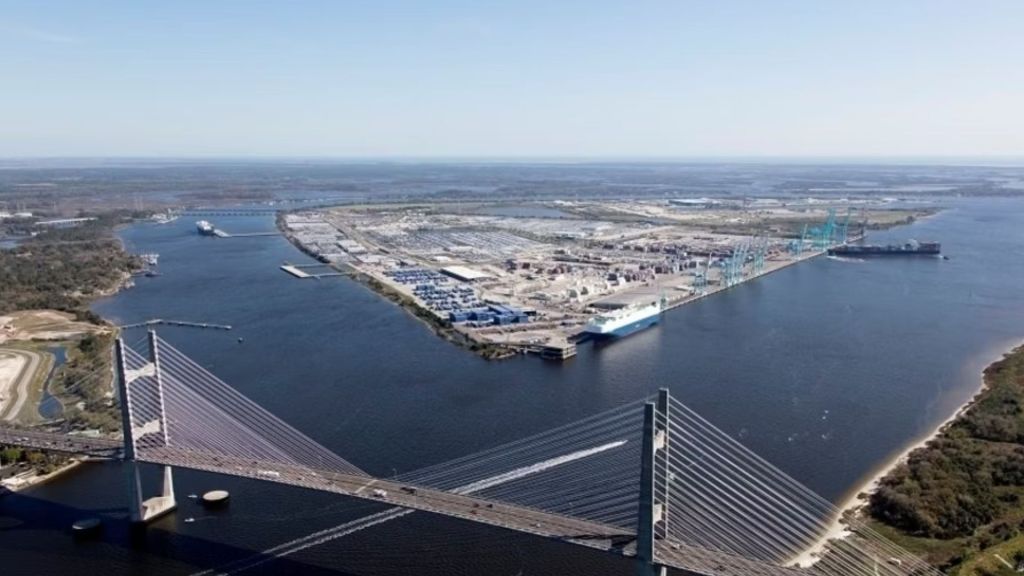
JAXPORT is a well-known world trade leader. It is located in Jacksonville, Florida. As one of the biggest container ports in the country, it deals with a wide range of goods, such as cars, market goods, and bulk commodities. JAXPORT’s strategic location on the southeastern coast of the United States provides direct access to major shipping lanes and markets, both domestic and international. JAXPORT is an important part of economic growth and trade links around the world because it has modern facilities and runs its business efficiently.
History: JAXPORT
JAXPORT, the Port of Jacksonville, was established in 1963 by a special act of the Florida Legislature. Located in Northeast Florida, it quickly grew from a regional port into a major international trade gateway. JAXPORT expanded its facilities throughout the late 20th century, developing specialized terminals for various cargo types. It became a significant automobile import/export hub and container port. In recent decades, JAXPORT has undertaken major dredging projects to accommodate larger vessels and has also developed cruise operations.
Infrastructure
JAXPORT, located in Jacksonville, Florida, is the largest container port complex in Florida. Its key infrastructure elements include:
- Terminals: Features three cargo terminals – Blount Island, Talleyrand, and Dames Point – each specializing in different types of cargo.
- Container facilities: Houses state-of-the-art container handling equipment, including post-Panamax cranes.
- Ro-Ro capabilities: Offers extensive Roll-on/Roll-off (Ro-Ro) facilities, making it one of the nation’s busiest ports for vehicle handling.
- Channel depth: Currently maintains a 40-foot deep channel, with an ongoing project to deepen it to 47 feet.
- Intermodal connections: Provides on-dock rail service and direct access to three major interstates (I-95, I-10, and I-75).
- Foreign Trade Zone: Encompasses Foreign Trade Zone No. 64, facilitating international trade.
- Cruise terminal: Includes a cruise terminal at the north bank of the St. Johns River.
- Specialized facilities: Features dedicated facilities for handling bulk cargo, heavy lift, and project cargo.
- LNG capabilities: Offers liquefied natural gas (LNG) bunkering capabilities.
- Cold storage: Houses significant refrigerated warehouse space for perishable cargo.
- Security: Utilizes advanced security systems in compliance with federal regulations.
Key Features and Statistics
- Annual Cargo Tonnage: Over 10 million short tons (2023)
- Container Throughput (TEUs): 1.3 million+ (2023)
- Economic Impact: Over $31 billion annually
- Employment: Supports over 138,500 jobs
- Vessels Handled Annually: Over 1,500
- Cargo Diversity: Major container port, handles automobiles, breakbulk, bulk, and liquid bulk cargo.
- Infrastructure: Deepwater access, intermodal connections (rail, highway), and ongoing expansion projects.
- Governance: Jacksonville Port Authority (JAXPORT)
Port of Palm Beach: Specialized Cargo Expertise

The Port of Palm Beach in Riviera Beach, Florida, is an important place for business and trade in the area. Despite being one of the smaller ports in Florida, it handles a significant volume of cargo, including sugar, molasses, cement, and fuel. Its strategic location facilitates efficient trade routes to the Caribbean and Latin America. The Port of Palm Beach helps the local economy by improving connections and encouraging economic growth in the area. It does this through its dedicated facilities and strong operations.
History: Port of Palm Beach
The Port of Palm Beach, established in 1915, is one of Florida’s smaller but busiest ports. Initially serving as an outlet for agricultural products, it evolved to handle diverse cargo types. During World War II, the port supported military operations. Post-war, it expanded its facilities and deepened its channels. The port became known for its short-sea shipping services to the Caribbean, particularly the Bahamas. Today, it remains a vital economic engine for Palm Beach County, handling containerized cargo, bulk commodities, and supporting limited cruise operations.
Infrastructure
Riviera Beach, Florida is home to the Port of Palm Beach. It’s one of the busiest container ports in Florida, even though it’s not very big. Key infrastructure elements include:
- Container facilities: Features container yards and gantry cranes for efficient container handling.
- Bulk and break-bulk: Offers facilities for handling various bulk and break-bulk cargoes.
- Cruise terminal: Houses a cruise terminal that primarily serves Bahamas Paradise Cruise Line.
- Channel depth: Maintains a 33-foot deep channel, suitable for many cargo and cruise vessels.
- Intermodal connections: Provides on-port rail service via the Florida East Coast Railway and easy access to major highways (I-95 and Florida’s Turnpike).
- Foreign Trade Zone: Encompasses Foreign Trade Zone No. 135, enhancing international trade capabilities.
- Roll-on/Roll-off: Offers Ro-Ro ramps for vehicle and heavy equipment handling.
- Refrigerated storage: Features temperature-controlled warehousing for perishable goods.
- Security: Implements advanced security measures in compliance with federal regulations.
- Petroleum handling: Includes facilities for receiving and distributing petroleum products.
- Office space: Houses the Maritime Office Complex, providing space for port-related businesses.
- Environmental initiatives: Implements various environmental programs to minimize the port’s ecological impact.
Key Features and Statistics
- Annual Cargo Tonnage: Over 2.5 million short tons (2023)
- Cruise Passengers: 400,000+ (2023)
- Economic Impact: $14 billion annually
- Employment: Supports over 6,000 jobs
- Vessels Handled Annually: Over 1,200
- Cargo Diversity: Containerized cargo (major focus), bulk, breakbulk, and project cargo.
- Caribbean Connection: Vital trade link for the Bahamas and other Caribbean islands.
- Infrastructure: On-dock rail, intermodal connections, Foreign Trade Zone.
- Governance: Port of Palm Beach District
Port Panama City: Gulf Coast’s Rising Star
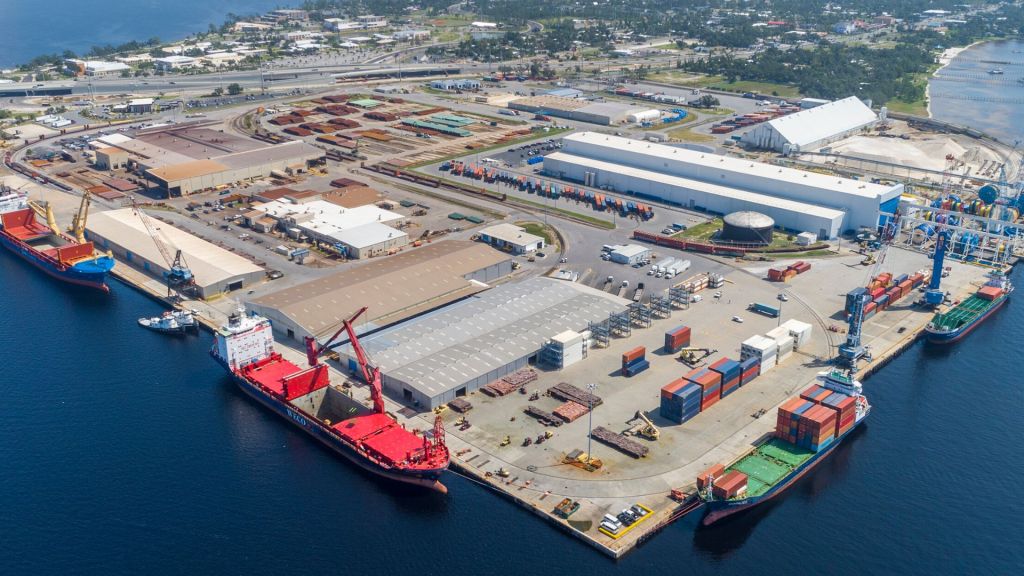
Port Panama City, located on Florida’s Gulf Coast, is an emerging center for trade and industry. Specializing in forest products, steel, and bulk commodities, it handles a diverse array of cargo with efficiency and expertise. Its strategic location offers direct access to key markets in the southeastern United States and beyond. Port Panama City is an important part of the global supply chain because it supports regional businesses and encourages economic growth. It does this by having modern facilities and a commitment to growth.
History: Port Panama City
Port Panama City, located in the Florida Panhandle, was established in 1945 to support the region’s economic growth after World War II. Initially focused on exporting local timber and agricultural products, the port gradually diversified its operations. In the 1960s and 1970s, it expanded its facilities to handle a wider range of cargo types. The port has become known for its efficient handling of breakbulk, bulk, and containerized cargo. It has also developed specialized facilities for forest products and steel.
Infrastructure
Port Panama City is located in the Florida Panhandle on St. Andrew Bay. It’s a smaller but significant port known for its diverse cargo handling capabilities. Key infrastructure elements include:
- Cargo terminals: Features multiple terminals handling a variety of cargo types, including bulk, break-bulk, and containers.
- East Terminal: A newer facility with a 900-foot bulkhead and 40-foot draft, capable of handling larger vessels.
- West Terminal: Handles various cargoes including wood pellets, aggregates, and steel products.
- Intermodal Distribution Center: A 250-acre inland port facility connected to the port by rail.
- Channel depth: Maintains a 36-foot deep channel in the bay, with deeper drafts at some berths.
- Rail access: Offers on-dock rail service via the Bay Line Railroad, connecting to major rail networks.
- Highway connections: Provides easy access to major highways including US 98 and proximity to I-10.
- Foreign Trade Zone: Part of Foreign Trade Zone No. 65, facilitating international trade.
- Warehousing: Offers significant covered storage space for various types of cargo.
- Container handling: Equipped with mobile harbor cranes for efficient container operations.
- Bulk handling: Features specialized equipment for handling bulk materials like wood pellets.
- Security: Implements required security measures in compliance with federal regulations.
Key Features and Statistics
- Annual Cargo Tonnage: 1.95 million tons (2021)
- Economic Impact: $1.6 billion annually (2021)
- Employment: Supports over 10,790 jobs (2021)
- Vessels Handled Annually: Information not readily available
- Cargo Diversity: Breakbulk, bulk, and containerized cargo
- Infrastructure: Two deep-water terminals (East and West), ongoing expansion projects
- Growth: Significant growth in recent years due to expanded facilities and diversified cargo.
- Governance: Panama City Port Authority
Port Manatee: Nature Coast’s Hidden Gem
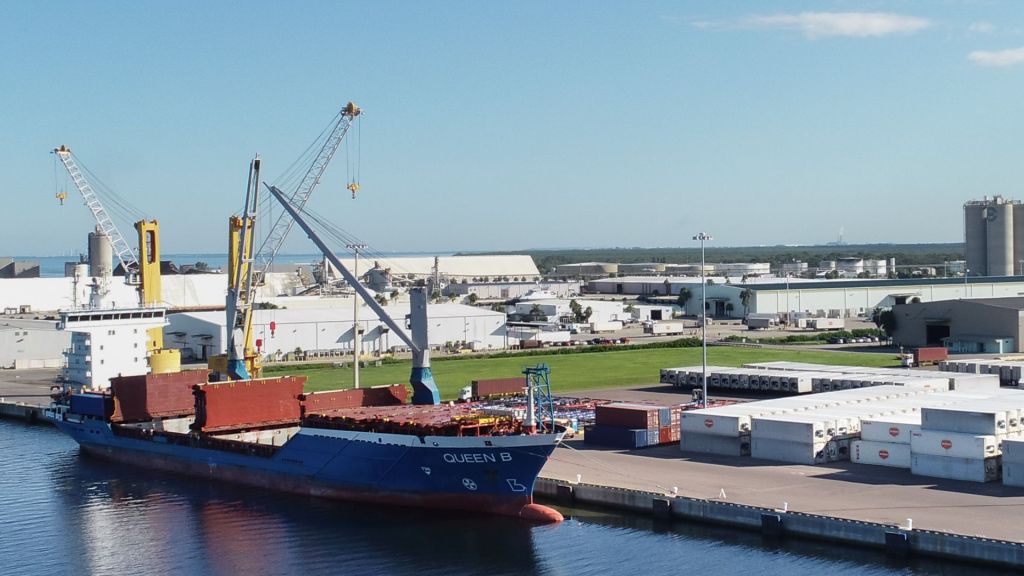
Port Manatee is an important place for foreign trade because it is at the entrance to Tampa Bay. Known for its deep-water capabilities, it handles a variety of cargo, including fresh produce, petroleum products, and project cargo. Its strategic position near the Panama Canal enhances its role as a critical gateway for trade between the United States, Central America, and the Caribbean. Port Manatee is an important part of global trade because it supports regional economic growth and connectivity by constantly improving its facilities and committing to sustainability.
History: Port Manatee
Port Manatee, located on the southern edge of Tampa Bay, was established in 1970 to support Manatee County’s growing economy. Initially focused on bulk and breakbulk cargo, the port quickly expanded its capabilities. It became known for handling phosphate, citrus products, and other agricultural commodities. In the 1980s and 1990s, Port Manatee diversified its operations, developing container facilities and expanding its refrigerated cargo capabilities.
Infrastructure
Port Manatee is located on the southern edge of Tampa Bay in Manatee County, Florida. It’s known for its diverse cargo handling capabilities and strategic location. Key infrastructure elements include:
- Berths: Features 10 deep-water berths with a total of nearly 2,900 linear feet of dock space.
- Container terminal: Equipped with container yards and mobile harbor cranes for efficient container handling.
- Bulk and break-bulk facilities: Offers specialized equipment for handling various bulk and break-bulk cargoes.
- Channel depth: Maintains a 40-foot deep channel, allowing access for larger vessels.
- Intermodal connections: Provides on-port rail service via the Port Manatee Railroad and direct access to Interstate 75.
- Cold storage: Houses significant refrigerated warehouse space for perishable goods.
- Foreign Trade Zone: Encompasses Foreign Trade Zone No. 169, facilitating international trade.
- Petroleum handling: Includes dedicated facilities for petroleum products with pipeline connections.
- Warehouse space: Offers over 1 million square feet of warehouse and office space.
- Roll-on/Roll-off capabilities: Features Ro-Ro ramps for vehicle and heavy equipment handling.
- Air cargo facility: Proximity to Sarasota-Bradenton International Airport enhances multimodal capabilities.
- Environmental initiatives: Implements various programs to protect the local ecosystem, including manatee protection measures.
- Security: Utilizes advanced security systems in compliance with federal regulations.
Key Features and Statistics
- Annual Cargo Tonnage: Over 11 million short tons (2023)
- Economic Impact: $5.1 billion annually
- Employment: Supports over 37,000 jobs (direct and indirect)
- Vessels Handled Annually: Information not readily available
- Cargo Diversity: Bulk, breakbulk, containers, heavy lift, project, and general cargo
- Strategic Location: Closest U.S. deepwater seaport to the expanded Panama Canal
- Infrastructure: 10 deep-water berths, on-dock rail, Foreign Trade Zone No. 169
- Growth: Expanding container yard and berth enhancements
- Governance: Manatee County Port Authority
Port of Pensacola: Historic Maritime Heritage
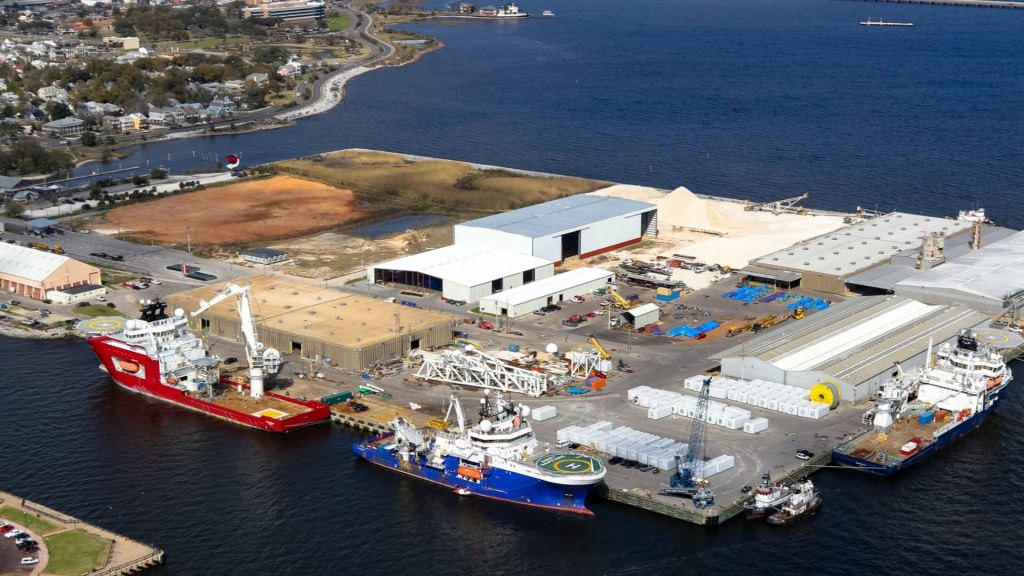
The Port of Pensacola, located in the Florida Panhandle, is a historic nexus for trade and industry. It handles a wide range of cargo, such as bulk goods, forest products, and offshore support boats. It is known for its deep-water harbor and strategic location. Its proximity to major shipping routes in the Gulf of Mexico enhances its role as a critical gateway for regional and international trade. With a focus on innovation and development, the Port of Pensacola continues to drive economic growth, leveraging its rich maritime heritage and modern facilities.
History: Port of Pensacola
The Port of Pensacola, one of Florida’s oldest seaports, has roots dating back to the 16th century. Officially established as a deep-water port in the 1820s, it initially served as a major exporter of regional lumber and agricultural products. The port played strategic roles during various conflicts, including the Civil War and World Wars I and II. In the mid-20th century, it diversified its operations, handling a variety of bulk and break-bulk cargoes.
Infrastructure
The Port of Pensacola is located in the Florida Panhandle on Pensacola Bay. It’s one of Florida’s smaller deepwater ports but offers specialized services. Key infrastructure elements include:
- Berths: Features three deepwater berths with a total of about 2,500 linear feet of berthing space.
- Channel depth: Maintains a 33-foot deep channel, suitable for many cargo vessels.
- Cargo handling: Equipped to handle various types of cargo including break-bulk, bulk, and project cargo.
- Warehouse facilities: Offers over 265,000 square feet of warehouse space, including climate-controlled options.
- Open storage: Provides approximately 50 acres of open storage area for cargo.
- Intermodal connections: Offers on-port rail service via the Alabama & Gulf Coast Railway and easy access to Interstate 10.
- Foreign Trade Zone: Part of Foreign Trade Zone No. 249, enhancing international trade capabilities.
- Specialized facilities: Features a wind turbine laydown facility and handling capabilities for oversized cargo.
- Security: Implements required security measures in compliance with federal regulations.
- GreenPort initiatives: Participates in environmental programs aimed at reducing the port’s ecological impact.
- Offshore support: Offshore oil and gas operations in the Gulf of Mexico can use these tools and services.
- Proximity to airport: Located near Pensacola International Airport, facilitating air-sea cargo transfers when needed.
Key Features and Statistics
- Annual Cargo Tonnage: Primarily serves as a homeport for the U.S. Navy and Coast Guard. Commercial cargo operations have been limited in recent years.
- Economic Impact: Supports military operations, tourism, and local businesses.
- Employment: Provides jobs related to military operations, port maintenance, and tourism.
- Historical Significance: Established in 1763, one of the oldest ports in the United States. Played a crucial role in timber and naval stores trade during the 19th century.
- Infrastructure: Deepwater access, various piers and wharves, and a turning basin.
- Current Focus: While commercial cargo operations have diminished, the port remains essential for military activities and is a popular destination for cruise ships and recreational boating.
- Governance: City of Pensacola
Port of Key West: Tropical Paradise Gateway
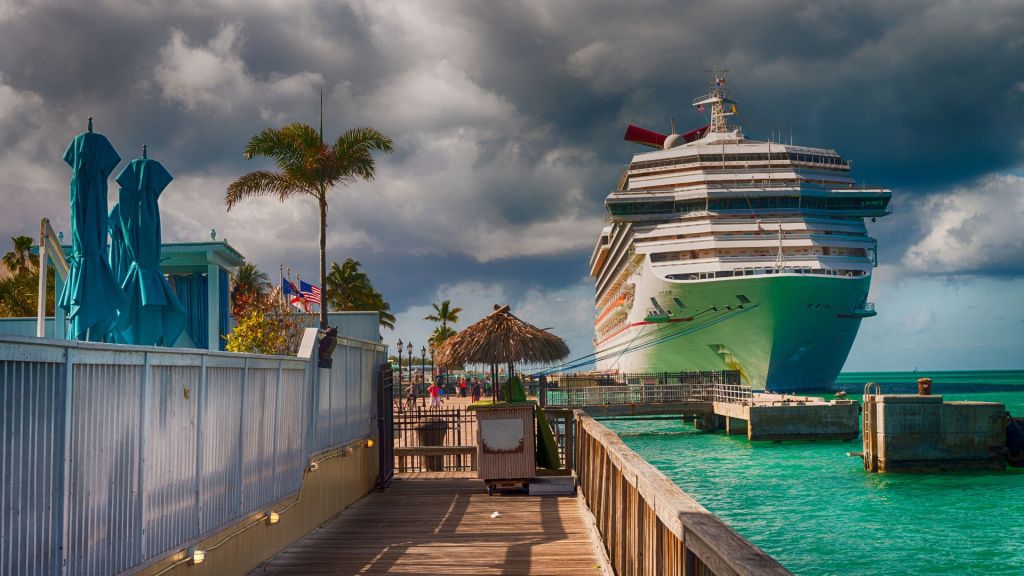
The Port of Key West, situated at the southernmost tip of Florida, is a vibrant hub for tourism and trade. Renowned for its picturesque location and bustling cruise ship activity, it welcomes millions of visitors annually, contributing significantly to the local economy. In addition to its thriving cruise industry, the port handles a range of cargo, including perishables and industrial supplies. With its unique charm and strategic location, the Port of Key West plays a vital role in promoting economic growth and fostering connections between the Florida Keys and the broader Caribbean region.
History: Port of Key West
The Port of Key West, established in the early 19th century, has a rich maritime history. Initially a center for shipwreck salvage and sponge fishing, it became a strategic naval base during the Civil War and Spanish-American War. In the 20th century, the port transitioned to focus on tourism, becoming a popular cruise ship destination.
Infrastructure
The Port of Key West is located at the southernmost point of the continental United States in the Florida Keys. It’s primarily a cruise port and naval facility, rather than a cargo port. Key infrastructure elements include:
- Cruise facilities: Features three docking facilities for cruise ships:
- Mallory Square
- Pier B at the Margaritaville Key West Resort
- The Navy’s Outer Mole Pier (shared use)
- Channel depth: Maintains a natural deep-water channel with depths ranging from 30 to 34 feet.
- Naval presence: Houses a U.S. Navy facility that shares some infrastructure with the commercial port.
- Tender facilities: Offers tender boat operations for cruise ships that cannot dock directly due to size limitations.
- Passenger services: Provides various facilities for cruise passengers, including welcome centers and transportation connections.
- Environmental considerations: Implements strict environmental policies to protect the delicate ecosystem of the Florida Keys.
- Limited cargo handling: Has minimal cargo handling capabilities, focusing primarily on supplies for the island.
- Security: Utilizes security measures in compliance with federal regulations, particularly for cruise operations.
- Transportation links: Connected to the mainland via the Overseas Highway (U.S. Route 1) and Key West International Airport.
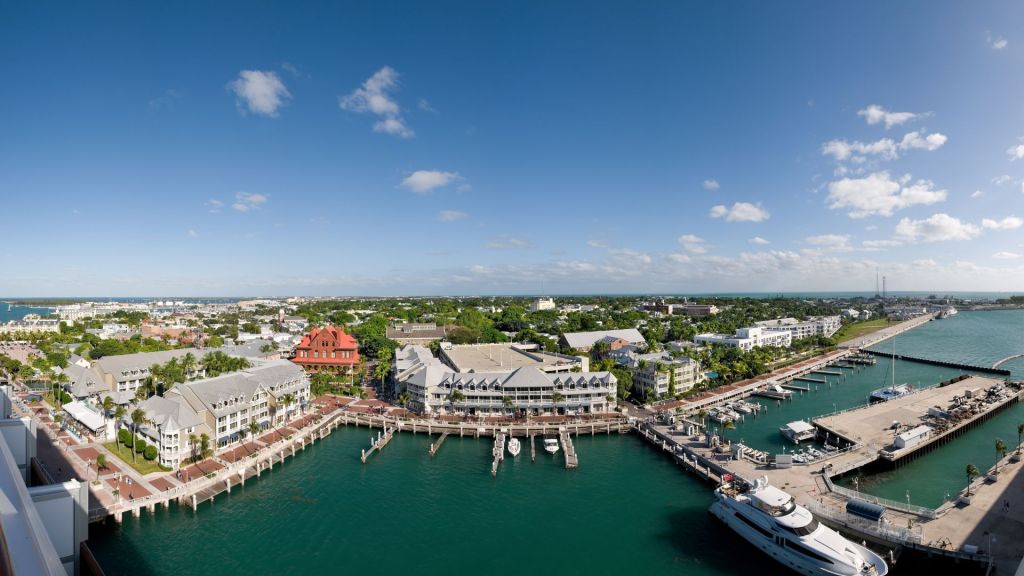
- Historic waterfront: Integrates with Key West’s historic district, offering tourists direct access to the city’s attractions.
Key Features and Statistics
- Annual Cargo Tonnage: Not a major cargo port, primarily focused on cruise and passenger traffic.
- Cruise Passengers: 1 million+ (Pre-Pandemic)
- Economic Impact: $85 million annually (Pre-Pandemic)
- Employment: Supports over 1,250 jobs
- Vessels Handled Annually: Information not readily available
- Key Role: Major economic driver for the city and local businesses
- Cruise Industry: Serves as a popular destination for cruise ships, with multiple piers and docks.
- Other Activities: Supports ferry services to Dry Tortugas National Park and recreational boating.
- Governance: City of Key West
The Future of Florida’s Ports: Innovations and Challenges
Florida’s ports face an exciting future filled with opportunities and challenges. Technological advancements promise increased efficiency and sustainability, while global economic shifts and environmental concerns demand adaptive strategies. As these 10 major ports continue to evolve, they remain at the forefront of maritime innovation, driving Florida’s economy and connecting the Sunshine State to the world.
From the bustling cruise terminals of Miami to the specialized cargo facilities of Port Manatee, Florida’s ports showcase the state’s maritime diversity and economic strength. Each port contributes uniquely to the tapestry of Florida’s coastal economy, supporting local communities and facilitating global trade. As these maritime gateways adapt to changing market demands and technological advancements, they secure Florida’s position as a leader in the global maritime industry.


