Mining ships demonstrate deep-sea engineering. Marine giants transform undersea life by burrowing into the crust and collecting diamonds and minerals. Modern ROVs, mapping technologies, and mining equipment allow them to navigate rugged terrain, gather data, and collect valuable resources. These ships are pioneering a new sector that will change the future by mining diamonds off South Africa or copper, silver, and gold for electric vehicle batteries and renewable technology. Discover the top 10 mining ships unique powers, innovations, and oceanic experiences.
Nautilus New Era Mining Ship: The Pioneering Seabed Mining Vessel
Heralded as the world’s first seabed mining vessel, the Nautilus New Era is a testament to human ingenuity and determination. Commissioned by the Canadian deep-sea mining and exploration company Nautilus Minerals, this colossal ship was intended to serve as a marine base for the Solwara-1 project, an ambitious endeavour to extract copper and gold from the Bismarck Sea off the coast of Papua New Guinea.
Engineered for Extreme Conditions
Nautilus New Era moonpool and dynamic positioning system efficiently deploy riser and seabed mining equipment. At 227 meters long, 40 meters wide, and 50,000 tons, this massive warship can carry 180 passengers and generate 31 megawatts. Lower deck mining equipment includes a powerful subsea pump, handling systems, riser and hoisting systems, ore storage, and cargo ship handling. The 250-tonne bulk cutter and collector can operate at 1,500 meters and 2.5 degrees Celsius, harsher than land-based technologies.
Hidden Gem: Transforming a Drill Ship into a Mining Marvel
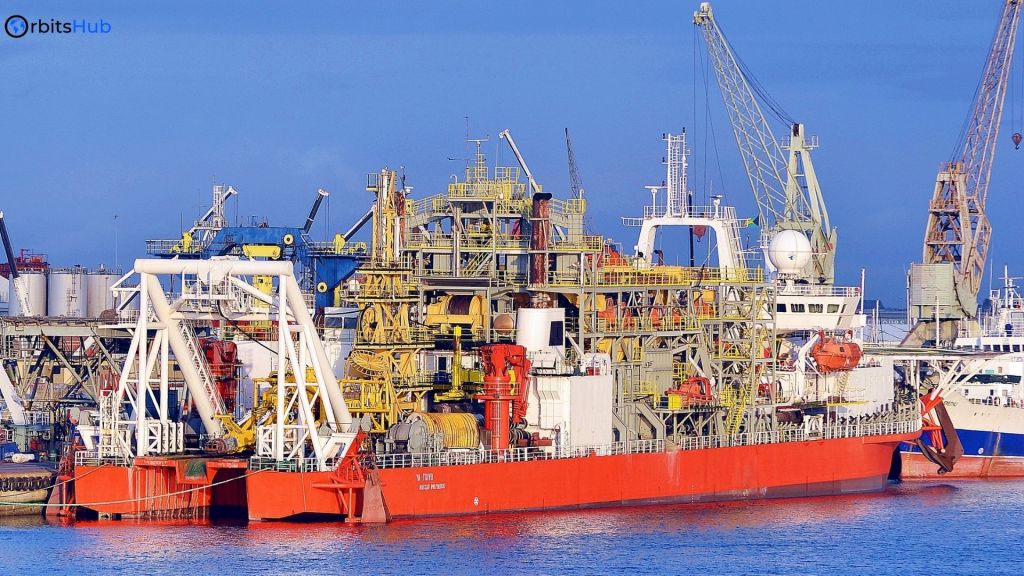
In 2020, the renowned offshore contractor Allseas acquired the Hidden Gem, a former drill ship named Viktoria 10000, and embarked on an ambitious transformation. With a length of 228 meters, a breadth of 42 meters, a gross tonnage of 60,331, and a deadweight of 61,042, this vessel possessed the ideal configuration to be repurposed as a mining ship, tasked with transporting polymetallic nodules from the ocean floor to the surface.
A Cutting-Edge Collector Vehicle
In Rotterdam, the Hidden Gem was extensively modified for its new duty after being reactivated in Norway. The vessel has a cutting-edge collection vehicle designed and built by Allseas in the Netherlands. This 12-meter collector may be launched and recovered to extreme water depths and pressure.
Fueling the Renewable Energy Revolution
The Hidden Gem’s primary goal is to find manganese, cobalt, copper, and nickel polymetallic nodules for electric vehicle and renewable energy battery production. Using ocean floor resources, the Hidden Gem helps the world shift to sustainable energy, leading a fast-changing industry.
Mengxiang Mining Ship: Pushing the Boundaries of Deep-Sea Drilling
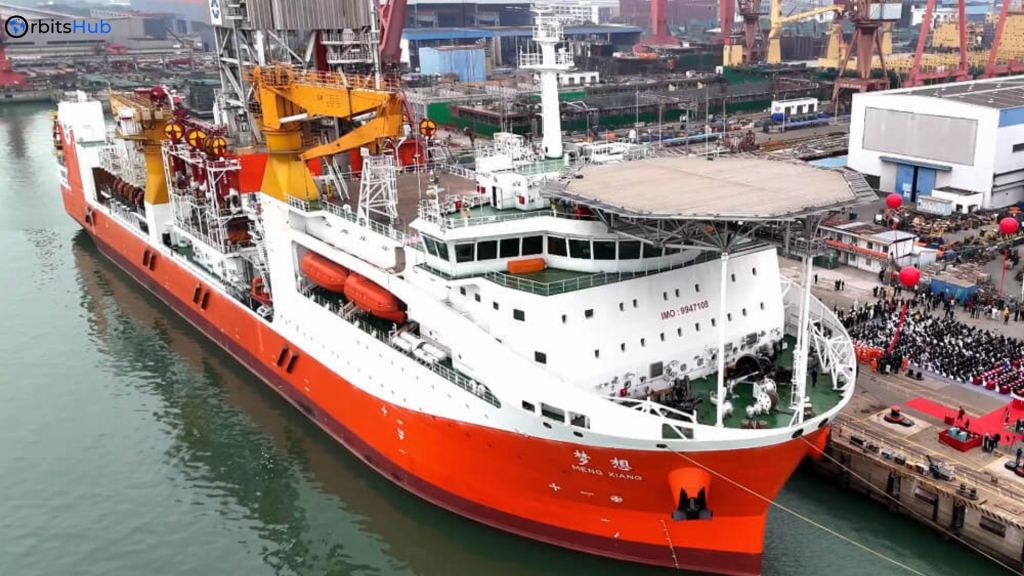
Hailed as the world’s most advanced deep-sea mining vessel, the Mengxiang is renowned for its unparalleled ability to reach the deepest underwater drilling depths. Constructed in China and launched in 2022, this formidable ship embarks on an ambitious mission: to drill through the planet’s crust, which can reach a staggering thickness of 6,000 meters beneath the oceans.
Pioneering Ocean Exploration
After its first journey in the Pearl River Estuary in December 2023, the Mengxiang will begin ocean research projects. Its unmatched drilling capabilities could reveal new energy and mineral sources and improve our understanding of Earth’s geology.
MV Ya Toivo: The Diamond Hunter of the Seas
Operated by Trans Hex Marine, the MV Ya Toivo stands as the company’s largest and most formidable diamond mining ship. Measuring 149 meters in length and 24 meters in width, this maritime giant harnesses an impressive 14,000 kilowatts of electric power to propel its onboard machinery and equipment.
A Relentless Diamond Seeker
MV Ya Toivo uses a 150-meter-digging 280-tonne ROV. Advanced onboard technology allows this ROV to mine 1,000 square meters in 60 minutes and transfer 1,600 tonnes of diamond-bearing sand into the vessel’s processing facilities. During almost a week of 24/7 submersion, powerful pumps and jetting systems loosen and suction silt. Onboard, machinery filters gems from gravel and trash, and then humans finish.
MV Mafuta Mining Ship: De Beers’ Diamond Powerhouse
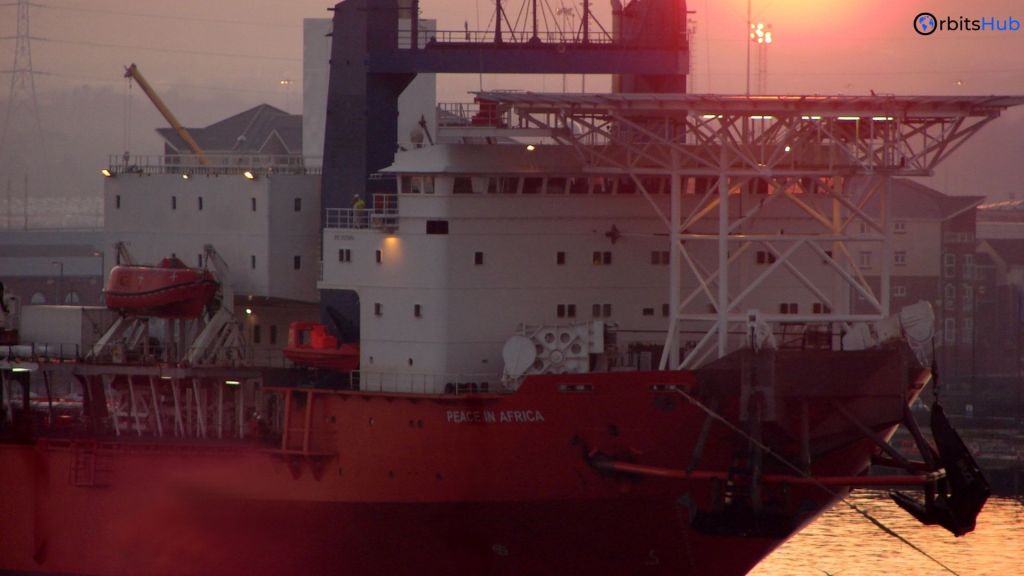
Operated by the renowned diamond mining company De Beers, the MV Mafuta proudly sails under the Namibian flag, offering an ethical alternative to the illicit diamond trade. Originally constructed as a heavy-lift vessel in 1982, it underwent a remarkable transformation in 2005 when De Beers acquired and converted it into a dedicated diamond mining ship.
A Metamorphosis into a Diamond Hunter
In 2011, the 169.5-meter-long, 24.2-meter-wide, 8.9-meter-draft MV Mafuta became a diamond mining powerhouse after various conversions. It hauled 60 diamonds every hour from Namaqualand. A 240-tonne crawler and an onboard recovery unit can clean 250 tons of water and gravel per hour for MV Mafuta’s mining. The ship retrieves rare ocean-floor jewels using its complicated technology.
Benguela Gem: Technological Marvel of Diamond Recovery
Designed in Poland and Norway and constructed in Romania for $486 million, the Benguela Gem is a technological marvel in diamond recovery. Owned by Debmarine Namibia, this vessel boasts advanced safety and performance-enhancing systems, ensuring efficient and reliable operations.
Intelligent Systems for Optimal Performance
Benguela Gem‘s dynamic positioning technology adjusts to weather, conserving energy and enhancing efficiency. The ship is self-sufficient and environmentally benign because its heat recovery system creates fresh water. The Benguela Gem’s 177-meter length, 27-meter beam, and 106 crew members offer more than cutting-edge mining. Its helicopter deck, entertainment systems, gym, medical, and relaxation facilities keep crew members healthy and happy on long flights.
MV Gariep Mining Ship: De Beers’ Rejuvenated Diamond Hunter

As part of De Beers Marine Namibia’s fleet of diamond mining vessels, the MV Gariep has undergone a significant overhaul to extend its operational lifespan and enhance its capabilities. Sailing under the Namibian flag, this vessel measures 113 meters long and 24.56 meters wide.
A Comprehensive Refit for Longevity
Rosyth-based Babcock Engineering and Design renovated MV Gariep in 2021. Due to antiquated equipment, this significant restoration was needed to extend the vessel’s service life. Wärtsilä upgraded generators, engines, and propulsion systems. Babcock had to ship De Beers’ stuff. The ship’s HVAC, cable routing, and plumbing were upgraded, adding a kilometre of tight-space pipes. Engineering complexity kept MV Gariep efficient and sustainable.
MV SS Nujoma: Namibia’s Diamond Exploration Pioneer
Named after Namibia’s former president, Sam Nujoma, the MV SS Nujoma is a highly specialized diamond exploration and sampling vessel. Measuring 113 meters in length and 22 meters in width, this formidable ship operates off the Namibian coast, pushing the boundaries of diamond exploration and data collection.
Unparalleled Sampling and Data Gathering
The $157 million, 12,000-tonne MV SS Nujoma collects more samples and data than its competitors. It pioneers the industry with twice the operational speed of its competitors. The vessel’s helideck and three-year lifespan ensure exploration and sampling. After its 2016 launch, Cape Town installed launch and recovery systems, sampling equipment, and a carbon-efficient mineral treatment facility for the MV SS Nujoma.
Fugro Voyager: Geotechnical Explorer of the Asia-Pacific
Operating in the Asia-Pacific region, the Fugro Voyager is a geotechnical drilling vessel dedicated to ocean research, surveys, seabed mapping, mineral resource assessment, and other maritime exploration activities. Currently sailing under the Bahamas flag, this vessel boasts an overall length of 82.9 meters and a breadth of 21.8 meters.
Drilling into the Depths
The drilling derrick above a moonpool is crucial to Fugro Voyager. The vessel’s automated tool-handling system and seabed sampling equipment can safely and efficiently gather samples at 3,000 meters. Fugro Voyager has a soil lab for sample analysis and 60 crew members. On long journeys, this ship has a gym, meeting rooms, and offices for worker comfort and efficiency.
Debmar Pacific Mining Ship: De Beers’ Enduring Presence in the Diamond Trade
Owned by De Beers Marine Namibia and sailing under the Namibian flag, the Debmar Pacific is a testament to the company’s enduring presence in the diamond mining industry. With an overall length of 137.01 meters and a beam of 21.95 meters, this vessel has a rich history dating back to its construction in 1977 by Levingston Shipbuilding in Orange, Texas, USA.
A Storied Past and Evolving Identity
The Debmar Pacific, initially categorized by the American Bureau of Shipping and based in Luderitz, has had various names. This vessel, originally named DeepSea Pacific in 1992 and Glomar Pacific in 1989, demonstrates the diamond mining industry’s fluidity and De Beers’ adaptability. The Debmar Pacific’s 9,048 gross tonnage and 6,667 deadweight contribute to De Beers’ global footprint and industry leadership.
The top 10 mining ships are resilient, technologically advanced, and frontier-push. The Nautilus New Era and diamond hunters MV Ya Toivo and MV Mafuta changed deep-sea mining. We must balance resource use with environmental protection to meet future challenges and possibilities. Advanced technology, strict environmental rules, and international cooperation can make deep-sea mining sustainable for future generations. The mining ships demonstrate human inventiveness and scientific advancement. While exploring the oceans, these giants will reveal wealth.
Do you want to learn more about cutting-edge aviation and maritime technology advancements? OrbitsHub, a leading consultancy service company specializing in these domains, can be your one-stop shop. Explore OrbitsHub to discover how their expertise can empower your organization.