Airport simulators have utterly transformed the aviation business by offering a risk-free, efficient, and cost-effective means of training pilots and testing aircraft systems. There are many different simulators, each made to meet a unique set of testing and training requirements. The various types of aircraft simulators, their distinguishing characteristics, and the role they play in contemporary aviation are all covered in this comprehensive overview. This in-depth review will give you a better grasp of these crucial resources whether you are a professional, an enthusiast, or an aspiring pilot.
Full Flight Simulators (FFS)
Definition and Purpose
Full Flight Simulators (FFS) are the most advanced aircraft simulators. They replicate the complete cockpit environment and provide a highly realistic flight experience. FFS is used primarily for pilot training, including initial, recurrent, and type rating training.
Key Features
- Motion Systems: FFS is equipped with motion systems that simulate the physical sensations of flight, such as turbulence, takeoff, landing, and various in-flight maneuvers.
- Visual Systems: High-fidelity visual systems provide a 360-degree view, replicating real-world flying conditions, including weather, time of day, and terrain.
- Cockpit Replication: The cockpit in an FFS replicates the actual aircraft, including all controls, instruments, and avionics systems.
- Sound Systems: Realistic sound effects enhance the immersive experience, including engine noise, wind, and other environmental sounds.
Applications
Pilots can practice complex maneuvers, emergency procedures, and instrument flying on FFSs without the dangers of actual flight, making them crucial for thorough pilot training. They are also used to evaluate new aircraft systems and conduct research and development.
Flight Training Devices (FTD)

Definition and Purpose
Flight Training Devices (FTD) are a step below FFS regarding complexity and fidelity. They provide a realistic cockpit environment but lack FFS’s full motion and visual systems. FTDs are used for specific aspects of pilot training, such as procedural training and instrument rating.
Key Features
- Cockpit Environment: Like FFS, FTDs replicate the cockpit environment with less emphasis on motion and visual realism.
- Instrument Training: FTDs focus on instrument training, allowing pilots to practice navigation, communication, and other instrument-based procedures.
- Cost-Effective: FTDs are more affordable than FFS, making them an attractive option for smaller flight schools and training programs.
Applications
FTDs are ideal for training pilots in procedural tasks, instrument flying, and cockpit resource management. They are also used for proficiency checks and refresher training.
Flight Simulation Training Devices (FSTD)
Definition and Purpose
Flight Simulation Training Devices (FSTD) encompass a range of simulators, including FFS, FTD, and others. The aviation industry ensures standardized training by categorizing FSTDs based on their level of fidelity and intended use.
Key Features
- Standardization: Regulatory bodies categorize and regulate FSTDs to ensure consistent training quality. Categories include FFS, FTD, and other specialized simulators.
- Training Versatility: FSTDs cover many training needs, from basic flight maneuvers to advanced emergency procedures.
- Regulatory Compliance: FSTDs must meet specific regulatory standards of aviation authorities, ensuring they provide accurate and reliable training.
Applications
Airlines, flight schools, and military organizations use FSTDs to provide standardized and high-quality pilot training. These organizations also use them for certification and recurrent training, ensuring that pilots maintain proficiency and adhere to regulatory requirements.
Cockpit Procedure Trainers (CPT)
Definition and Purpose
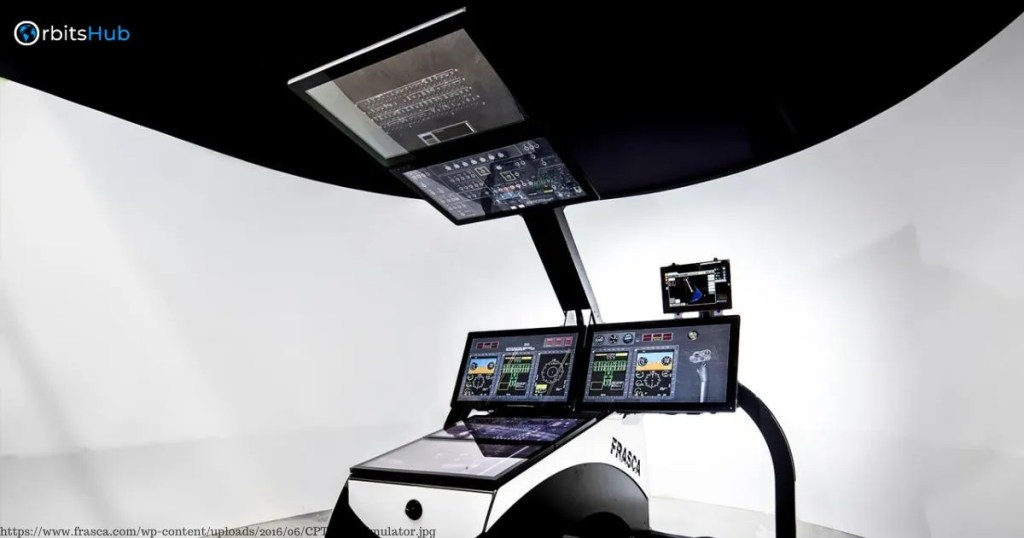
Cockpit Procedure Trainers (CPT) are designed to familiarize pilots with the layout and functionality of the aircraft cockpit. They focus on procedural training rather than flight dynamics.
Key Features
- Cockpit Familiarization: CPTs replicate the aircraft cockpit, allowing pilots to practice pre-flight checks, startup procedures, and shutdown sequences.
- System Familiarity: Pilots can learn the functionality and operation of various aircraft systems, including avionics, navigation, and communication.
- Affordable Training: CPTs are cost-effective, making them accessible for initial and recurrent training.
Applications
Pilots use CPTs for initial type rating training to become familiar with the aircraft cockpit and procedures before moving on to more advanced simulators. They also use CPTs for recurrent training and procedural reviews.
Part-Task Trainers (PTT)
Definition and Purpose
Part-Task Trainers (PTT) are specialized simulators focusing on specific flight training aspects. They are used to train pilots in particular tasks or procedures.
Key Features
- Task-Specific Training: PTTs focus on specific training tasks, such as navigation, communication, or emergency procedures.
- System Replication: These trainers replicate particular aircraft systems, allowing pilots to practice and master individual components.
- Flexible and Modular: You can tailor and easily update or reconfigure PTTs to meet specific training needs.
Applications
PTTs supplement other training devices, providing focused training on critical tasks or procedures. They are handy for emergency procedure training and system-specific familiarization.
Virtual Reality (VR) Simulators
Definition and Purpose
Virtual Reality (VR) simulators leverage advanced VR technology to provide immersive and interactive flight training experiences. They are a relatively new addition to the range of aircraft simulators.
Key Features
- Immersive Experience: VR simulators provide a highly immersive training environment with 360-degree visuals and interactive controls.
- Cost-Effective: VR simulators are more affordable than traditional FFS and FTD, making them accessible for a broader range of training programs.
- Flexible Training Scenarios: VR technology creates diverse training scenarios, including emergency procedures, instrument flying, and more.
Applications
VR simulators train users for various purposes, from basic flight training to advanced emergency procedures. They also enable remote training, allowing pilots to train from any location with VR equipment.
Synthetic Training Devices (STD)

Definition and Purpose
Synthetic Training Devices (STD) encompass a broad range of simulators designed to replicate specific aspects of flight training. They include devices such as CPT, PTT, and others.
Key Features
- Diverse Training Applications: STDs cover many training needs, from procedural training to system-specific familiarization.
- Regulatory Standards: STDs must meet specific regulatory standards for accurate and reliable training.
- Cost-Effective: STDs offer a cost-effective training solution, making them accessible for various training programs.
Applications
Airlines, flight schools, and military organizations use STDs to provide comprehensive and standardized training. They are handy for procedural, system familiarization, and emergency procedure training.
Aircraft simulators are indispensable in modern aviation, providing safe, efficient, cost-effective training solutions for pilots and other professionals. From the highly advanced Full Flight Simulators to the versatile Virtual Reality Simulators, each simulator plays a crucial role in enhancing training quality and safety. Future training options will be increasingly more inventive and immersive as technology improves.
For those looking to explore the world of aircraft simulators or seeking expert advice on aviation training, Orbitshub offers comprehensive maritime and aviation consultancy services. If you want to learn more about how we can help you achieve your operational and training goals, please contact us immediately.