Introduction: A Hidden Paradise Beneath the Waves
Imagine a world where colors dance in the sunlight, life thrives in every nook and cranny, and nature’s artistry is on full display. Welcome to the coral reefs of the Andaman and Nicobar Islands! These underwater marvels are not just beautiful – they’re the beating heart of the ocean.
“The sea, once it casts its spell, holds one in its net of wonder forever.” – Jacques Cousteau.
As we dive into the azure waters of the Bay of Bengal, we’re about to embark on an extraordinary journey through one of the most diverse ecosystems on our planet. Get ready to explore a world that’s as fragile as it is fascinating!
The Importance of Coral Reefs
Before we plunge into the specifics of the Andaman and Nicobar reefs, let’s take a moment to appreciate why coral reefs are so crucial:
- Biodiversity Hotspots: Coral reefs are often called the “rainforests of the sea.” They occupy less than 1% of the ocean floor but are home to more than 25% of marine life!
- Coastal Protection: Reefs act as natural barriers, protecting coastlines from storms and erosion. They’re like nature’s seawalls!
- Economic Value: From fishing to tourism, coral reefs support millions of jobs worldwide. They’re not just pretty – they’re pretty important for the economy, too!
- Climate Regulation: Believe it or not, coral reefs regulate the Earth’s climate. They’re carbon sinks, helping to mitigate climate change.
- Medical Breakthroughs: Many marine organisms in coral reefs are being studied for potential medical applications. Who knows? The cure for cancer might be swimming around a coral reef right now!
The Archipelago: A Jewel in the Indian Ocean
Geography and Climate: Nature’s Perfect Canvas
The Andaman and Nicobar Islands are like pearls across the Bay of Bengal. With 572 islands, islets, and rocks, this archipelago is a tropical paradise. But what lies beneath the surface truly takes your breath away!
Location
Southeastern part of the Bay of Bengal
Number of Islands
572
Inhabited Islands
Only 37
Coral Reef Area
A whopping 11,000 sq km!
The climate here is a coral reef’s dream come true. Warm, tropical waters and sunshine create the perfect conditions for these underwater cities to thrive.
A Closer Look at the Islands
Let’s break down this archipelago a bit more:
- Andaman Islands: The larger and more populated group, including popular tourist destinations like Port Blair and Havelock Island.
- Nicobar Islands: Located further south, these islands are more remote and have restricted access to protect the indigenous Nicobarese people.
- Volcanic Origins: Did you know that these islands are the peaks of a submerged mountain range? Talk about a geological marvel!
- Tropical Climate: With temperatures ranging from 23°C to 31°C year-round, it’s always summer in the Andamans!
Biodiversity: An Underwater Metropolis
Hold onto your snorkels, folks! The biodiversity here is mind-blowing. We’re talking about an underwater New York City, teeming with life at every turn.
Marine Species Statistics
- Complex coral species: Over 200 (More varieties than ice cream flavors!)
- Soft coral species: 100+
- Fish species: A staggering 1,200+
- Mollusk species: 1,000+ (Shells galore!)
- Crustacean species: 500+ (Crab party, anyone?)
But numbers don’t tell the whole story. Each species plays a crucial role in this intricate ecosystem. It’s like a perfectly choreographed underwater ballet!
Spotlight on Unique Species
Let’s zoom in on some of the stars of this underwater show:
- Dugong: Also known as the “sea cow,” this gentle giant grazes on seagrass beds around the islands. They’re like the underwater version of cows!
- Andaman Day Gecko: This bright green lizard is found nowhere else. Talk about exclusive!
- Coconut Crab: The largest land-dwelling arthropod in the world, these crabs can crack coconuts with their powerful claws. Nutcrackers, eat your heart out!
- Andaman Serpent Eagle: This bird of prey is endemic to the islands. It’s like the guardian of the skies over the Andamans.
- Irrawaddy Dolphin: These smiling cetaceans are often spotted in the coastal waters. They’re like the friendly neighbors of the Andaman seas!
The Coral Architects: Tiny Builders, Massive Impact
Meet the Polyps: Nature’s Tiniest Construction Workers
Imagine building a skyscraper with your bare hands. Now, imagine doing it underwater. That’s what coral polyps do, except they’re tinier than a pinhead!
“In nature, nothing is perfect and everything is perfect. Trees can be contorted, bent in weird ways, and they’re still beautiful.” – Alice Walker.
These little champions work 24/7, secreting calcium carbonate to build their homes. It’s slow work – we’re talking millimeters per year – but boy, is it impressive when you zoom out!
The Coral Life Cycle
Let’s break down how these tiny architects create such massive structures:
- Larval Stage: It all starts with a free-swimming larva called a planula. It’s like a coral seed drifting in the currents.
- Settlement: When the planula finds a suitable spot, it attaches to the substrate. Home, sweet home!
- Polyp Formation: The settled larva develops into a polyp, the basic unit of a coral colony.
- Budding: Polyps can reproduce asexually by budding, creating genetically identical copies of themselves. It’s like having clones!
- Colony Growth: As more polyps are added, the colony grows larger and larger. Rome wasn’t built in a day, and neither are coral reefs!
The Symbiotic Dance: It Takes Two to Tango
Here’s where it gets cool. Corals have a secret weapon: tiny algae called zooxanthellae. It’s a partnership made in heaven (or in the ocean).
- Zooxanthellae: Provide food through photosynthesis
- Coral: Offers protection and compounds for photosynthesis
It’s like having a garden in your house that feeds you. Talk about sustainable living!
Benefits of the Coral-Algae Partnership
This symbiotic relationship is a win-win situation:
- Nutrient Exchange: The algae provide up to 90% of the coral’s energy needs. Talk about a generous roommate!
- Waste Recycling: The algae use the coral’s waste products for photosynthesis. One creature’s trash is another’s treasure!
- Coloration: What are the vibrant colors we associate with healthy corals? That’s all thanks to the zooxanthellae. They’re like living paint!
- Calcium Carbonate Production: The algae help speed up the process of skeleton building. They’re like the coral’s personal construction crew.
A Day in the Life of the Reef: From Dawn to Dusk
Sunrise: The Reef Awakens
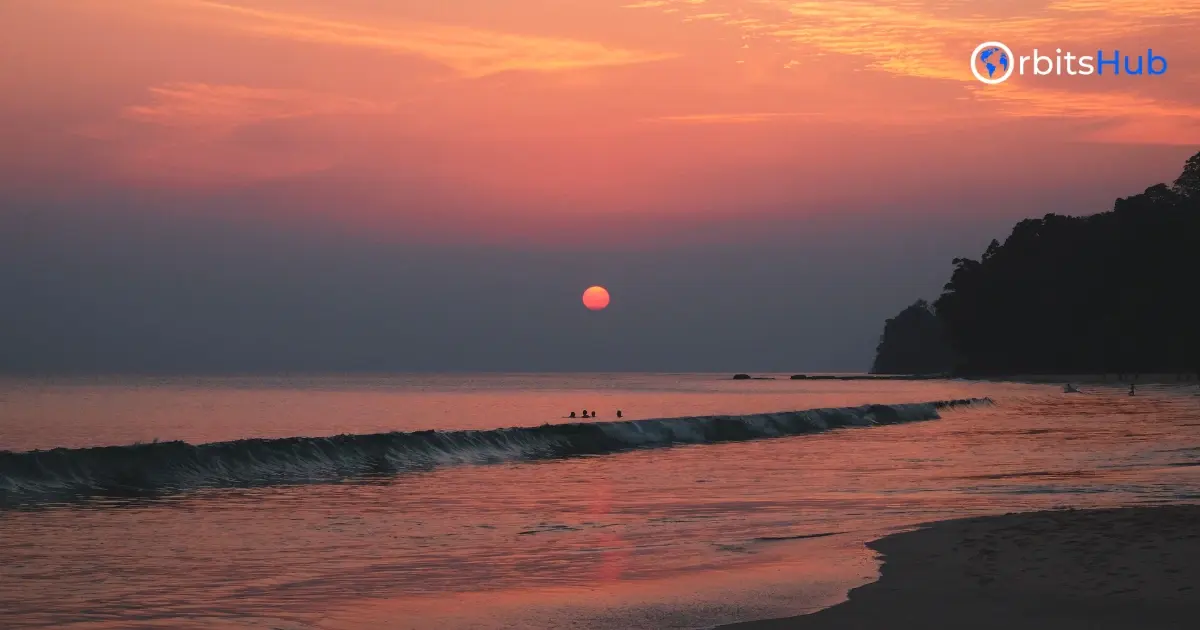
The reef springs to life as the first rays of sunlight pierce the water’s surface. It’s rush hour, underwater style!
- Parrotfish begin their day job: algae cleanup crew
- Butterflyfish dart about, their colors rivaling any rainbow
- Clownfish peek out from their anemone homes, ready for adventure
Morning Rituals
Let’s take a closer look at how different reef inhabitants start their day:
- Cleaner Wrasses: These small fish set up “cleaning stations,” where larger fish come to have parasites removed. It’s like an underwater car wash!
- Sea Anemones: These flower-like animals unfurl their tentacles to catch the morning sunlight and any unsuspecting prey that swims by.
- Hermit Crabs: As the tide recedes, these resourceful crustaceans scuttle about the exposed reef flats, scavenging for breakfast.
- Corals: While they don’t sleep in the traditional sense, corals are more active during the day, extending their polyps to catch plankton drifting by.
Midday: The Hustle and Bustle
When the sun is high, the reef is a hive of activity. Let’s take a peek at what’s going on:
- The Hunters: Barracudas and groupers patrol the waters
- The Hunted: Smaller fish stick close to the coral for protection
- The Tricksters: Camouflage experts like stonefish blend in, waiting for the perfect moment to strike
Lunchtime on the Reef
Feeding time is a spectacle on the reef. Here’s what’s on the menu:
- Parrotfish: These colorful characters use their beak-like mouths to scrape algae off the coral. In doing so, they produce sand – up to 100 kg per year for a single fish!
- Triggerfish: With powerful jaws, they crunch through sea urchins and mollusks. It’s like watching a Nutcracker in action!
- Moray Eels: These snake-like fish lurk in crevices, darting to snatch unsuspecting prey. They’re the ambush predators of the reef.
- Manta Rays: These gentle giants glide through the water, filtering out plankton with their specialized gill rakers. It’s like watching underwater ballet!
Sunset: Shift Change
As day turns to night, a whole new cast of characters takes the stage:
- Bioluminescent plankton light up the water like underwater fireflies
- Octopuses emerge, masters of disguise on the prowl
- Parrotfish snuggle into mucus cocoons for a good night’s sleep (Gross but excellent!)
Nocturnal Adventures
The reef doesn’t sleep – it just changes shifts. Here’s what happens after dark:
- Basket Stars: These relatives of starfish unfurl their intricate arms to catch passing plankton. They look like something out of a sci-fi movie!
- Lionfish: These beautiful but venomous fish become more active at night, using their fan-like fins to corner small prey.
- Coral Spawning: Many coral species release their eggs and sperm into the water at night, often synchronized with the lunar cycle. It’s like an underwater fireworks display!
- Nurse Sharks: These bottom-dwelling sharks emerge from their daytime resting spots to hunt for small fish and invertebrates.
Coral Nurseries: Where the Magic Begins
Shallow Lagoons: Nature’s Daycare Centers
The shallow areas around the islands are like underwater kindergartens. Here, baby fish learn the ropes of reef life:
- Protected from strong currents
- Plenty of hiding spots from predators
- An all-you-can-eat buffet of plankton and algae
Life in the Nursery
Let’s take a closer look at how young marine life thrives in these protected areas:
Marine Habitats and Their Importance
| Habitat | Description |
|---|---|
| Seagrass Beds | These underwater meadows provide shelter and food for juvenile fish and invertebrates. They’re like nature’s playgrounds! |
| Mangrove Roots | The tangled roots of mangrove trees offer perfect hiding spots for young fish. It’s like a natural obstacle course. |
| Tidal Pools | These small, isolated pockets of water left behind at low tide are like natural aquariums, teeming with tiny creatures. |
| Soft Coral Gardens | Areas with soft corals provide additional shelter and feeding grounds for young reef inhabitants. |
Mangrove Guardians: The Reef’s Best Friends
Remember the mangroves! These coastal forests are the unsung heroes of the reef ecosystem:
- Act as natural filters, trapping sediment and pollutants
- Provide nursery grounds for young marine life.
- Protect the coastline (and the reefs) from storms and erosion.
It’s a perfect example of how everything in nature is connected—land, sea, and everything in between work together in harmony.
Mangrove Marvels
Let’s dive deeper into the wonders of mangrove ecosystems:
- Root Systems: The intricate root systems of mangroves provide stability and create a complex habitat for marine life. It’s like an underwater apartment complex!
- Carbon Storage: Mangroves are incredibly efficient at storing carbon, helping to mitigate climate change. They’re like nature’s carbon banks!
- Biodiversity Hotspots: From monkeys to mudskippers, mangroves support various life above and below the water.
- Cultural Significance: Many local communities have deep cultural ties to mangrove forests, using them for traditional medicine, food, and building materials.
Threats to Paradise: Storm Clouds on the Horizon
Climate Change: The Invisible Enemy
Climate change is like an uninvited guest at a party, and it’s overstaying its welcome. Rising sea temperatures spell trouble for our coral friends:
- Coral bleaching: When stressed, corals expel their colorful algae partners
- Ocean acidification Makes it more challenging for corals to build their skeletons.
“The greatest threat to our planet is the belief that someone else will save it.” – Robert Swan.
The Domino Effect of Climate Change
Let’s break down how climate change impacts the reef ecosystem:
Sea Level Rise
As sea levels rise, it can “drown” corals that can’t grow fast enough to keep up. It’s like trying to tread water… forever.
Increased Storm Intensity
More powerful storms can physically damage reefs. Imagine a wrecking ball swinging through an underwater city.
Changes in Ocean Currents
Shifts in currents can affect the distribution of nutrients and larvae. It’s like rerouting all the highways in a city!
Invasive Species
Warming waters allow non-native species to thrive, disrupting the delicate balance of the reef ecosystem.
Human Impact: Loving the Reefs to Death?
We humans love the reefs, but sometimes we love them a bit too much:
- Overfishing: Disrupts the delicate balance of the ecosystem
- Coastal development: More hotels mean more pollution and sedimentation
- Marine debris: Even paradise isn’t safe from plastic pollution
The Human Touch: A Double-Edged Sword
Our relationship with coral reefs is complicated. Let’s explore some of the ways human activity impacts these fragile ecosystems:
- Tourism: While it brings economic benefits, uncontrolled tourism can lead to physical damage to corals and increased pollution.
- Agricultural Runoff: Fertilizers and farm pesticides can wash into the ocean, causing algal blooms that smother corals.
- Destructive Fishing Practices: Methods like dynamite fishing or bottom trawling can devastate reef structures.
- Coral Mining: In some areas, corals are harvested for use in construction or souvenirs, directly destroying reef habitats.
Conservation Efforts: Hope for the Future
Marine Protected Areas: Safe Havens for Sea Life
Good news! Steps are being taken to protect these underwater treasures:
- Mahatma Gandhi Marine National Park: Covers 281.5 square kilometers
- Strict regulations: Limited access to sensitive areas
The Power of Protection
Let’s explore how Marine Protected Areas (MPAs) make a difference:
- No-Take Zones: Some areas are entirely off-limits for fishing, allowing fish populations to recover and thrive.
- Research Opportunities: MPAs provide scientists with “living laboratories” to study reef ecosystems and conservation methods.
- Ecotourism: Controlled tourism in MPAs can raise awareness and provide sustainable income for local communities.
- Spillover Effect: Protected areas often increase fish populations in surrounding waters, benefiting local fisheries.
Community Involvement: It Takes a Village
Local communities are stepping up to the plate:
- Education programs to raise awareness
- Sustainable fishing practices
- Ecotourism initiatives
Grassroots Conservation
Let’s look at some inspiring community-led initiatives:
- Beach Cleanups: Regular community events to remove marine debris from beaches and coastal areas
- Coral Gardening: Local fishermen and dive operators are trained to grow and transplant corals, actively participating in reef restoration.
- Traditional Knowledge Integration: Indigenous communities share their ancestral knowledge of marine ecosystems, helping to inform conservation strategies.
- Sustainable Livelihoods: Programs that help locals develop eco-friendly businesses, reducing pressure on marine resources.
Coral Restoration: Giving Nature a Helping Hand
Scientists and volunteers are working hard to give damaged reefs a second chance:
- Coral nurseries: Growing new corals from fragments
- Transplantation: Replanting corals on degraded reefs
It’s like underwater gardening, and every little bit helps!
Innovative Restoration Techniques
Let’s explore some cutting-edge methods being used to restore coral reefs:
- Micro-fragmentation: Breaking corals into tiny pieces to speed up growth rates. It’s like giving corals a growth spurt!
- Assisted Evolution: Selectively breeding corals for heat tolerance. We’re talking about creating super corals!
- 3D Printed Reef Structures: Using technology to create artificial reef structures that mimic natural coral formations.
- Larval Seeding: Collecting and releasing coral larvae strategically to boost natural reproduction.
The Future of the Reefs: A Story Still Being Written
Adaptation and Resilience: Nature’s Superpower
Some corals are more challenging than others. These “super corals” might hold the key to helping reefs adapt to changing conditions. Nature always finds a way!
Lessons from Resilient Reefs
What can we learn from these hardy corals?
- Genetic Diversity: Reefs with more diverse coral species are more resilient. It’s like having a varied investment portfolio!
- Thermal Adaptation: Some corals have adapted to survive in warmer waters. They’re like the camels of the sea!
- Symbiont Shuffling: Corals can switch their algal partners to more heat-tolerant species. Talk about choosing your friends wisely!
- Rapid Acclimatization: Some corals can quickly adjust to environmental changes. They’re the quick learners of the reef world!
Technology to the Rescue: Science Fiction Becomes Reality
Exciting new technologies are joining the fight to save the reefs:
- 3D-printed artificial reef structures
- Underwater drones for monitoring reef health
- Genetic research to understand coral resilience.
Cutting-Edge Conservation Tech
Let’s dive into some of the most excellent tech being used to study and protect coral reefs:
- Autonomous Underwater Vehicles (AUVs): These robots can quickly and efficiently map large reef areas.
- eDNA Analysis: By analyzing DNA traces in seawater, scientists can track biodiversity without disturbing marine life.
- Satellite Monitoring: Advanced satellites can now track coral bleaching events from space. It’s like having a doctor’s check-up for the whole planet!
- Artificial Intelligence: Machine learning algorithms predict coral bleaching events and identify resilient coral species.
The Global Importance of Andaman and Nicobar Reefs
Biodiversity Hotspot
The Andaman and Nicobar reefs aren’t just beautiful but critically important for global marine biodiversity.
- Species Richness: Home to numerous endemic species found nowhere else on Earth
- Genetic Reservoir: A source of gene diversity crucial for species adaptation and evolution
- Migratory Species Hub: Important stopover for many migratory marine species
Climate Change Research
These reefs serve as natural laboratories for studying the impacts of climate change:
- Temperature Monitoring: Tracking sea temperature changes over time
- Acidification Studies: Observing the effects of changing ocean chemistry on coral growth
- Adaptation Research: Studying how different coral species adapt to environmental stresses
Economic Significance
The reefs play a vital role in the local and national economy:
- Fisheries: Supporting both commercial and subsistence fishing
- Tourism: Attracting visitors from around the world, boosting the local economy
- Coastal Protection: Natural barriers against storms and erosion, saving millions in infrastructure costs
Lessons from the Andaman and Nicobar Reefs

Interconnectedness of Ecosystems
The reefs teach us about the delicate balance of nature:
- Mangrove-Seagrass-Reef Continuum: How Different Marine Ecosystems Support Each Other
- Land-Sea Connection: The impact of terrestrial activities on marine health
- Food Web Complexity: The intricate relationships between species in the reef ecosystem
Human-Nature Coexistence
These islands demonstrate both the challenges and possibilities of humans living in harmony with nature:
- Sustainable Resource Use: Traditional fishing practices that have sustained communities for generations
- Ecotourism Models: Balancing economic development with conservation
- Indigenous Knowledge: The value of traditional ecological knowledge in modern conservation efforts
Resilience in the Face of Adversity
The Andaman and Nicobar reefs have faced numerous challenges, from the 2004 tsunami to ongoing climate change:
- Natural Recovery: Observing how reefs naturally recover from disturbances
- Adaptive Capacity: Studying which coral species are most resilient to environmental changes
- Ecosystem Services: Understanding how healthy reefs contribute to overall ecosystem resilience
A Living Legacy
The Andaman and Nicobar Islands coral reefs are more than just a pretty sight. They’re a testament to nature’s resilience, a crucial part of our planet’s health, and a reminder of the wonders that still exist in our world.
Jacques Cousteau once said, “The sea, once it casts its spell, holds one in its net of wonder forever.” Let’s ensure these underwater wonders continue to cast their spell for generations!
A Call to Action
What can we do to help protect these unique ecosystems?
- Spread Awareness: Share what you’ve learned about the importance of coral reefs
- Support Sustainable Tourism: Choose eco-friendly operators when visiting reef areas.
- Reduce Your Carbon Footprint: Every action counts in the fight against climate change.
- Support Conservation Organizations: Donate or volunteer with groups working to protect coral reefs
- Make Sustainable Choices: Your choices, from the seafood you eat to the sunscreen you use, can impact reef health.
Remember, the story of the Andaman and Nicobar coral reefs is still being written. With our help, it can have a happy ending!
Frequently Asked Questions
Plan your trip between November and April! The seas are calmer, visibility is crystal clear, and water temperatures are just right. It’s like the reefs are rolling out the red carpet for you!
These fragile ecosystems are protected by law. Many areas require permits, and some are off-limits to tourists. Always go with licensed operators who know the rules and respect the reefs. Remember, take only pictures, leave only bubbles!