The aviation industry has witnessed numerous technological advancements over the years, but few have impacted as significantly as the Dornier 228. This twin-turboprop STOL (Short Takeoff and Landing) utility aircraft has revolutionized how we think about aviation technology. From its origins to its latest generation, the Dornier 228 has continuously evolved, setting new standards for versatility, performance, and reliability. In this article, we will explore the development, Design, operators, and specifications of the Dornier 228, highlighting its remarkable journey in the aviation world.
Development of Dornier 228
Origins
The story of the Dornier 228 begins in the late 1970s when Dornier GmbH embarked on a groundbreaking project to develop a new kind of wing called the TNT (Tragflügel neuer Technologie – Aerofoil new technology). With the support of the German Government, Dornier tested the TNT wing on a modified Do 28D-2 Skyservant aircraft equipped with Pratt & Whitney Canada PT6A-110 turboprop engines. This initial testing led to the development of the Dornier 128, which featured two Garrett AiResearch TPE-331-5 engines and a new fuselage design. The Dornier 228-100 and 228-200 were introduced at the 1980 ILA Berlin Air Show by Dornier, who would subsequently name the new aircraft.
Dornier 228-100 and Dornier 228-200
After receiving German certification in December 1981, the first Dornier 228-100 entered service with Norving in July 1982. The more extensive Dornier 228-200 followed, entering service with Jet Charters in late 1982. The Dornier 228 quickly gained recognition for its impressive capabilities, including its ability to operate from rough runways and in hot climates. To produce 300 aircraft by the decade’s end, Dornier increased the 228’s manufacturing pace to three planes per month by 1983.
License Production in India
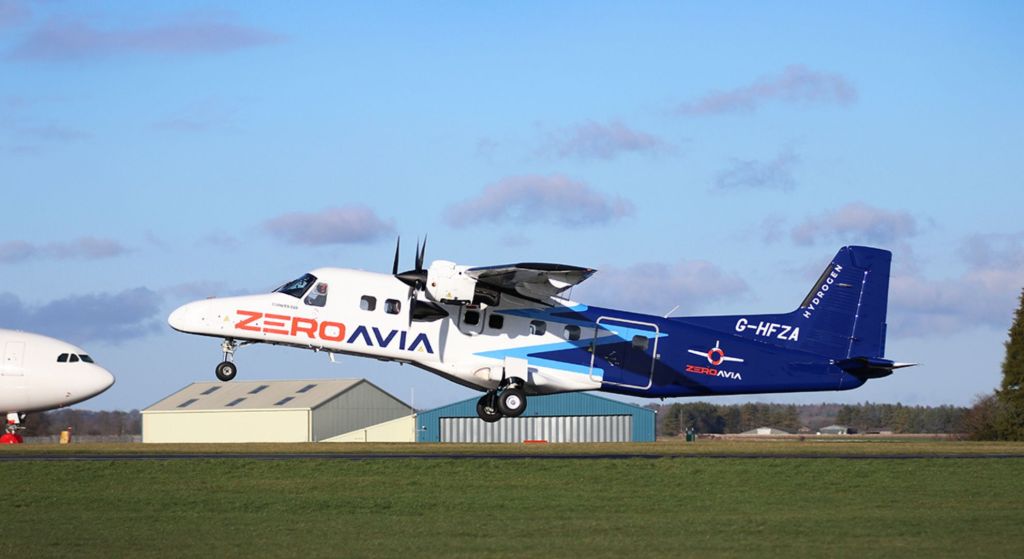
In November 1983, Dornier signed a license-production agreement with Hindustan Aeronautics Limited (HAL) in India. This agreement established a separate production line in Kanpur, where HAL produced its first Dornier 228 in 1985. Over the years, HAL manufactured 125 Dornier 228 aircraft in India, further expanding the reach of this versatile aircraft.
RUAG and the Dornier 228NG
In 2002, RUAG acquired the Dornier 228 production rights from Fairchild Dornier. Building on this acquisition, RUAG launched the Dornier 228 Next Generation (Dornier 228NG) in December 2007. New and improved features of the Dornier 228NG included a glass cockpit, more powerful engines, and a composite five-blade propeller. The first delivery of the Dornier 228NG took place in September 2010, marking a new era for this iconic aircraft.
General Atomics Acquisition
In 2020, General Atomics, a US business specializing in advanced technology solutions, purchased the Dornier 228 program from RUAG. This acquisition marked another chapter in the Dornier 228’s evolution, opening up new possibilities for future development and utilization.
Design
The Design of the Dornier 228 has played a crucial role in its success and versatility. With its rectangular fuselage section and large side-loading doors, the Dornier 228 is particularly well-suited for utility operators. The supercritical wing, a distinguishing feature of the Dornier 228, generates significant lift at slow speeds, making it ideal for short takeoff and landing operations. The wing structure is unique, consisting of a box formed from four integrally-milled alloy panels, with Kevlar used for the ribs, stringers, trailing edge, and Fowler flaps. The fuselage and tail are conventional, incorporating chemical milling to save weight.
Dornier 228NG: Enhanced Performance and Efficiency
Discuss the specific enhancements and design changes in the Dornier 228NG that contribute to improved performance metrics, such as increased speed, greater payload capacity, reduced fuel consumption, and enhanced operational efficiency.
Dornier 228 Safety Features and Reliability
Explore the safety features integrated into the Dornier 228 aircraft, including structural design elements, avionics systems, emergency procedures, and maintenance protocols. These features highlight its exceptional safety record and reliability in various operating conditions.
Dornier 228NG: Taking Design to the Next Level
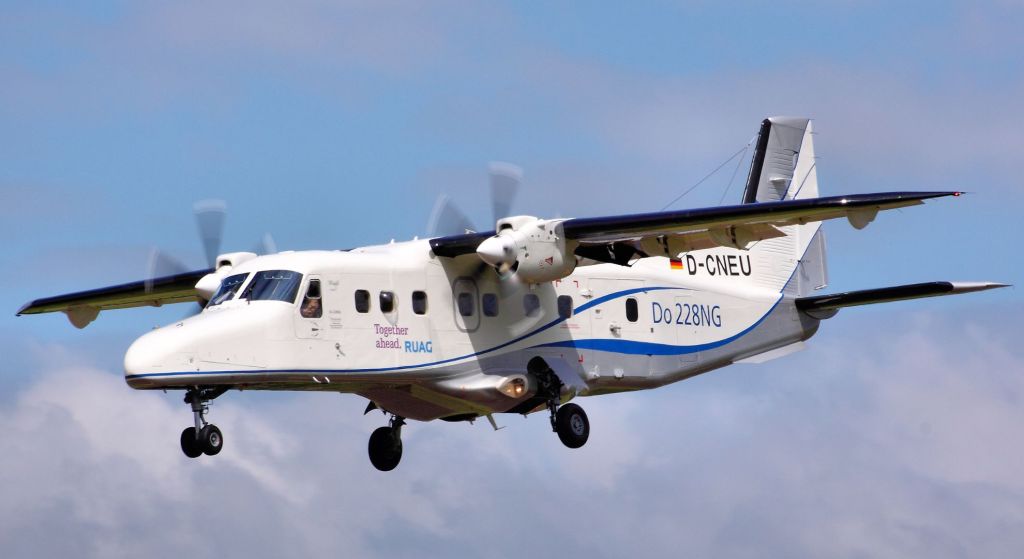
The Dornier 228NG builds upon the success of its predecessor, introducing more than 350 design changes. The plane can now be flown under visual and instrument flight rules (VFR) with just one pilot thanks to the installation of Universal’s UNS-1 glass cockpit, one of the most striking upgrades. Some of the more sophisticated components of the navigation system include a flight management system, a radar altimeter, a VHF omnidirectional range (VOR), a distance measuring equipment (DME), an automatic direction finder (ADF), and a Global Positioning System (GPS). The Dornier 228NG also features Garrett TPE331-10 engines optimized to work with redesigned five-bladed fiber-composite propellers, resulting in improved efficiency, reduced vibration, and noise. With these advancements, the Dornier 228NG offers unparalleled performance and reliability.
Operators
The Dornier 228 has gained popularity among both civil and military operators worldwide. Indian Air Force, Indian Coast Guard, and Indian Navy are among the primary users of this aircraft. Its versatility has also made it attractive to police, law enforcement, and paramilitary operators. By July 2018, there were 57 Dornier 228 aircraft in airline service, accumulating over four million flight hours.
Accidents and Incidents
Like any aircraft, the Dornier 228 has experienced accidents and incidents throughout its service history. As of January 2021, there have been 54 incidents involving the Dornier 228, resulting in 205 fatalities. While these incidents are unfortunate, it is essential to note that the Dornier 228 has a high level of reliability and an impressive safety record.
Specifications (Dornier 228NG)

The Dornier 228NG performs well due to its remarkable specs. Its wingspan is 16.97 meters, length is 16.56 meters, and height is 4.86 meters. The 32-square-meter wing has a Do A-5 airfoil. Dornier 228NGs weigh 3,900 kilos empty and 6,575 kg maximally. The two Honeywell TPE331-10 turboprop engines produce 579 kilowatts each. The airplane has 2.5-meter-diameter five-bladed MT-Propeller constant-speed propellers. It can carry 1,960 kg and cruise at 413 kilometers per hour, stall at 137 kilometers per hour, and cover 396 kilometers. The Dornier 228NG has a 7,620-meter service ceiling and 0.945 kg/km fuel consumption. It takes 792 meters to take off and 451 meters to land.
FAQ’s
1. What is a Dornier 228?
A twin-turboprop Short Takeoff and Landing (STOL) plane, the Dornier 228, was made in Germany by Dornier GmbH, now RUAG Aviation. It’s known for its versatility and reliability in various missions.
2. What are the primary uses of the Dornier 228?
The Dornier 228 serves various purposes, including passenger transport, cargo hauling, maritime surveillance, aerial photography, medevac operations, and military applications.
The Dornier 228 has undoubtedly left an indelible mark on the aviation industry. From its early days as a revolutionary aircraft to its latest incarnation as the Dornier 228NG, this versatile and reliable aircraft has proven its worth in various applications. Whether transporting passengers and cargo or performing special missions, the Dornier 228 continues to push the boundaries of aviation technology. With its rich history and promising future, the Dornier 228 remains a game-changer in the world of aviation.