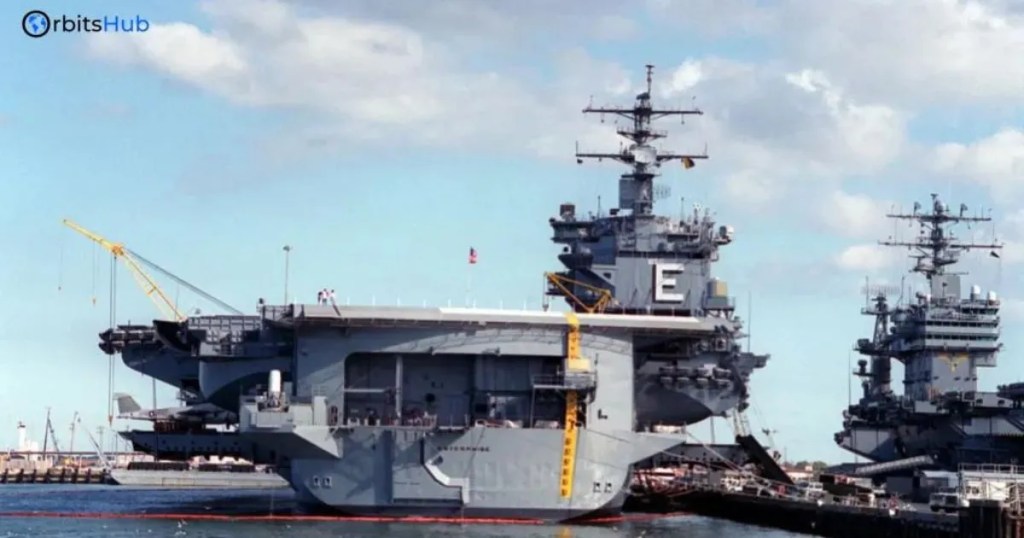
As the first aircraft carrier powered by nuclear energy, the USS Enterprise (CVN-65), sometimes called the “Big E,” occupies a unique position in naval annals. Commissioned in 1961, the Enterprise was pivotal in the U.S. Navy’s operations during the Vietnam War. However, its significance extended beyond wartime engagements. The post-Vietnam era marked a transition period for the Enterprise, shifting from combat operations to peacetime missions. This blog explores the USS Enterprise’s journey during this transitional period, highlighting its key roles and contributions.
The Legacy of USS Enterprise (CVN-65)
A Brief History of the USS Enterprise
The USS Enterprise (CVN-65) was launched in 1960 and commissioned in 1961, becoming the eighth U.S. Navy ship to bear the name. With a length of 1,123 feet, it was the longest naval vessel in the world. Its nuclear-powered propulsion system allowed it to operate for extended periods without refueling, a significant advancement.
During the Vietnam War, the Enterprise was crucial in providing air support and conducting operations in the Gulf of Tonkin. Its ability to project power and maintain a sustained regional presence was instrumental in several military campaigns. However, as the war ended and the geopolitical landscape evolved, the Enterprise faced new challenges and opportunities.
Transition to Peacetime Operations
The Shift from Combat to Peacetime Missions
The end of the Vietnam War in 1975 marked a significant turning point for the USS Enterprise. With the cessation of hostilities, the carrier’s role transitioned from a combat-focused platform to one oriented toward peacetime operations. This shift involved reorientating the ship’s mission and capabilities to support peacekeeping, humanitarian assistance, and international diplomacy.
One of the first significant peacetime missions for the Enterprise was its participation in Operation Frequent Wind, the evacuation of Saigon. This operation showcased the carrier’s versatility and ability to adapt to non-combat roles. Following this mission, the Enterprise continued to serve as a symbol of American naval power and diplomacy.
Humanitarian and Diplomatic Missions
In the years following the Vietnam War, the USS Enterprise participated in several humanitarian missions. These included providing disaster relief, medical aid, and support for international peacekeeping efforts. The carrier proved useful in transporting aid to areas hit by crises and natural catastrophes, expanding its role beyond military operations.
One notable example was the carrier’s involvement in evacuating American citizens from the Philippines during the eruption of Mount Pinatubo in 1991. The Enterprise provided crucial support in the evacuation efforts, demonstrating the Navy’s ability to respond quickly to emergencies.
Training and Readiness
As the Cold War continued, maintaining readiness and training for potential conflicts remained a priority. By taking part in a plethora of drills and war games, the USS Enterprise was an integral element of these endeavors. These exercises helped the Navy maintain combat readiness and tested the carrier’s capabilities in various scenarios.
The Enterprise’s crew underwent rigorous training to ensure they were prepared for any eventuality. This included flight operations, damage control, and coordination with other naval assets. The carrier’s ability to project power and serve as a platform for air operations remained critical to the Navy’s strategic planning.
Technological Advancements and Upgrades
Modernizing the USS Enterprise
The USS Enterprise underwent several upgrades and overhauls throughout its service to keep pace with technological advancements. These upgrades were essential to maintaining the carrier’s operational effectiveness and extending its service life.
One significant upgrade was the Comprehensive Overhaul and Refueling (COR) conducted between 1979 and 1982. This extensive modernization effort included refueling the ship’s nuclear reactors, upgrading its electronics and communication systems, and enhancing its defensive capabilities. These improvements ensured that the Enterprise remained a formidable force in the U.S. Navy’s fleet.
Integration of New Aircraft and Technologies
The USS Enterprise also integrated new aircraft and technologies as part of its modernization. Introducing advanced fighter jets, such as the F-14 Tomcat and later the F/A-18 Hornet, enhanced the carrier’s air wing capabilities. These aircraft were equipped with state-of-the-art avionics and weapon systems, providing the Enterprise with a powerful and versatile air strike capability.
Additionally, the carrier’s electronic warfare and defensive systems were upgraded to counter emerging threats. Integrating advanced radar and missile systems allowed the Enterprise to detect and engage potential adversaries more effectively. These technological advancements ensured the carrier could run in a rapidly changing global security environment.
The USS Enterprise (CVN-65) was pivotal in the U.S. Navy’s transition from the Vietnam War to a peacetime focus. As the world’s first nuclear-powered aircraft carrier, it set new standards in naval warfare and peacetime operations. The Enterprise demonstrated versatility and adaptability from humanitarian missions to technological upgrades. Its legacy will inspire generations of marine aviators and sailors.
As we remember the USS Enterprise, we must also consider how naval assets affect global peace and stability. The carrier’s journey from combat to peace highlights the evolving nature of military missions and the importance of readiness and adaptability.
For those interested in exploring naval history, maritime strategies, and aviation advancements, visit the OrbitsHub Website. OrbitsHub offers comprehensive consultancy services in the marine and aviation sectors, providing valuable insights and expertise.
Explore the future of maritime and aviation with OrbitsHub!