Hypersonic weapons have been gaining attention globally in recent years, especially in military and defence circles. These high-speed marvels are pushing the limits of technology and warfare. But what exactly are hypersonic weapons? Why are they so important, and how do they work?
In this blog, we’ll dive into the world of hypersonic weapons, explaining their basic principles, key types, and the potential they hold for revolutionizing modern warfare. We’ll also explore the advantages they offer and why countries around the world are investing heavily in their development. Buckle up because we’re about to take a deep dive into one of the most exciting advancements in defence technology.
Understanding Hypersonic Weapons
Hypersonic weapons are a class of weapons that can travel at speeds greater than Mach 5, which is five times the speed of sound (approximately 6,174 kilometres per hour or 3,836 miles per hour). These weapons are designed to be faster, more agile, and harder to intercept than conventional missiles. While traditional missiles follow predictable flight paths, hypersonic weapons move so quickly and erratically that they are almost impossible to track and stop using existing defence systems.
But speed isn’t the only thing that makes these weapons so formidable. The combination of speed, manoeuvrability, and altitude gives them unique advantages on the battlefield. To truly grasp the significance of hypersonic weapons, let’s break them down further.
Types of Hypersonic Weapons
There are two main types of hypersonic weapons: Hypersonic Glide Vehicles (HGVs) and Hypersonic Cruise Missiles (HCMs). Each type operates differently and serves different strategic purposes.
1. Hypersonic Glide Vehicles (HGVs)
HGVs are launched from a rocket or missile before gliding at hypersonic speeds towards their target. These weapons are capable of changing direction mid-flight, which makes them highly unpredictable. HGVs are typically launched into the lower parts of space before they re-enter the Earth’s atmosphere and glide towards their target, maintaining incredible speeds throughout the journey.
A prime example of HGVs is Russia’s Avangard system, which has demonstrated speeds in excess of Mach 27 (more than 33,000 kilometres per hour). This system’s ability to change direction mid-flight while maintaining its speed makes it extremely challenging for any defence system to intercept.
2. Hypersonic Cruise Missiles (HCMs)
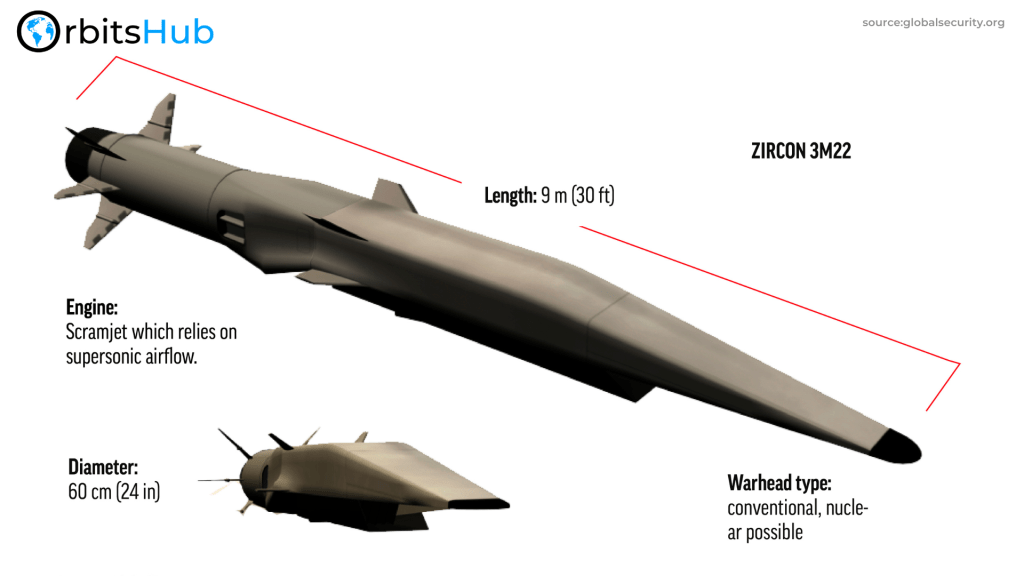
Unlike HGVs, which rely on high-altitude flight and glide, HCMs are powered by advanced scramjet engines. Scramjets allow the missile to maintain high speeds by continuously combusting fuel in a supersonic airstream, making these weapons incredibly efficient at hypersonic speeds. These missiles are typically launched from the ground or from aircraft, but their real strength lies in their ability to travel at sustained speeds of Mach 5 or higher while remaining within the atmosphere.
An example of an HCM is the United States Air-launched Rapid Response Weapon (ARRW), which is being developed for hypersonic missile capabilities. These weapons will be crucial in future conflict zones where speed and unpredictability are key.
How Hypersonic Weapons Work

Hypersonic weapons operate on a combination of principles that involve speed, high energy, and advanced propulsion. But how do they achieve the speeds they do, and what makes them so challenging to defend against? Let’s break it down into a few simple concepts.
Propulsion Systems in Hypersonic Weapons
The propulsion systems in hypersonic weapons are key to their extreme speeds. These systems fall into two main categories: rocket propulsion and scramjet engines.
Rocket Propulsion
For some hypersonic weapons, particularly HGVs, rocket propulsion is used to launch the weapon into space or at high altitudes before it glides back down toward its target. Rockets provide an initial boost to the weapon, giving it the necessary speed to achieve hypersonic velocities.
Scramjet Engines
Scramjets are a major technological leap forward. These engines operate by compressing air into the engine’s intake at supersonic speeds, which is then mixed with fuel and ignited to create thrust. The key to their efficiency lies in their ability to maintain this combustion at extremely high speeds, enabling hypersonic flight within the atmosphere.
Unlike traditional jet engines that require turbines and large mechanical parts to work, scramjets do not have moving parts, making them incredibly efficient for high-speed flight. They’re the propulsion system that powers many of the next-generation hypersonic cruise missiles.
Why Hypersonic Weapons Are a Game-Changer
There are several reasons why hypersonic weapons are so highly valued by military forces around the world.
1. Speed and Maneuverability
At speeds far beyond Mach 5, hypersonic weapons can strike targets before defences can react. This makes them a strategic advantage for surprise attacks and quick strikes, significantly reducing the window of opportunity for adversaries to defend themselves.
2. Hard to Detect and Intercept
Because of their high speed and unpredictable flight paths, these weapons are challenging to track using traditional radar and missile defence systems. This makes intercepting them very difficult. While conventional missiles follow a relatively predictable path, hypersonic weapons are capable of making sharp turns and altering their altitude mid-flight.
3. Precision Strikes
Many hypersonic weapons are designed to hit targets with pinpoint accuracy. Their ability to fly at high speeds without losing trajectory allows for devastatingly precise strikes on critical infrastructure or military targets.
Global Efforts in Developing Hypersonic Weapons
As of today, several countries are in a race to develop hypersonic weapons, seeing them as the future of military superiority. The United States, Russia, and China are among the most advanced nations in this field.
Russia
Russia has been at the forefront of hypersonic weapon development, with several successful tests of its Avangard HGV and Kinzhal missile. These weapons are seen as a direct response to NATO’s missile defence systems, offering Russia a way to bypass modern anti-missile technologies.
China
China has also made significant strides in the development of hypersonic weapons. The Chinese military has tested several different types of hypersonic missiles, including its DF-17 missile, which has a manoeuvrable warhead capable of delivering a precision strike at hypersonic speeds.
United States
The United States is catching up rapidly with Russia and China, investing heavily in hypersonic research. The U.S. Air Force, Navy, and DARPA (Defense Advanced Research Projects Agency) have all initiated projects to develop hypersonic capabilities, including the ARRW and the Hypersonic Attack Cruise Missile (HACM).
Challenges and Risks
Despite their promise, hypersonic weapons come with their own set of challenges and risks.
Technological Hurdles
Developing hypersonic weapons requires overcoming significant technological challenges, particularly in the areas of materials science and propulsion. The intense heat generated during hypersonic flight places enormous stress on the materials used to construct these weapons, making them prone to damage if not designed properly.
Cost and Resources
Research and development of hypersonic technology are extremely costly. The advanced materials, testing, and production capabilities required to build these weapons make them expensive to produce and maintain. Only a few nations have the resources to fund such high-stakes projects.
Escalation of Arms Race
The widespread deployment of hypersonic weapons could lead to an arms race, with more countries striving to develop and acquire these weapons. This could lead to increased global instability as nations struggle to maintain military balance.
The Future of Hypersonic Weapons
As technology continues to advance, the capabilities of hypersonic weapons will evolve. It’s likely that these weapons will become more affordable, efficient, and widespread, making them an integral part of future military arsenals. However, the development of effective defence systems to counter these threats will also be a priority for many nations.
Frequently Asked Questions
1. What is the difference between hypersonic weapons and supersonic missiles?
Hypersonic weapons travel at speeds greater than Mach 5, while supersonic missiles travel at speeds between Mach 2 and Mach 5. The key difference lies in their speed, manoeuvrability, and the challenges they pose to defence systems.
2. Are hypersonic weapons currently operational?
Yes, several countries, including Russia and China, have developed operational hypersonic weapons. The United States is also in advanced stages of developing and testing its own hypersonic missiles.