Defining Mediterranean Mooring
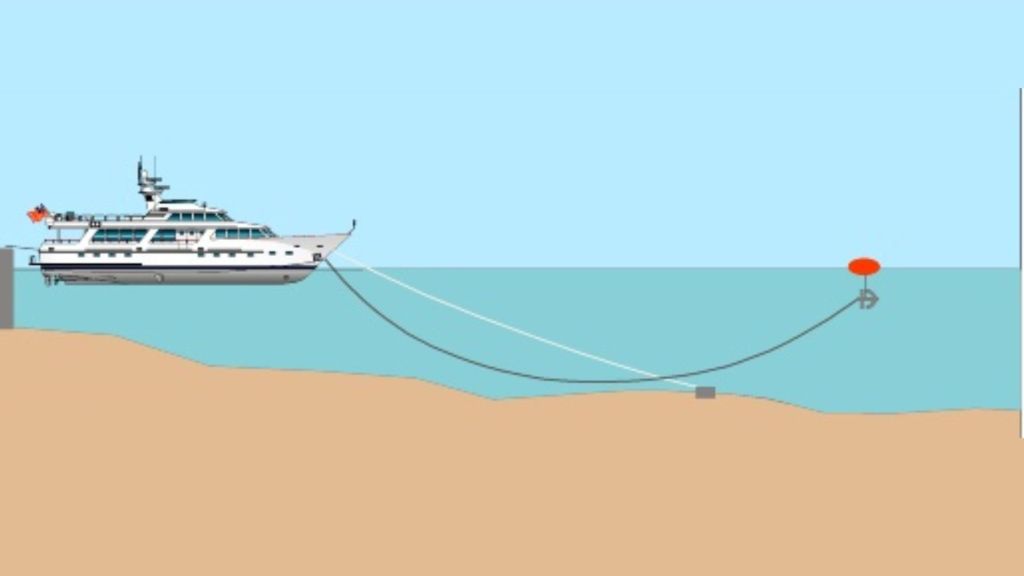
A Mediterranean mooring, also known as “Med mooring” or “stern-to mooring,” is a method of anchoring and securing a vessel in a marina or harbor, commonly used in the Mediterranean region and other parts of the world with a similar coastal layout. This mooring technique is used when there is limited space in the marina or when a boat is required to moor stern-first to the shore or a quay wall.
Here’s how a Mediterranean mooring typically works:
- Approach: The vessel approaches the designated mooring area with its stern (rear) facing the shore or quay wall.
- Anchoring: The boat drops its anchor some distance away from the shore, allowing it to swing around and come parallel to the quay wall. The anchor is set to ensure the boat doesn’t drift away.
- Backing in: The boat then reverses into the mooring spot while crew members or mooring personnel on the shore assist in guiding the boat’s stern towards the quay.
- Securing lines: Once the boat is close enough to the quay wall, crew members on board throw lines to individuals on the quay, who secure the lines to bollards, cleats, or other fixed points on the shore.
- Adjusting lines: After the initial lines are secured, additional lines may be attached to prevent the boat from swinging or moving excessively while moored. This provides stability and security.
- Fenders: Fenders (large, soft, inflatable cushions) are often used to protect the boat’s hull from damage while it is moored against the quay wall.
Mediterranean mooring is a useful way to make the most of limited room in marinas or when a boat is only there for a short time. But you need some skill and balance because moving the boat stern-first can be hard in some situations, and you need to be very careful with the lines to make sure the boat stays safely moored. Because many of the ports and marinas in the Mediterranean are crowded and old, this way of mooring is very popular there.
Components of Mediterranean Mooring
The successful implementation of Mediterranean Mooring relies on several critical components:
- Stern Lines: Stern lines are strong and heavy-duty mooring lines attached to the ship’s stern (rear). These lines are meticulously secured to bollards or cleats on the dock or quay, ensuring stability and preventing the ship from drifting away from the dock.
- Forward-Facing Anchors: In Mediterranean Mooring, anchors or similar devices are deployed from the ship’s bow (front) and are used in conjunction with the stern lines. These forward-facing anchors act as counterbalances to the stern lines, enhancing the ship’s stability.
How Mediterranean Mooring Works
The process of Mediterranean Mooring unfolds as follows:
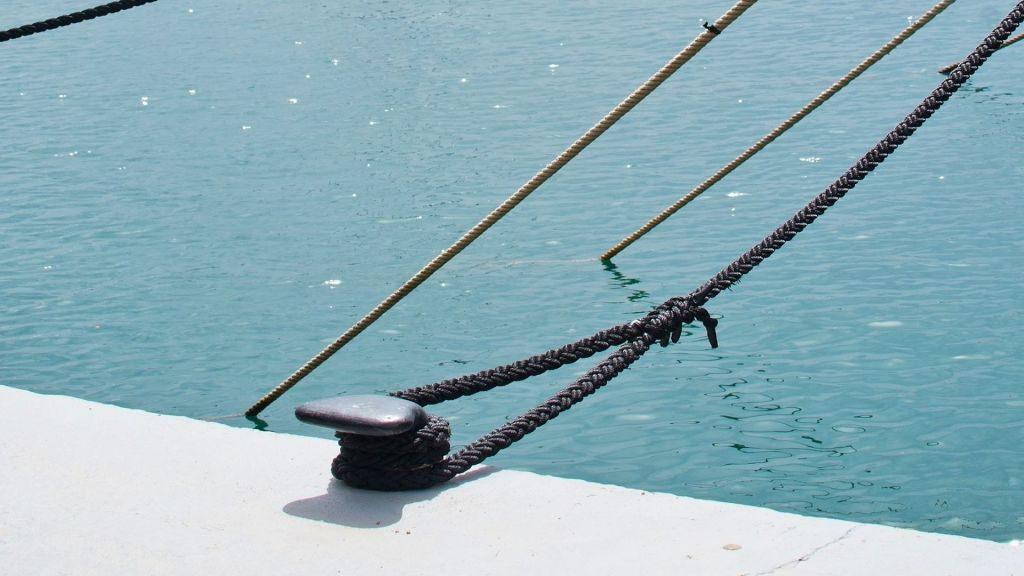
- Stern Line Attachment: Upon approaching the dock or quay, experienced crewmembers attach stern lines from the ship’s stern to bollards or cleats on the dock. These stern lines are typically made of robust materials and are crucial in ensuring the ship remains parallel to the dock during berthing.
- Forward-Facing Anchors Deployment: Forward-facing anchors are strategically deployed from the ship’s bow. The positioning of these anchors plays a critical role in maintaining the ship’s alignment parallel to the dock. These anchors are securely lowered to the seabed or the harbor floor.
- Berthing Parallel to the Dock: As the stern lines are expertly secured to the dock’s bollards and the forward-facing anchors are set, the ship is effectively berthed parallel to the dock. This unique mooring technique maximizes space utilization in busy ports and facilitates efficient cargo handling operations.
Types of Mediterranean Mooring
A. Stern-to mooring
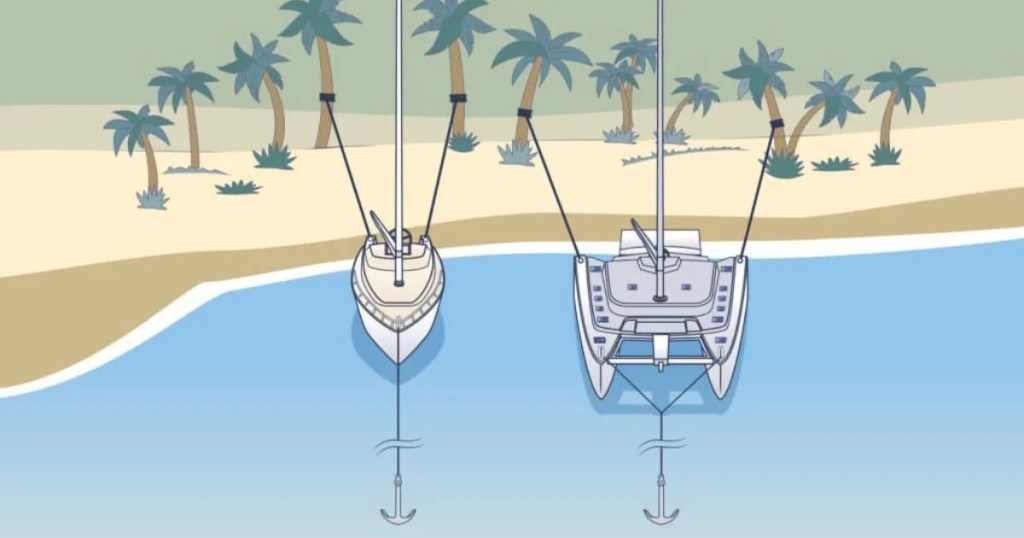
Stern-to mooring stands as the quintessential Mediterranean mooring technique. This method involves positioning the vessel with its stern facing the quay or dock. The boat’s bow points seaward, secured by an anchor dropped some distance from the shoreline. Stern-to mooring offers several advantages, including easier access to the vessel from the quay and improved maneuverability in tight spaces.
Mariners often prefer this approach due to its versatility in various harbor configurations. It allows for a more efficient use of limited dock space, accommodating a greater number of vessels along a given stretch of quayside. The stern-to orientation also facilitates simpler boarding and disembarking procedures, particularly beneficial for vessels with swim platforms or transom-mounted ladders.
B. Bow-to mooring
Bow-to mooring, while less common, presents an alternative approach to Mediterranean mooring. In this configuration, the vessel’s bow faces the quay, with its stern pointing towards open water. This method proves particularly useful in certain scenarios, such as when dealing with vessels featuring bow-mounted boarding ramps or for ships requiring bow access for loading and unloading operations.
The bow-to technique offers enhanced privacy for aft deck areas and can provide better protection for stern-mounted equipment in rough weather conditions. However, it may pose challenges in terms of visibility and maneuverability during the mooring process, especially for larger vessels. Skippers must exercise additional caution when employing this method to avoid potential collisions with neighboring boats or shore structures.
Equipment Required for Mediterranean Mooring

A. Anchor and chain
The anchor and chain combination forms the cornerstone of successful Mediterranean mooring. A robust anchor, typically a plow or Bruce-style design, ensures a secure hold on the seabed. The chain that goes from the anchor to the boat is very important for keeping the boat in place and reducing shock loads.
Selecting the appropriate anchor size and chain length is paramount. Factors such as vessel displacement, expected wind conditions, and bottom composition must be carefully considered. A general rule of thumb suggests using a scope (ratio of chain length to water depth) of at least 5:1 for optimal holding power. High-tensile strength chain, resistant to corrosion and abrasion, proves indispensable in these demanding mooring situations.
B. Mooring lines
Mooring lines serve as the critical connection between the vessel and the quayside. These lines, typically constructed from materials such as nylon or polyester, must possess sufficient strength and elasticity to withstand the constant forces exerted by wind, waves, and tidal changes.
A comprehensive mooring arrangement includes several types of lines:
- Bow lines: Secure the vessel’s bow to the quay
- Stern lines: Connect the stern to shoreside bollards or cleats
- Spring lines: Prevent fore and aft movement of the vessel
The judicious use of these lines, properly tensioned and arranged, ensures the vessel remains securely positioned while allowing for natural movement in response to changing conditions.
C. Fenders
Fenders play an indispensable role in protecting both the vessel and the quayside structure during Mediterranean mooring operations. These shock-absorbing devices, available in various shapes and sizes, buffer the impact of potential collisions and mitigate the effects of wave action and vessel movement.
Cylindrical fenders, often referred to as “sausage fenders,” prove particularly effective for Mediterranean mooring scenarios. Their elongated shape provides extensive coverage along the vessel’s hull. Alternatively, spherical or pneumatic fenders offer localized protection at key contact points.
Proper fender deployment requires careful consideration of the vessel’s freeboard, hull shape, and potential points of contact with neighboring boats or shore structures. Skippers must ensure fenders are positioned at appropriate intervals and secured with sturdy fender lines to maintain their effectiveness throughout the mooring period.
Step-by-Step Process of Mediterranean Mooring
A. Approach and positioning
The initial phase of Mediterranean mooring demands meticulous planning and execution. As the vessel approaches the designated mooring area, the skipper must assess prevailing wind and current conditions, as well as the available space between adjacent vessels.
Maintaining a slow, controlled speed, the vessel aligns itself perpendicular to the quayside. In stern-to configurations, the stern faces the shore, while bow-to arrangements reverse this orientation. Precise throttle control and wheel adjustments prove crucial during this stage, as the skipper aims to position the vessel at the optimal distance from the quay.
Clear communication between the helm and crew members stationed at bow and stern ensures coordinated action throughout the approach. Hand signals or radio communication facilitate this vital information exchange, particularly in noisy or windy conditions.
B. Dropping anchor
As the vessel reaches the predetermined anchoring position, typically four to six boat lengths from the quayside, the anchoring process commences. The designated crew member, positioned at the bow, prepares to deploy the anchor on the skipper’s command.
With the vessel maintaining minimal forward momentum, the anchor is lowered to the seabed. The crew pays out sufficient chain to achieve the desired scope, typically aiming for a 5:1 or greater ratio of chain length to water depth. This generous scope allows for proper catenary in the anchor rode, enhancing holding power and absorbing shock loads.
Once the anchor touches bottom, the vessel slowly reverses towards the quay. This backward movement helps set the anchor firmly into the seabed. The crew monitors the anchor’s hold by observing visual reference points on shore or utilizing electronic positioning systems.
C. Securing to the quay
As the vessel approaches the quayside, crew members prepare to deploy stern lines (or bow lines in bow-to configurations). Skilled hands toss heaving lines to shore handlers or utilize boat hooks to reach shoreside bollards or cleats.
The primary mooring lines are then attached and gradually tensioned. Spring lines follow, strategically positioned to prevent fore and aft movement. Throughout this process, fenders are adjusted to provide optimal protection along the vessel’s hull.
Fine-tuning the mooring arrangement involves careful adjustment of all lines to achieve a balanced tension. The anchor rode may require additional scope or take-up to maintain the vessel’s desired position relative to the quay and neighboring boats.
With all lines secured and properly tensioned, the Mediterranean mooring process concludes. The vessel now rests securely in its berth, ready to weather the dynamic conditions of a busy Mediterranean harbor.
Benefits of Mediterranean Mooring
Mediterranean Mooring offers several advantages, including:
- Space Efficiency: This mooring technique allows ships to berth parallel to the dock, optimizing space utilization in congested harbors and ports. It is particularly valuable in regions where dock space is limited.
- Efficient Cargo Handling: Mediterranean Mooring simplifies and expedites cargo loading and unloading operations. The ship’s parallel alignment to the dock allows for efficient access to cargo holds and minimizes the need for complex maneuvers.
Mediterranean Mooring is a valuable mooring method that enhances dockside security and efficiency in maritime operations. Its unique combination of stern lines and forward-facing anchors allows ships to berth parallel to the dock, maximizing space utilization in busy ports and facilitating the swift and secure handling of cargo.