

When we think about aircraft, many of us picture regular commercial planes or perhaps military jets zooming across the sky. However, there’s an entirely different class of aircraft that stands out for its exceptional capabilities — stealth aircraft. These remarkable machines are not like the planes most people are familiar with. They are designed with advanced technology that makes them nearly invisible to radar, a feature that has changed the way modern air forces operate.
In this blog, we will explore what makes stealth aircraft so different from regular planes, why they are crucial in military operations, and how they achieve their signature stealth capabilities.
Understanding Stealth Aircraft
What is a Stealth Aircraft?
Stealth aircraft are military planes designed to be less visible to radar and infrared detection. Unlike traditional aircraft, these planes are built with specialized materials and advanced technologies that reduce their radar cross-section, making them harder to detect.
Key Differences Between Stealth Aircraft and Regular Planes

Shape and Design
The most obvious difference between stealth aircraft and regular planes is their shape. Regular planes, whether commercial or military, often have sharp angles and traditional designs that are easily identifiable. However, stealth aircraft are designed with a very specific purpose in mind: to minimize visibility.
Materials Used
The materials used in constructing stealth aircraft are vastly different from those used in regular planes. Regular planes are typically made from aluminium alloys, which are lightweight and durable. In contrast, stealth aircraft are built using advanced composite materials, such as radar-absorbent materials (RAM), that can absorb radar waves rather than reflect them.
Radar Cross-Section (RCS)
A key factor that differentiates stealth aircraft from regular planes is their Radar Cross-Section (RCS). RCS refers to the amount of radar energy that an aircraft reflects back to the radar receiver. The larger the RCS, the easier it is for radar systems to detect an aircraft.
Heat Signatures
While radar is the primary means of detecting aircraft, heat signatures can also give away the position of a plane. Regular planes have engines that produce significant heat, which can be easily detected by infrared sensors.
Performance Capabilities of Stealth Aircraft
Speed and Maneuverability
When it comes to speed and manoeuvrability, regular planes and stealth aircraft differ in purpose and design. Regular planes, especially commercial aircraft, are built for efficiency and comfort, prioritizing fuel economy and passenger capacity. Military jets are designed for agility and speed but may sacrifice some stealth features to achieve maximum performance.
Operational Uses of Stealth Aircraft
Regular planes serve a wide range of purposes, from commercial air travel to cargo transport and military reconnaissance. Stealth aircraft, however, have a very focused mission: to conduct precision strikes and surveillance without being detected.
Why Stealth Technology Matters
The importance of stealth technology in modern warfare cannot be overstated. The advent of stealth aircraft has completely changed the nature of air combat. These planes give their pilots an edge by allowing them to strike without being noticed, making it much harder for enemy forces to react in time.
Stats and Facts About Stealth Aircraft
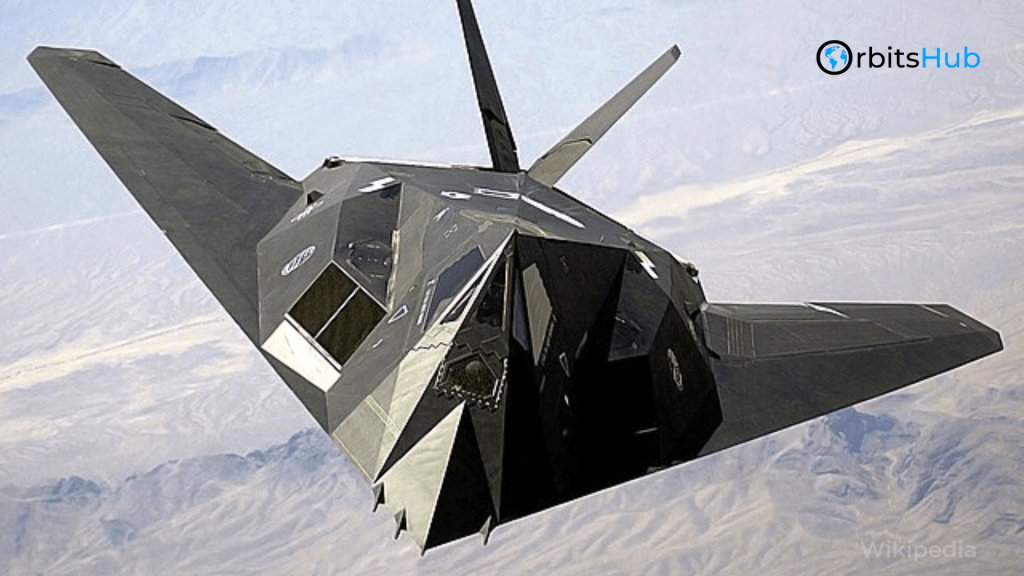
To understand the impact of stealth aircraft, some statistics must be considered. For instance, the F-22 Raptor, a fighter jet widely regarded as one of the most advanced stealth aircraft, has a top speed of 1,500 miles per hour (2,414 km/h) and a range of 1,839 miles (2,958 km).
The Future of Stealth Aircraft
Looking ahead, the development of stealth aircraft is not slowing down. New technologies, such as artificial intelligence (AI) and hypersonic propulsion systems, are likely to shape the future of these planes. In the coming years, stealth aircraft will become even more advanced, with greater ranges, higher speeds, and even better stealth capabilities.
Frequently Asked Questions
1. How does a stealth aircraft avoid detection by radar?
Stealth aircraft use unique designs and materials, such as radar-absorbing coatings and special shapes, to minimize their radar cross-section (RCS). This makes it harder for radar systems to detect them.
2. What are some examples of stealth aircraft?
Examples of stealth aircraft include the F-22 Raptor, the F-35 Lightning II, and the B-2 Spirit. These planes are used for a variety of military purposes, including combat and surveillance.


