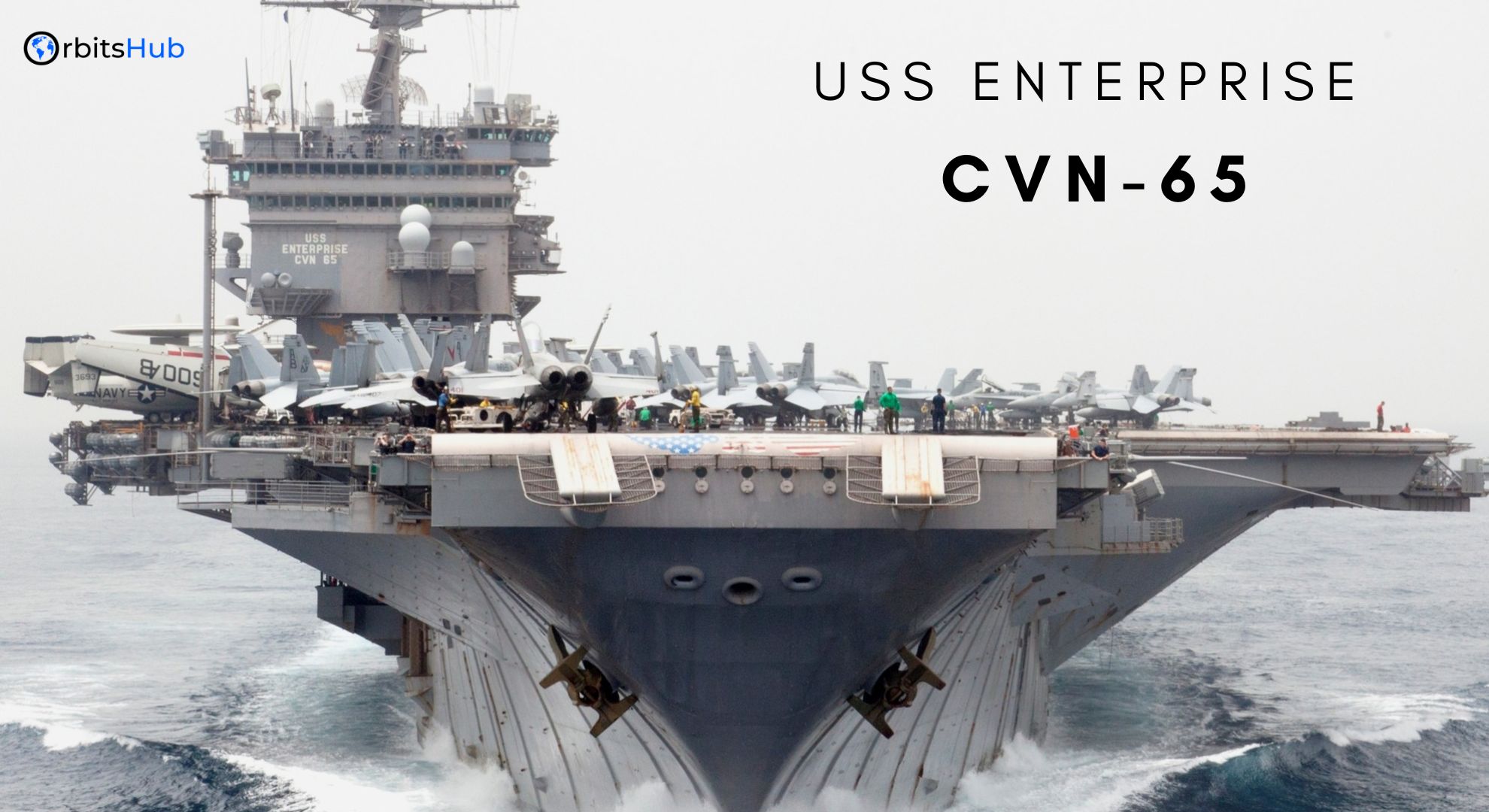
The USS Enterprise (CVN-65), often called “Big E,” holds a special place in maritime history. As the world’s first nuclear-powered aircraft carrier, this iconic vessel served the United States Navy with distinction for over five decades. From its commissioning in 1961 to its decommissioning in 2017, the USS Enterprise was pivotal in numerous military operations, technological advancements, and humanitarian missions. Let us delve into the incredible voyage of the USS Enterprise (CVN-65) in this blog, shedding light on its historical importance and the lasting impression it makes.
The Birth of an Icon: Construction and Commissioning
The Vision and Design
The idea of a nuclear-powered aircraft carrier was revolutionary in the 1950s. Traditional aircraft carriers relied on oil-fired boilers, which limited their range and required frequent refuelling. The concept of a nuclear-powered carrier promised unprecedented operational range and endurance. The Enterprise was designed to harness this potential, featuring eight nuclear reactors that allowed it to operate continuously for years without refuelling.
Construction Milestones
In 1958, the Newport News Shipbuilding and Drydock Company in Virginia began constructing the USS Enterprise. The ship’s keel was laid on 4th February 1958, and it took nearly three years to complete. The vessel was launched on 24th September 1960 and officially commissioned on 25th November 1961. The Enterprise was the longest naval vessel ever built at its commissioning, measuring 1,123 feet (342 meters).

Early Years: Cold War and Cuban Missile Crisis
Cold War Operations
The USS Enterprise entered service during the height of the Cold War, a period marked by intense rivalry between the United States and the Soviet Union. The carrier made its maiden voyage in the Mediterranean as a member of the Sixth Fleet, demonstrating the might of the United States Navy and its nuclear prowess.
The Cuban Missile Crisis
One of the most critical moments in the USS Enterprise’s early years was its involvement in the Cuban Missile Crisis of 1962. The deployment of the USS Enterprise to the Caribbean was part of a naval blockade that occurred during the height of U.S.–Soviet tensions over the deployment of nuclear missiles to Cuba. The carrier played a crucial role in enforcing the blockade and demonstrating America’s resolve, contributing to the peaceful resolution of the crisis.
Vietnam War: A Crucial Contributor
Combat Operations
The Vietnam War was a watershed moment in the USS Enterprise’s history. The carrier was deployed to the Gulf of Tonkin in 1965, where it launched airstrikes against North Vietnamese targets. Throughout the war, the Enterprise conducted numerous combat operations, providing air support to ground troops and engaging in bombing missions. Its ability to remain on station without refuelling made it a valuable asset in the protracted conflict.
Technological Advancements
The Vietnam War also saw the USS Enterprise play a role in advancing naval aviation technology. The carrier was equipped with the latest aircraft in various combat missions, including the F-4 Phantom II and the A-6 Intruder. The USS Enterprise’s operational capabilities and technological innovations set new standards for future aircraft carriers.
The Transition to Peace: Post-Vietnam Era
Humanitarian Missions
Following the end of the Vietnam War, the USS Enterprise continued to serve in various capacities, including humanitarian missions. In 1975, the carrier participated in Operation Frequent Wind, the evacuation of American citizens and Vietnamese refugees from Saigon as North Vietnamese forces advanced. This operation demonstrated the Enterprise’s versatility and commitment to humanitarian efforts.
Cold War Deterrence
Throughout the 1980s, the USS Enterprise remained vital to the United States’ strategic deterrence. The carrier deployed to numerous places, including the Persian Gulf and the Indian Ocean, to fight Soviet influence and guarantee stability. Its presence in these areas underscored America’s commitment to maintaining global security.
Gulf War and Beyond: USS Enterprise

Operation Desert Storm
The Gulf War of 1990-1991 was another significant chapter in the USS Enterprise’s history. The carrier played a crucial role in Operation Desert Storm, the coalition effort to liberate Kuwait from Iraqi occupation. The Enterprise launched airstrikes against Iraqi targets, contributing to the swift and decisive victory of coalition forces.
Post-9/11 Operations
The Navy sent out the USS Enterprise as one of the initial assets in reaction to the 9/11 terrorist attacks. The carrier participated in Operation Enduring Freedom, launching airstrikes against Taliban and Al-Qaeda targets in Afghanistan. Its role in these operations highlighted its continued relevance and adaptability in modern warfare.
Legacy and Decommissioning: USS Enterprise
Technological Innovations
The USS Enterprise was a platform for numerous technological innovations throughout its service life. The carrier equipped itself first with the Aegis Combat System, an advanced air defence system that significantly enhanced its operational capabilities. The USS Enterprise pioneered integrated nuclear propulsion, setting a precedent for future aircraft carriers.
Decommissioning
The Navy decommissioned the USS Enterprise on 3rd February 2017 after over 50 years of distinguished service. The carrier’s legacy, however, lives on in the form of the Gerald R. Ford-class carriers, which incorporate many of the technological advancements pioneered by the USS Enterprise. The name “Enterprise” will continue to inspire future generations, with plans for a new USS Enterprise (CVN-80) underway.
The USS Enterprise (CVN-65) was pivotal in shaping modern naval history. From its groundbreaking nuclear-powered design to its vital military and humanitarian missions, the “Big E” redefined aircraft carriers and showed the US Navy’s strength and agility. After reviewing its history, we can appreciate the USS Enterprise’s contributions to global security and innovation.
Explore the fascinating world of maritime and aviation history by visiting the OrbitsHub website. Discover how OrbitsHub can provide expert consultancy services in the marine and aviation sectors, helping you navigate the complexities of these dynamic industries.