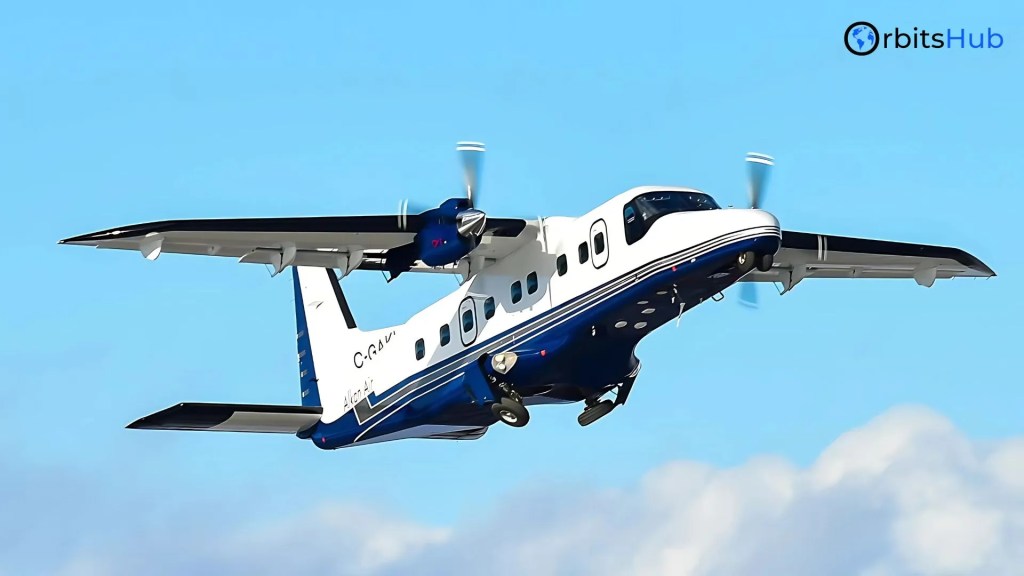
The Dornier 228 is great for getting people and goods to remote coastal areas and marine hubs quickly and reliably. This twin-turboprop is made for short routes and is very efficient. It can hover and has low running costs. It meets the needs of people who work in maritime and aviation, corporate leaders who want cost-effective solutions, and environmentalists who wish for eco-friendly transportation choices.
The Dornier 228: A Versatile Workhorse
Engineered for Short Takeoff and Landing (STOL)
The Dornier 228’s standout feature is its Short Takeoff and Landing (STOL) capability. With the ability to operate on runways as short as 1,500 feet, this aircraft thrives where larger planes simply can’t. This means seamless access to coastal airstrips or island destinations for maritime industry professionals, ensuring cargo and passengers move efficiently.
Aviation experts will appreciate how the aircraft’s high-wing design and robust landing gear handle unpaved or semi-prepared surfaces, making it ideal for challenging environments. Whether it’s a remote fishing village or a naval outpost, the Dornier 228 easily connects critical locations.
Compact Yet Capable Design
Don’t let its size fool you. The Dornier 228, available in 15- and 19-passenger variants, maximizes space without sacrificing performance. Corporate decision-makers will note its ability to carry up to 2,340 kg of cargo or serve as a commuter for small groups while maintaining low operational costs.
For defense officials, the aircraft’s modular cabin supports rapid reconfiguration for maritime patrol or medical evacuation missions. This versatility ensures the Dornier 228 meets diverse needs, from civilian transport to specialized operations, without requiring extensive infrastructure.
Unrivaled Efficiency for Short Routes
Fuel Efficiency and Cost Savings
In an era where every dollar counts, the Dornier 228 is a cost-effective solution. Powered by two Garrett TPE331 turboprop engines, it delivers impressive fuel efficiency, reducing operating expenses for short-haul routes.
Maritime professionals managing supply chains to offshore platforms will value how these savings translate into more frequent trips without breaking the budget. For corporate leaders, the aircraft’s low maintenance requirements further enhance its appeal, ensuring high utilization rates and a strong return on investment.
High Utilization in Demanding Environments
Short routes often have unpredictable conditions such as coastal fog, high winds, or scorching heat. The Dornier 228 is built to handle them all. Its rugged airframe and advanced avionics allow it to operate in hot climates and rough weather, making it a favorite for aviation experts overseeing regional networks.
Technology innovators will be intrigued by the Dornier 228 Next Generation (NG), which boasts a modern glass cockpit and five-blade composite propellers for enhanced performance. This reliability ensures consistent service, whether delivering supplies to a remote port or conducting surveillance for government agencies.
Specialized Applications for Maritime and Defense
Maritime Surveillance and Patrol
For maritime industry professionals and defense officials, the Dornier 228’s adaptability for surveillance is a game-changer. It excels in marine patrol, pollution control, and search-and-rescue missions, equipped with advanced radar systems and optional equipment like searchlights or satellite uplinks.
The aircraft’s ability to loiter over vast ocean expanses makes it indispensable for monitoring shipping lanes or combating illegal fishing. Government officials will appreciate its low operational costs and allow for frequent deployments, maximizing coverage without straining budgets.
Rapid Response and Flexibility
When disaster strikes, speed is critical. The Dornier 228’s quick reconfiguration capabilities make it a vital asset for emergency response. Maritime professionals coordinating relief to storm-hit coastal regions can rely on its ability to deliver supplies or evacuate personnel from short, makeshift runways.
Defense officials will value its role in transporting paratroopers or medical teams with a cabin that adapts to mission needs in hours. This flexibility ensures the aircraft remains relevant across scenarios, from humanitarian aid to tactical operations.
Sustainability and Modern Innovation
A Step Toward Greener Aviation
Sustainability advocates in transport will find the Dornier 228’s eco-friendly credentials compelling. Its fuel-efficient engines produce lower emissions than larger aircraft, aligning with global goals for greener aviation. Technology innovators also note experimental advancements, such as hybrid-electric and hydrogen-electric powertrains being tested on Dornier 228 platforms.
While these are still in development, they signal a future where short-haul routes could become even more sustainable, appealing to environmentally conscious decision-makers in the maritime and aviation sectors.
Cutting-Edge Upgrades in the Dornier 228 NG
The Dornier 228 Next Generation (NG) represents the pinnacle of modern engineering. With a glass cockpit featuring digital avionics, pilots benefit from enhanced situational awareness, reducing workload on short, demanding routes.
For aviation experts, the NG’s upgraded TPE331-10 engines offer greater power and efficiency, while the composite propellers minimize noise, a boon for communities near small airstrips. Corporate leaders eyeing fleet modernization will see the NG as a forward-thinking investment, blending proven reliability with cutting-edge technology.
Why Stakeholders Choose the Dornier 228

Bridging Remote Communities
For maritime professionals and government officials, connectivity is more than convenience. It’s a lifeline. The Dornier 228 bridges remote coastal and island communities, delivering passengers, cargo, and essential services where larger aircraft can’t.
Its ability to operate from minimal infrastructure makes it a catalyst for economic growth in underserved regions, earning praise from corporate decision-makers focused on social impact.
A Proven Track Record
With over 370 units produced and decades of service worldwide, the Dornier 228’s reliability is undeniable. Aviation experts trust its legacy, from its origins in Germany to its licensed production in India by Hindustan Aeronautics Limited (HAL).
Defense officials rely on its proven performance in roles like maritime surveillance, while technology innovators see its adaptability as a platform for future advancements. This track record reassures stakeholders that the Dornier 228 is a safe, dependable choice for short routes.
Dornier 228 solves short-route concerns in numerous ways. Marines and pilots praise its STOL, fuel efficiency, and agility; soldiers prefer its adaptability. Executives and environmentalists will like the plane’s affordability and functionality.
Dornier 228s excel in island transit, maritime patrolling, and emergency response. This plane fosters sea and air travel innovation, dependability, and connectivity as technology improves. Dornier 228 boosts creativity, reliability, and productivity.
FAQs
1. What makes the Dornier 228 ideal for short routes?
Its STOL capability, fuel efficiency, and ability to operate on short, unpaved runways make it perfect for reliably connecting remote maritime and coastal regions.
2. Can the Dornier 228 support maritime surveillance?
With advanced radar and long loiter times, it excels in maritime patrol, pollution control, and search-and-rescue missions for defense and government use.