Geographical Location

Within the Arctic Ocean lies the marginal sea known as the East Siberian Sea. Its nesting grounds are formed by the Arctic Cape to the north, the Siberian coast to the south, the New Siberian Islands to the west, Cape Billings, which is near Chukotka, and Wrangel Island to the east. This sea shares borders with the Chukchi Sea on the east and the Laptev Sea on the west.
Its Name Origin
The East Siberian Sea was given its current name in 1935 by a decree of the Soviet Government. Prior to this, the sea had no specific name and a multitude of titles were used interchangeably to refer to it in Russia. These included names like Indigirskoe, Kolymskoe, Severnoe (Northern), Sibirskoe, and Ledovitoe (Icy).
Climate Conditions
The Atlantic and Pacific oceans, as well as the Asian continent, have an impact on the polar climate that exists in the East Siberian Sea. The continent primarily affects it in the winter, when cold air from Siberia is brought in by southerly and south-westerly winds. Consequently, January’s average temperature is roughly -30 °C. The weather is clear, calm, and stable with cyclones making sporadic appearances.
Unique Hydrology
The East Siberian Sea has a unique hydrology characterized by constant surface currents directed from west to east. These currents are weak and can temporarily change direction due to the wind. The tides in this sea are semidiurnal (rising twice a day) with an amplitude between 5 and 25 cm.
Ice Formation

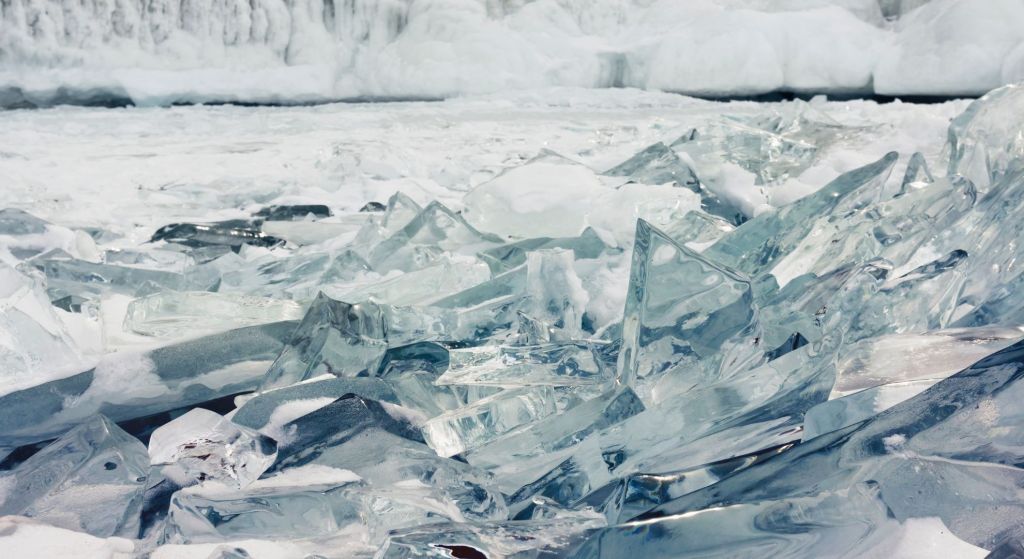
The East Siberian Sea freezes from October to November and again in June and July. Near the coast, the ice is continuous and stationary, and by the end of winter, it has grown to a thickness of two meters. The ice cover becomes drifting ice farther out into the sea, which is between two and three meters thick.
Flora and Fauna
Despite the harsh climate, the East Siberian Sea hosts a diverse array of wildlife. Together with their predator, the polar bear, the seashores and icefields are home to walruses, bearded seals, and ringed seals. Seagulls, uria, and cormorants are examples of birds. Whales such as the bowhead, gray, beluga, and narwhal frequent sea waters. Grayling and Coregonus (whitefish), including muksun, broad whitefish, and omul, are the two main species of fish.
Human Interactions
Indigenous tribes of the Yukaghirs, Chukchi, and later Evens and Evenks have inhabited the East Siberian Sea coast for thousands of years. The Yakuts and then the Russians eventually assimilated these tribes. Pevek, the northernmost city on the Russian mainland, is the only city and port on this sea.
Economic Significance
Most cargo crossings of Russia’s northern coast occur in the months of August through September via the East Siberian Sea. The remaining floating ice, which is occasionally carried down to the southern shores by winds, makes navigation difficult even in the summer. Although they are merely local pursuits, fishing and marine animal hunting are still practiced as customs.
Environmental Concerns
Seawater is generally clean when industrial activity isn’t present. Minor contaminations, however, can be found in Chaunskaya Bay because of the nearby thermal power plant and activities at the major port Pevek, as well as in the vicinity of the Novosibirsk and Wrangel islands as a result of sporadic oil spills.
Historical Importance
Russia’s history has been significantly impacted by the East Siberian Sea. During the 1930s, Ambarchik, a coastal settlement situated at the Kolyma River delta, served as a temporary labor camp from which prisoners were sent to other camps in the Gulag system located in the north.
Research and Exploration
A number of expeditions in 1735–42, 1820–24, 1822, 1909, and 1911–14 conducted systematic exploration and mapping of this sea and its coast. The East Siberian Sea is still one of the least studied in the Arctic region despite these efforts.
Future Developments
Future developments in the East Siberian Sea are planned. For instance, a plan called for building a floating 70 MW atomic power plant in place of Pevek’s outdated thermal power plant by 2015.