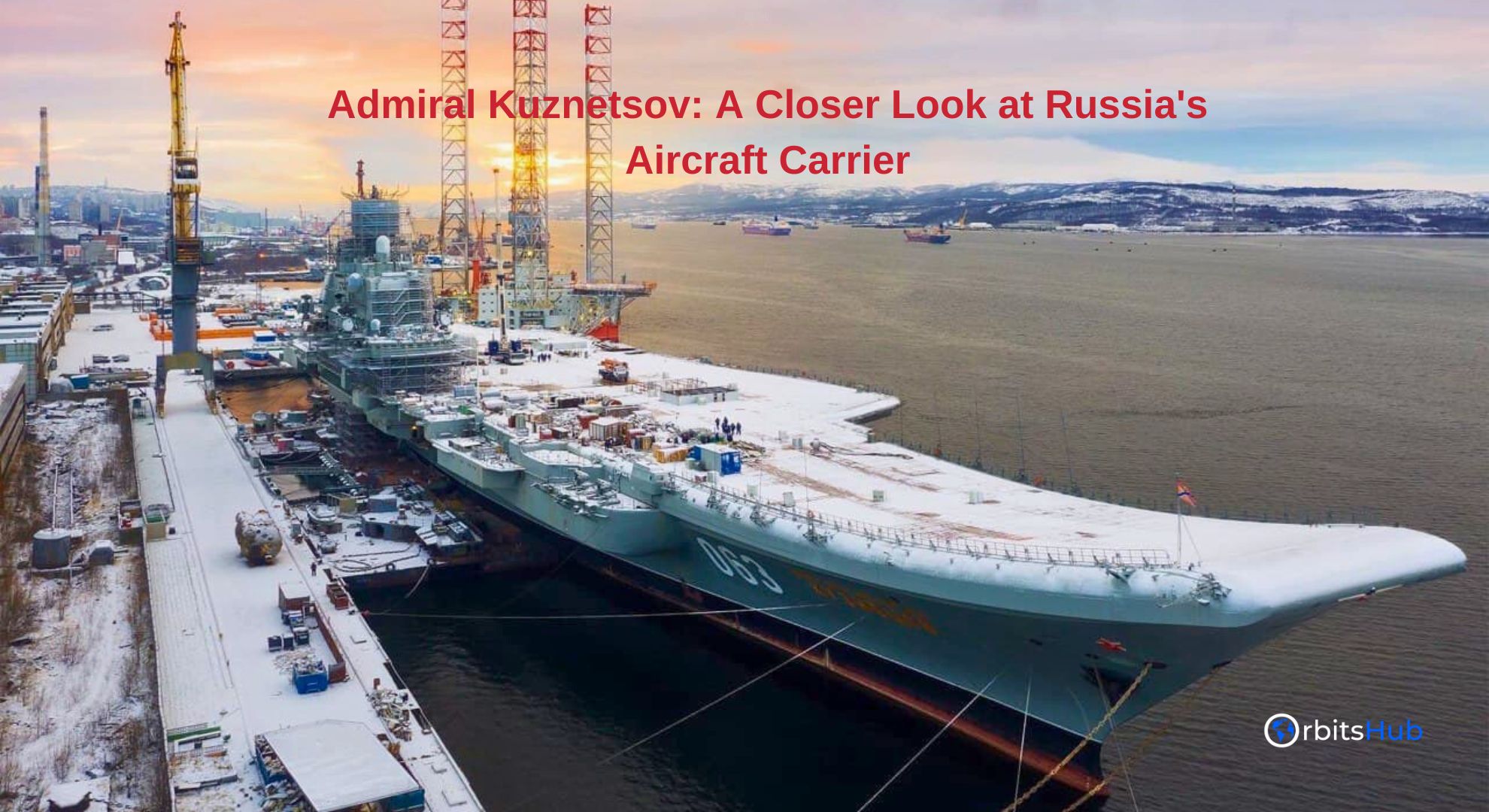
The Admiral Kuznetsov is a ship that often divides opinion. Nicknamed “Kuznetsov, the carrier that coughs” by some and a symbol of Russian aircraft carrier naval power by others, this behemoth of the seas has a long and exciting history. In this blog, we’ll take a closer look at Admiral Kuznetsov, exploring its design, capabilities, and the controversies surrounding it.
A Legacy of the Soviet Era
Admiral Kuznetsov’s story began in the 1980s, a product of the Cold War rivalry between the Soviet Union and the United States. Designed to respond to American aircraft carriers, the Kuznetsov was intended to project Soviet naval power globally. Launched in 1985 under the name Riga, it was later renamed after the famous Russian Admiral Nikolai Kuznetsov.
The ship’s design is unique. Unlike American carriers that use catapults to launch their aircraft, the Kuznetsov relies on a ski-jump ramp. This system allows the airline to operate fixed-wing aircraft but with payload and takeoff weight limitations compared to catapults. Additionally, the Kuznetsov carries a significant anti-ship missile armament, blurring the lines between a traditional aircraft carrier and a heavily armed cruiser.
The Admiral’s Arsenal: Aircraft and Armaments
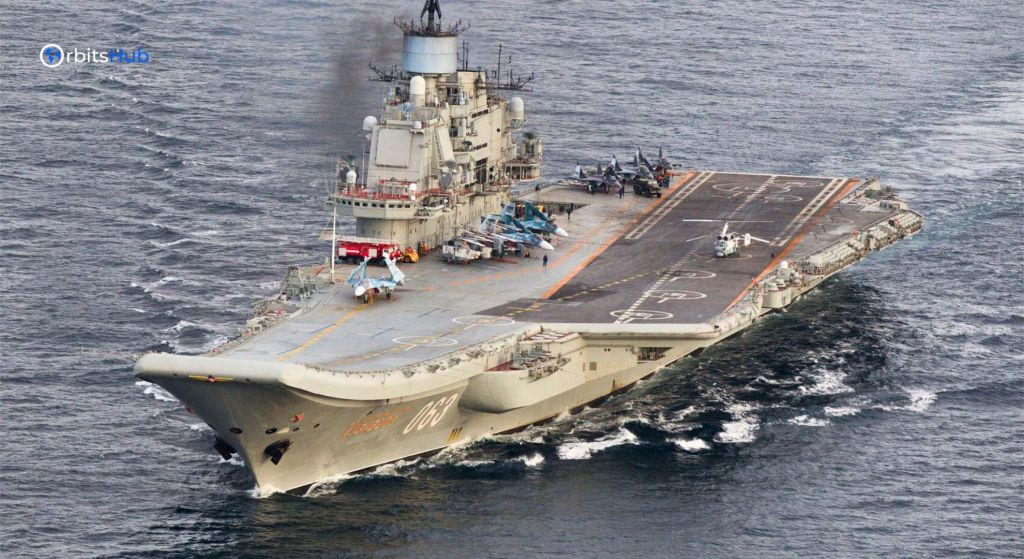
The Admiral Kuznetsov boasts an air wing of around 28 aircraft, including:
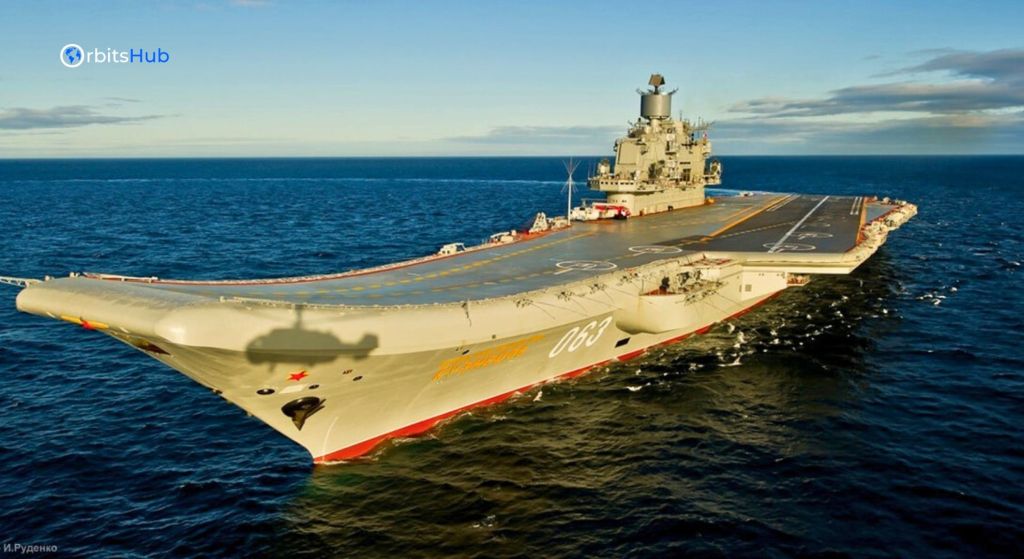
- Sukhoi Su-33: This is the primary fighter jet flown from the Kuznetsov. The Su-33 is a powerful aircraft, but the ski-jump launch system limits its effectiveness.
- Mikoyan MiG-29K: This multirole fighter provides air defence and can conduct ground attack missions.
- Ka-27 Helix: These helicopters serve various purposes, including anti-submarine warfare, search and rescue, and transport.
The Kuznetsov also has powerful anti-ship missile systems. The most impressive of these is the P-700 Granit missile, which can easily destroy enemy ships.
A History of Service and Controversy
Admiral Kuznetsov has seen active service in several conflicts, including the Syrian Civil War. However, its deployments have often been marred by technical problems and accidents. A major fire in 2019 during a refit caused significant damage, raising questions about the carrier’s long-term viability.
Kuznetsov’s effectiveness as a modern aircraft carrier is also debated. While it carries a respectable air wing, its reliance on the ski-jump launch system and its age compared to American carriers limit its capabilities.
The Kuznetsov and Russian Geopolitical Aspirations
Admiral Kuznetsov is more than just a warship; it’s a potent symbol of Russia’s desire to maintain a robust naval presence on the global stage. During the Soviet era, the Kuznetsov served as a reminder of the USSR’s ability to project military might worldwide. Following the Cold War, the carrier continued to showcase Russian naval capabilities, particularly during deployments to the Mediterranean Sea and the North Atlantic.
The deployment of Kuznetsov to the Syrian Civil War in 2016 underscored Russia’s strategic objectives in the Middle East. The carrier served as a launch platform for airstrikes against Syrian rebel forces and a symbol of Russia’s commitment to supporting the Assad regime. While Kuznetsov’s effectiveness in the conflict was debated, its presence clearly showed Russia’s willingness to use military force to further its geopolitical interests.
Modernization Challenges and the Future of Russian Carrier Aviation
The Admiral Kuznetsov’s future is clouded by uncertainty. The 2019 fire during a refit caused extensive damage, raising questions about the feasibility and cost of effectively modernizing the ageing carrier. Upgrading the Kuznetsov to address its technical shortcomings and bring it closer to the capabilities of American carriers would require a significant investment.
Russia has also begun constructing a new class of aircraft carriers, the Project 23000 “Storm” carriers. These next-generation carriers will utilize catapult launch systems and are intended to rival American carriers in capability. However, the Project 23000 carriers are still under development, and it will likely be several years before they enter service.
In the meantime, Admiral Kuznetsov will likely remain the centrepiece of Russian carrier aviation. Modernization efforts may focus on ensuring its operational viability rather than achieving a complete overhaul. The future of Russian carrier aviation hinges on the success of the Project 23000 program. If these new carriers are built and operational, they will mark a significant step forward for Russian naval power.
The Future of the Kuznetsov
The future of the Admiral Kuznetsov remains uncertain. Russia is committed to modernizing the carrier, but the extent and cost of the upgrades are significant.The Kuznetsov symbolizes Russian naval ambition. While American carriers may overshadow its capabilities, it remains a powerful warship with a unique history.
Are you considering a career in the maritime or aviation industry? OrbitsHub offers consultancy services to help businesses navigate the world of complex marine and aviation operations. Contact OrbitsHub today and see how we can help your business take flight!