As the sun rises over the Gulf of Kutch, casting a golden glow across the vast expanse of water, a bustling hive of activity comes to life. Massive cargo ships dot the horizon, their silhouettes growing more prominent as they approach the coast. This is Mundra Port, the crown jewel of Gujarat’s maritime infrastructure and a testament to India’s growing economic might.
Nestled in the Kutch district of Gujarat, Mundra Port has transformed from a sleepy coastal town to India’s largest commercial port in just a few decades. Mundra Port’s story is characterized by vision, ambition, and relentless growth, which have not only reshaped the local landscape but also the entire economic geography of western India.
The Rise of a Maritime Giant
When the first vessel docked at Mundra’s newly constructed jetty in 1998, few could have imagined the scale of what was to come. Mundra Port handles a staggering cargo volume today, dwarfing its humble beginnings. In the fiscal year 2023, the port processed over 150 million metric tons (MMT) of cargo, representing more than 25% of India’s total maritime trade.
To put this growth into perspective, let’s look at the port’s cargo handling capacity over the years :
Mundra Cargo Capacity Over the Years
This exponential growth has been about more than just numbers. It’s a story of human ingenuity, cutting-edge technology, and strategic vision coming together to create a world-class facility.
The Heartbeat of Kutch’s Economy

Walk through the streets of Mundra town today, and you’ll feel the pulsating energy of a place transformed. Where modest fishing villages once stood, modern apartments, bustling markets, and state-of-the-art educational institutions now rise. The port has become the region’s lifeblood, directly and indirectly employing thousands and spurring ancillary industries.
A local businessman, Rajesh Adani, recalls the change: “Twenty years ago, we couldn’t imagine staying here. Now, my children study in top schools, and we have access to world-class healthcare. The port has given us a future we never dreamed of.”
This transformation extends far beyond Mundra. The port’s strategic location and excellent connectivity have made it the preferred gateway for trade in North and Northwest India. Goods from as far as Delhi and Punjab find their way to global markets through Mundra’s efficient channels.
A Port of Many Firsts
Mundra Port isn’t just about size; it’s about innovation. It boasts several firsts in Indian maritime history:
Milestones in Indian Port History
The first port in India to handle 100 million tons of cargo in a year was achieved in 2013-14.
We were the first to use Radio Frequency Identification (RFID) technology for smooth cargo tracking.
It was the first to establish a specialized container terminal capable of handling more than 2 million TEUs, or twenty-foot equivalent units.
These innovations have set new benchmarks for efficiency in Indian ports. The average turnaround time for ships at Mundra is just 0.7 days, compared to the national average of 2.5 days. This efficiency translates into significant business cost savings and contributes to India’s improving ease of doing business rankings.
Sustainability: Balancing Growth and Environment
As Mundra Port has grown, so has its commitment to environmental sustainability. The port has implemented several green initiatives, including
Port Sustainability Highlights
Wind Power: Port operations are powered by a 50 MW wind farm.
Mangrove Plantations: Extensive mangrove plantations cover over 2,800 hectares.
Water Management: There is a zero-water discharge policy and state-of-the-art water treatment facilities.
These efforts have earned Mundra Port recognition as one of Asia’s most environmentally friendly ports. In 2019, it became the first Indian port awarded the prestigious Green Port certification by the World Ports Sustainability Program.
The Road Ahead
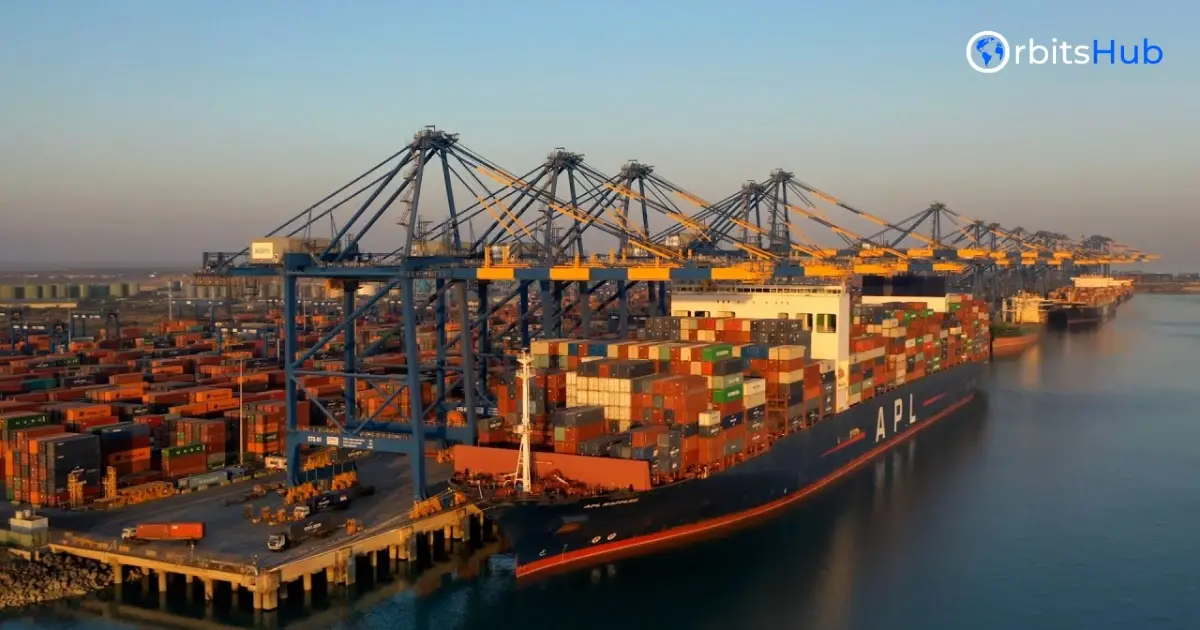
The story of Mundra Port is far from over. With plans to expand its capacity to over 500 million tons annually by 2025, it’s poised for even greater heights. This expansion isn’t just about numbers; it’s about cementing India’s position as a global trade powerhouse and bringing prosperity to millions.
As the sun sets over the Gulf of Kutch, casting long shadows across the bustling port, one can’t help but feel awe at what human ambition and perseverance can achieve. Mundra Port stands not just as a gateway to Gujarat but as a symbol of India’s maritime aspirations and economic potential.
Frequently Asked Questions
Mundra Port has been a game-changer for the local economy of Kutch. It has created thousands of direct and indirect jobs, attracted numerous secondary industries, and significantly improved the region’s infrastructure. The port’s presence has led to the development of schools, hospitals, and other social amenities, raising the overall quality of life in the area. Moreover, it has put Kutch on the global trade map, attracting investments and business opportunities that were unimaginable a few decades ago.
Mundra Port’s efficiency stems from a combination of factors:
1 .Its state-of-the-art infrastructure, including deep draft berths and modern cargo handling equipment, allows it to accommodate larger vessels and process cargo faster.
2. The port has implemented advanced technologies like RFID tracking and automated gates, which streamline operations and reduce delays.
3. Its strategic location and excellent connectivity (road, rail, and pipeline) ensure smooth cargo evacuation.
4. The port’s management has consistently focused on operational excellence, setting benchmarks for turnaround times and cargo handling speeds that surpass national averages.