The European aerospace giant Airbus is poised to unveil its groundbreaking “Wingman” concept at the prestigious International Aerospace Exhibition (ILA) in Berlin. This cutting-edge innovation represents a paradigm shift in military aviation, introducing a new era of uncrewed support military Airbus designed to augment the capabilities of human-crewed combat jets.
A Visionary Approach to Mission Success
In military aviation, the term “wingman” traditionally refers to a pilot in a separate aircraft who provides protection and support to the lead pilot. However, Airbus’ Wingman concept takes this notion to unprecedented heights, introducing an unmanned fighter-type drone that operates under the command of a pilot in a human-crewed combat aircraft, such as the formidable Eurofighter.
This revolutionary uncrewed aircraft is engineered to undertake high-risk mission tasks that could endanger manned aircraft. By seamlessly integrating the Wingman into combat operations, Airbus aims to enhance mission success rates and elevate the overall effectiveness of aerial combat missions.
A Glimpse into the Future: The ILA Berlin Showcase
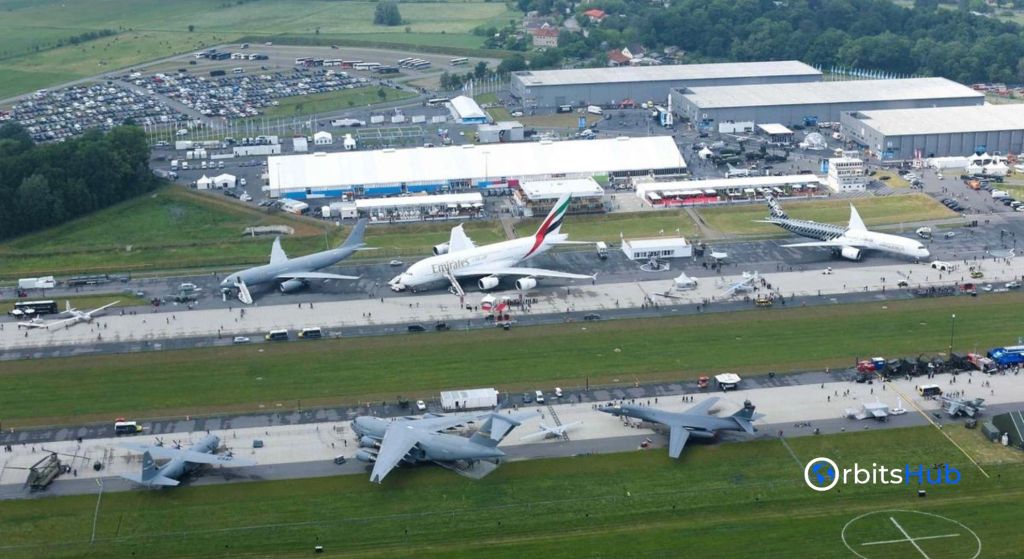
At the ILA Berlin Air Show, running from June 5 to 9, Airbus will unveil a stunning 1:1 scale model of the Wingman, akin to a “show car” in the automotive industry. This full-size exhibit will showcase the envisioned capabilities of the Wingman, including:
- Low Observability: The sleek, angular design and flat surfaces are meticulously crafted to minimize radar cross-section (RCS), enhancing stealth capabilities.
- Armament Integration: The model will demonstrate the potential for integrating a diverse array of armaments, from precision-guided munitions to advanced missiles.
- Advanced Sensors: State-of-the-art sensor technologies will be highlighted, enabling enhanced situational awareness and target acquisition.
- Connectivity and Teaming Solutions: The Wingman’s ability to seamlessly integrate with human-crewed aircraft and operate as part of a coordinated team will be showcased.
While not all features displayed may make it into the final production model, this exhibit serves as a foundation for driving design requirements and refining the capabilities of future generations of Wingman drones.
A Strategic Response to Evolving Threats
Before the Future Combat Air System launched in 20 years, Airbus Defence and Space CEO Michael Schoellhorn said the German Air Force needed an uncrewed aircraft to support its fighters. Wingman is the answer—a cheap choice with the performance to optimize impacts and double fighter fleet power in the 2030s.
Wingman tasks include surveillance, target jamming, and precision-guided missile and ammunition engagement. Unmanned systems protect and reduce danger, but pilots make final choices and command fighters.
Enhancing Combat Mass and Operational Flexibility
One key focus of the Wingman concept is to increase combat mass affordably, enabling air forces to match or even surpass the capabilities of opposing forces in conflicts with peer or near-peer adversaries. By integrating these unmanned platforms, Airbus aims to revolutionize the way military aviation operations are conducted, providing a force multiplier effect and enhanced operational flexibility.
A Collaborative Effort Towards Innovation
The Wingman concept represents a significant milestone in Airbus’ ongoing pursuit of innovation in the aerospace sector. By leveraging its extensive expertise and collaborating with key stakeholders, including the German Air Force, Airbus is poised to shape the future of aerial combat.
Airbus will incorporate feedback and insights from the ILA Berlin exhibition as the Wingman concept evolves, refining the design requirements and operational concepts to ensure optimal performance and adaptability in future combat scenarios.

Redefining the Battlespace: Operational Advantages
The integration of the Wingman into military aviation operations promises to redefine the battlespace, offering numerous operational advantages:
- Force Multiplication: By augmenting human-crewed combat aircraft with unmanned platforms, air forces can effectively multiply their combat power, increasing their overall effectiveness.
- Risk Mitigation: Deploying unmanned systems in high-risk missions reduces the exposure of human pilots to potential threats, enhancing overall mission safety.
- Operational Flexibility: The ability to rapidly deploy and coordinate manned and unmanned assets enables greater tactical agility and responsiveness to dynamic combat situations.
- Cost-Effectiveness: Leveraging unmanned platforms can reduce operational costs associated with human-crewed aircraft, enabling more efficient resource allocation.
- Interoperability: The Wingman’s seamless integration with existing operated combat aircraft systems ensures seamless interoperability and enhanced coordination within the battlespace.
Advancing Stealth and Survivability
The Wingman’s stealthy design is a testament to Airbus’ commitment to cutting-edge aerospace engineering. The aircraft’s sleek, angular lines and flat surfaces are meticulously craft to minimize radar cross-section (RCS), enhancing its ability to evade detection by enemy radar systems.
Sensor Suite and Connectivity: Enhancing Situational Awareness
Situational awareness is paramount in modern aerial combat, and the Wingman is design to excel in this domain. The aircraft will include enhanced sensors for collecting and analyzing real-time battlespace data.
These sensors may include:
- Electro-Optical/Infrared (EO/IR) Sensors: Providing high-resolution imagery and thermal data for target acquisition and identification.
- Synthetic Aperture Radar (SAR): Enabling all-weather, day/night surveillance and mapping capabilities.
- Electronic Support Measures (ESM): Detecting and identifying hostile radar emissions for electronic warfare applications.
Furthermore, the Wingman will feature advanced connectivity solutions, allowing seamless data exchange and coordination with human-crewed combat aircraft and other assets within the network-centric warfare environment.
Armament Capabilities: Precision and Versatility
The Wingman can carry a variety of precision-guided weapons and missiles, although its armament combinations are still being finalize. This versatility will enable the Wingman to engage various targets, from ground-based installations to airborne threats.
Potential armament options may include:
- Air-to-Ground Missiles: Enabling precision strikes against hardened or deeply buried targets.
- Air-to-Air Missiles: Air defence capabilities against hostile aircraft or uncrewed aerial vehicles (UAVs).
- Precision-Guided Munitions: Offering a range of guided bomb options for surgical strikes on high-value targets.
The integration of these armaments will be seamless, ensuring optimal performance and lethality while minimizing collateral damage.
Command and Control: Leveraging Human Decision-Making
While the Wingman will operate autonomously, pilots in human-crewed combat aircraft will retain ultimate control and decision-making authority. These “command fighters” will dynamically task and re-task the Wingman to meet mission goals.
This human-in-the-loop strategy keeps potentially lethal decisions in the hands of qualified pilots, reducing the risks of completely autonomous systems.
Collaborative Combat Operations: Teaming and Swarming
Wingman is designed to work alone and in conjunction with human-crewed combat aircraft and other unmanned systems. This collaborative approach enables the implementation of advanced tactics, such as swarming and distributed operations.
Merging human and unmanned platforms lets air forces respond fast to changing combat scenarios and outmanoeuvre opponents.
Affordability and Sustainability: Addressing Financial Constraints
One key driver behind the Wingman concept is the need to address the financial constraints faced by modern air forces. Airbus hopes to maximize the combat effectiveness of manned fighter aircraft at a reasonable price by using unmanned systems.
Wingman’s lower development and operational costs than human-crew combat aircraft allow air forces to increase combat mass and reach cheaper.
International Collaboration: Fostering Interoperability
The Wingman concept is initially tailor to the German Air Force, but Airbus sees potential for worldwide collaboration and interoperability. The company aims to engage with other allied nations as the project progresses, fostering cooperation and standardization efforts.
Airbus can improve multinational coalitions in future combat scenarios by synchronizing Wingman’s capabilities with other partner air forces.
Regulatory Challenges and Ethical Considerations
As with any groundbreaking technology, the Wingman concept raises important regulatory and ethical considerations. Airbus collaborates with authorities and stakeholders to comply with international unmanned aerial system development and deployment laws.
Shaping the Future of Aerial Warfare
Wingman, Airbus defence unit‘ uncrewed support aircraft, revolutionizes military aviation by enhancing human-crewed combat jets. Airbus will transform aerial combat by using cutting-edge technologies and promoting international collaboration. The Wingman idea will redefine battlespace and give air forces a multiplier and operational flexibility as they evolve. Airbus is leading this transformation through innovation and collaboration, making military aviation more capable, efficient, and sustainable.
Ready to navigate the skies and seas with expertise? Explore OrbitsHub now to unlock top-tier maritime and aviation consultancy services. Let’s chart a course to success together. Click here to learn more!