
The safety of air travel is of utmost importance, and one of the key elements in ensuring smooth operations at airports is the proper use of aircraft runway markings. These markings guide pilots during takeoffs, landings, and taxiing, providing essential visual cues to ensure safe and efficient airport operations. While pilots are extensively trained to read and understand these markings, it is important to understand what each marking signifies.
The Importance of Aircraft Runway Markings
Aircraft runway markings are a critical component of airport operations. These markings help pilots navigate safely during their approach, landing, and takeoff procedures. Without these clear and well-defined markings, there would be confusion, increasing the risk of accidents or delays.
Ensuring Safe and Smooth Operations
The main function of aircraft runway markings is to guide aircraft safely, ensuring that pilots align their planes correctly during various stages of flight. From takeoff to landing, these markings provide the necessary visual cues that help pilots position their aircraft accurately. They are designed to improve both the safety and efficiency of air traffic operations.
Assisting with Navigation
Runway markings also help pilots identify where they are on the airport grounds. With various markings indicating taxiways, runway thresholds, and holding positions, they assist pilots in navigating through complex airport environments, ensuring they stay on course and avoid potential hazards.
Key Elements of Aircraft Runway Markings

Different markings on aircraft runway surfaces provide pilots with essential information, such as runway direction, where to start landing, and where to stop. Understanding these elements is crucial for smooth airport operations.
Runway Designators and Threshold Markings
One of the most important runway markings is the designator, which indicates the runway’s alignment relative to the magnetic north. The magnetic compass direction of each runway is used to assign a number, with each number rounded to the nearest 10 degrees. At the start of the runway, there are threshold marks that show where planes are allowed to land. Usually, these lines are bigger in the middle and thinner at the edges so that pilots can easily find where they need to land.
Centreline and Edge Markings
The runway centreline marking is a continuous white line running along the centre of the runway. This helps pilots align their aircraft for both takeoff and landing. In addition to the centreline, there are edge markings that define the edges of the runway. These markings help pilots stay within the designated landing area, preventing them from veering off the runway.
Types of Aircraft Runway Markings
There are various types of aircraft runway markings, each designed to provide specific information to pilots. These markings can differ depending on the level of precision required at the airport and whether it is a visual or instrument-based landing.
Precision Instrument Runway Markings
Precision instruments approach runways, such as Category I, II, and III ILS approaches, have markings that help pilots navigate under low-visibility conditions. These precision markings include dashed lines and aiming point markings that guide aircraft during the final stages of their approach.
Non-Precision Runway Markings
Non-precision runways, typically used in airports with less sophisticated approach systems, feature simpler markings. These include single dashed lines for alignment but lack the more detailed approach guides found in precision systems. These runways are primarily used for visual landings where weather conditions allow pilots to see the runway clearly.
Taxiway Markings and Holding Positions
While aircraft runway markings are used primarily for takeoff and landing, taxiway markings are also essential for guiding aircraft when moving between different areas of the airport.
Taxiway Centreline and Holding Positions
Taxiway centreline markings indicate the path aircraft should follow as they taxi to or from the runway. Holding positions, on the other hand, are marked with solid double lines or dashed lines, showing where aircraft must stop before entering a runway or when awaiting clearance from air traffic control.
Importance of Clear Taxiway Markings
Taxiway markings are essential for managing the movement of aircraft on the ground. These markings help avoid collisions and ensure that aircraft are directed to the correct runway or terminal. Their visibility, particularly during nighttime or low-visibility conditions, is critical to maintaining smooth airport operations.
The Role of Runway Holding Positions
Holding positions are critical aircraft runway markings that help prevent accidents and confusion, especially at busy airports.
Where Aircraft Must Stop
Runway holding position markings are used to indicate where aircraft must stop to avoid entering an active runway. These markings, typically located at runway intersections, consist of solid or dashed lines that help pilots maintain a safe distance from an active runway. Proper understanding of these markings helps prevent accidents at critical points where aircraft might be crossing or waiting for clearance.
Types of Holding Position Markings
The holding position markings come in two types: solid and dashed lines. A solid double line indicates that an aircraft must stop, while a dashed line allows for crossing, provided clearance from air traffic control has been granted. These markings are crucial for ensuring that aircraft do not enter a runway without proper authorization.
Maintenance of Aircraft Runway Markings
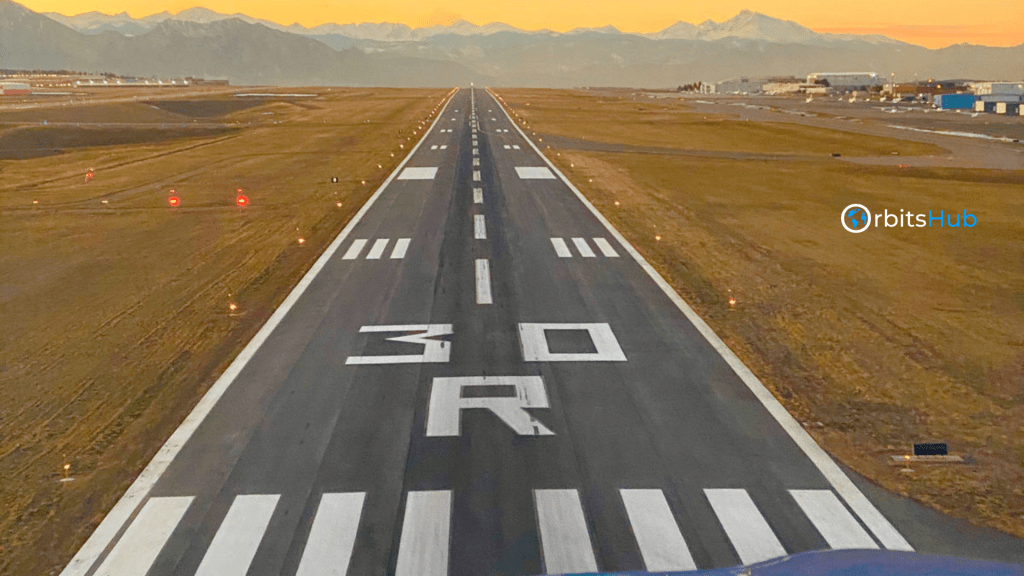
Aircraft runway marks need to be maintained on a regular basis to make sure they keep working right. There is wear and tear on these marks from the weather, traffic, and normal use.
Regular Inspections and Repainting
The marks on the runway are checked often to make sure they stay clear and easy to see. Airports check the marks often to see how they’re holding up and paint them again if needed to keep them working. The marks may fade faster in bad weather, like rain, snow, or strong winds, so they need to be checked on more often.
Visibility During Low Light Conditions
Maintaining visibility is an essential part of runway marking maintenance. At night or in poor weather conditions, it is critical that aircraft runway markings remain clearly visible to pilots. Airports use reflective paints and high-quality materials to ensure that these markings can be seen at all times, even in low light or foggy conditions.
Why Aircraft Runway Markings Matter
Markings on aeroplane runways are very important. They make sure that pilots have the information they need for a safe trip, which directly improves the safety and speed of airport operations.
Enhancing Safety for Pilots and Passengers
Runway markings play a vital role in improving safety by reducing the chances of confusion or accidents. By providing clear guidance during takeoff, landing, and taxiing, they help pilots avoid collisions, stay on course, and make better decisions in critical situations.
Contributing to Efficient Airport Operations
Efficient airport operations rely on accurate and clear aircraft runway markings. By helping pilots navigate quickly and safely, they reduce delays and streamline air traffic movements. This is especially important at busy airports where smooth transitions between runways and taxiways are essential to maintaining flight schedules.
Frequently Asked Questions
1. Why are aircraft runway markings important?
Aircraft runway markings are essential for guiding pilots during takeoff, landing, and taxiing, helping them navigate safely and efficiently while minimizing accidents.
2. How often are aircraft runway markings maintained?
Runway markings are regularly inspected and repainted to ensure their visibility and clarity. Maintenance is done more frequently in areas with harsh weather conditions.