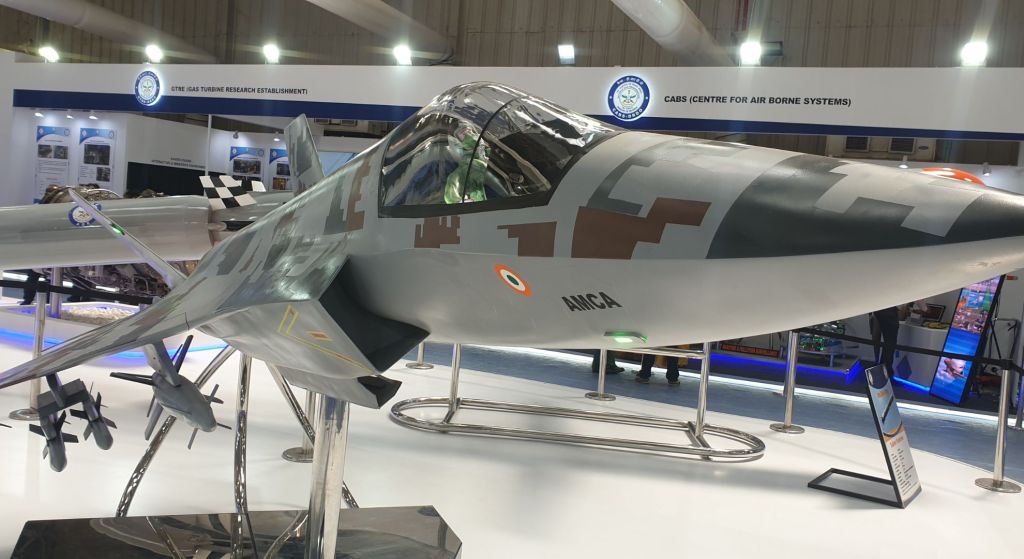
India’s robust defence sector is taking a significant leap forward with the developing of AMCA aircraft. This meticulously designed fighter jet will redefine the country’s air defence capabilities and mark India’s entry into the elite league of nations with fifth-generation fighter aircraft technology.
The Genesis of AMCA
The AMCA project was born out of a necessity to bolster India’s airborne combat capabilities. The project aims to replace ageing combat aircraft in the Indian Air Force (IAF) inventory with advanced, homegrown stealth fighters. The AMCA is poised to be a twin-engine aircraft, incorporating top-tier technologies such as supercruise, sensor fusion, and stealth capabilities.
Project Timeline and Progress
The development of the AMCA has been a long and complex journey, spanning over a decade. Fifteen years since the project’s inception, India is now on the verge of witnessing the first flight of the AMCA. The project’s bold schedule calls for the first flight to happen by 2027 and the squadron’s formation by 2035.
However, this timeline has been met with scepticism and referred to as ‘very tight’ by the IAF’s top leadership. Despite the reservations, senior officials from the Defence Research and Development Organisation (DRDO) and Hindustan Aeronautics Ltd (HAL) have remained optimistic about meeting the projected deadlines.
Challenges in AMCA Development
This topic can delve into the challenges the DRDO and HAL faced in developing the AMCA, such as technological hurdles, resource limitations, international collaborations, and meeting stringent timelines. It can also discuss how these challenges are being addressed and mitigated to ensure the successful completion of the project.
Strategic Implications of AMCA for Indian Defence
This subtopic can explore the broader strategic implications of the AMCA for India’s defence posture. It can discuss how the AMCA fits into India’s overall military strategy, its role in enhancing deterrence against regional threats, and its potential impact on India’s geopolitical standing in the global defence landscape. Additionally, it can touch upon the economic and technological spin-offs associated with the AMCA project.
The AMCA Design: A Two-Phase Development
The development of the AMCA is proposed to be carried out in two phases. Phase 1 will result in AMCA Mk-1, powered by the US GE-414 engine. Phase 2, on the other hand, will lead to the development of AMCA Mk2, which is expect to feature a more advanced, powerful engine develop in collaboration with a foreign partner.
The AMCA Mk-1, however, will lack three defining features of a fifth-generation fighter engine – supercruise, supermaneuverability, and sensor fusion. It will also have some stealth, like the F-35, which doesn’t have any radio frequency or stealth on the back but does have a suppressed infrared signal.
Sensor Fusion in AMCA Aircraft
Fifth-generation fighters are made to get into enemy airspace that is highly contested, find targets, and send information about those targets to other weapon systems in the air, on land, or at sea. Achieving this requires excellent stealth capabilities and situational awareness using sensor fusion. Sensor fusion combines inputs from various onboard sensors, such as radar, IR, and optical, into a single coherent display. The DRDO aims to field Stage 2 sensor fusion with the Medium Weight Fighter (MWF) LCA Mk.2.
The Reality Check and Way Forward
As the AMCA project progresses, it’s crucial to remain realistic about the challenges ahead. DRDO and HAL will likely face technology shortfalls, leading to project delays and performance concessions. However, the need for the AMCA project is undeniable. The IAF needs stealth planes and counter-stealth AD radar systems that can work within the next five years, not after the due dates have passed.

AMCA Vs. Global Competitors
American F/A-22 Raptors and F-35 Lightning-II Joint Strike Fighters, and the Chinese Chengdu J-20 and Russian Sukhoi-57, currently dominate the global fifth-generation fighter scene. However, the AMCA project aims to put India on the worldwide map of this sector.
Engine Dilemma: A Crucial Decision
The engine is a vital aircraft component, and the AMCA fighter jet is no exception. The first two AMCA squadrons will be power by the American GE-414 engines in the 98 Kilonewton thrust class, similar to the Tejas Mark-2 jets. The subsequent five squadrons will be equip with a more powerful 110-kilometre engine develop with foreign collaboration.
AMCA and the Indian Air Force
The IAF currently operates with just 31 fighter squadrons when at least 42 are require to tackle potential threats from China and Pakistan. The induction plan includes 83 Tejas Mark-1A, 108 Tejas Mark-2, 114 multi-role fighter aircraft (to be manufacture in India with foreign collaboration), and 126 AMCA.
The Road Ahead for AMCA Fighter Jet
The journey ahead for the AMCA project is challenging. The project promises to transform India’s air defence capabilities despite the hurdles. The AMCA, with its advanced stealth features and supercruise capabilities, could usher in a new era for the Indian Air Force.

AMCA – A Beacon of Hope
The AMCA aircraft is a beacon of hope for India’s defence sector. Despite the challenges, the project symbolizes India’s determination to achieve self-reliance in defence technology. As the project progresses, it will undoubtedly face hurdles and setbacks. However, with a steadfast commitment, the AMCA has the potential to redefine India’s air defence capabilities and mark a significant milestone in the country’s defence history.
FAQ’s
1. What does AMCA stand for?
AMCA stands for Advanced Medium Combat Aircraft.
2. What is the AMCA Aircraft designed for?
For the Indian Air Force, there is a new generation of multi-role combat aircraft called the AMCA Aircraft.
3. What are some key features of the AMCA Aircraft?
The AMCA Aircraft boasts advanced stealth capabilities, superior avionics, high maneuverability, and cutting-edge weapon systems.