The Bell Boeing V-22 Osprey is an iconic aircraft that has redefined the concept of vertical takeoff and landing (VTOL). Developed through years of innovation and technological advancements, the V-22 Osprey is the world’s first successful military tiltrotor aircraft. With its ability to seamlessly transition from vertical to horizontal flight, the V-22 has revolutionized military aviation and become an indispensable asset for the U.S. Marine Corps, Air Force, Navy, and other international military forces.
The Birth of a Game-Changer
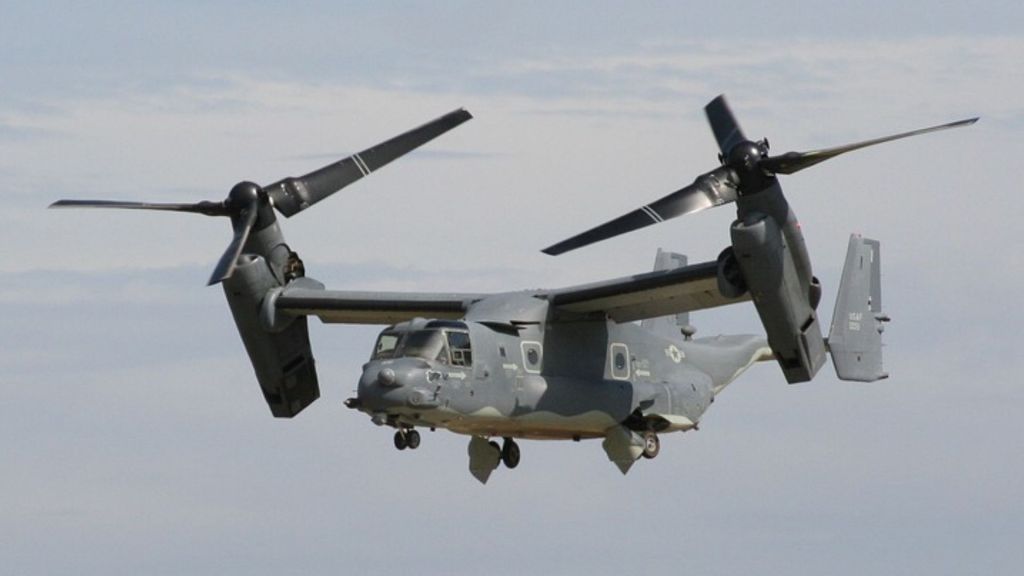
The journey of the V-22 Osprey began with the XV-15, an experimental aircraft that laid the groundwork for the revolutionary tiltrotor technology. However, it wasn’t until smaller and more powerful turboprop engines became available that the V-22 concept truly took flight. The V-22’s twin-engine design, with its rotating wings and rotors that fold horizontally, allows for efficient storage aboard aircraft carriers and assault ships, making it a truly versatile and transportable aircraft.
Unmatched Versatility and Performance
The V-22 Osprey offers a wide range of capabilities that set it apart from any other aircraft in the world. Its tiltrotor configuration enables it to perform vertical takeoffs and landings, hover like a helicopter, and achieve high-speed, high-altitude flight like a fixed-wing aircraft. This unmatched versatility makes the V-22 ideal for various military operations, including air assault, special operations, carrier onboard delivery, VIP transport, aerial refueling, evacuation and recovery, and more.
Enhanced Combat Capabilities
The V-22 Osprey has proven its combat capabilities in numerous operations worldwide. With its ability to extend commanders’ reach by operating farther and faster than ever before, the Osprey has become a valuable asset in air assault missions. Its survivability features, including terrain-following radar and enhanced technology, enable it to support the infiltration and exfiltration of special operations forces in any environment, day or night.
Addressing V-22 Osprey Safety and Controversies
This H2 topic would delve into the well-known safety challenges the V-22 Osprey program has faced throughout its development and operational history. You could discuss past accidents and incidents involving the Osprey, acknowledging public concerns. Then, explore how the program has addressed these issues through safety improvements, pilot training enhancements, and ongoing maintenance protocols.
Swift and Efficient Logistics Support
One of the key strengths of the V-22 Osprey is its ability to serve as a carrier onboard delivery aircraft. With its point-to-point flexibility, the CMV-22 variant can transport critical supplies quickly and efficiently to where they are needed most. Equipped with floor rollers and a cargo winch, the V-22 allows for rapid loading and unloading of cargo, ensuring timely delivery of essential resources.
VIP Transport and Dignitary Support
V-22 Osprey capabilities go beyond military use. The V-22 is suited for VIP transport and dignitary support due to its vertical mobility and fixed-wing transit speed and range. Its interior fuselage is designed to provide a comfortable and secure environment for dignitaries, ensuring presidential-level confidence in air travel.
Aerial Refueling for Global Reach
The V-22 Osprey’s multi-mission capabilities include aerial refueling, which allows it to extend its range and support global operations. The aircraft can refuel off most common tanker aircraft using standard high-speed drogues, a feature that has been proven during countless trans-Atlantic crossings by U.S. Marine and Air Force crews. This capability enhances its ability to provide critical support and reach remote locations around the world.
Evacuation and Recovery: Saving Lives
In critical situations, time is of the essence, and the V-22 Osprey’s speed and coverage area make it an invaluable asset for evacuation and recovery missions. With its rapid response capabilities, the Osprey ensures that more casualties receive medical care during the “Golden Hour” – the critical first hour after an incident. Its hoist and hover capability allow for the safe and efficient recovery of personnel over water or rough terrain, further enhancing its life-saving potential.
Milestones and Achievements
Since its first flight in March 1989, the V-22 Osprey has achieved numerous milestones and garnered an impressive track record. With over 600,000 flight hours accumulated by a fleet of over 400 aircraft, the Osprey has proven its reliability and performance in various missions worldwide. Notably, the V-22 has been deployed in combat operations, provided earthquake relief, aided in hurricane response, and supported humanitarian efforts, showcasing its versatility and adaptability in a wide range of scenarios.
Continuous Improvement and Future Prospects
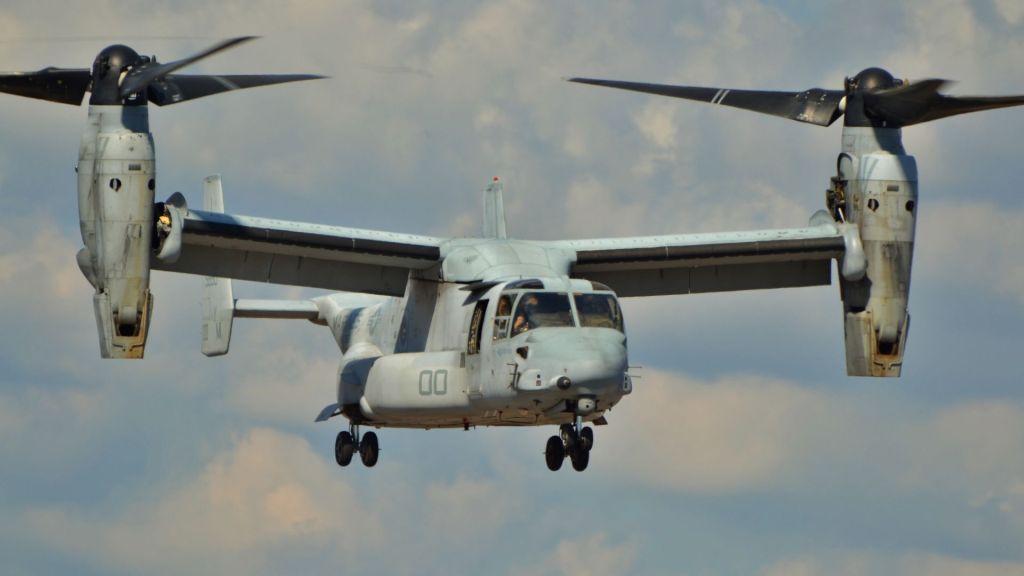
The V-22 Osprey is a product of constant innovation and continuous improvement. In December 2021, Bell Boeing introduced improvement kits for the V-22’s nacelles, enhancing its reliability rate and boosting mission readiness. The aircraft’s modern fly-by-wire controls reduce pilot workload and increase situational awareness, further improving its safety and performance. As technology advances, the potential for a jet-powered variant with 2D thrust vectoring systems looms on the horizon, promising even greater capabilities and possibilities for the V-22 in the future.
Innovation and technology in military aircraft are shown by the Bell Boeing V-22 Osprey. Its unique tiltrotor design, unmatched versatility, and exceptional performance have revolutionized the way military operations are conducted. From combat missions to logistics support, VIP transport, and humanitarian efforts, the V-22 has consistently proven its worth as a game-changing aircraft. As it continues to evolve and improve, the V-22 Osprey will undoubtedly play a crucial role in shaping the future of military aviation for years to come.