A silent game of cat and mouse unfolds in the vast, mysterious depths of the world’s oceans. Welcome to the world of submarine tracking, where cutting-edge technology meets age-old maritime strategy. This is the tale of the Deep Sea Detective, a state-of-the-art submarine tracking system revolutionizing naval warfare and ocean surveillance.
The Birth of a Legend
Our story begins in 2030 in a top-secret naval research facility nestled along the rugged coastline of Nova Scotia. Here, a team of brilliant engineers and oceanographers work tirelessly to perfect a technology that will forever change the face of underwater warfare.
Dr. Amelia Hawthorne, a prodigy in acoustic engineering, leads the charge. Her piercing blue eyes scan endless data streams, searching for the key to unlocking the ocean’s secrets. “The sea is a noisy place,” she often says, “but every submarine has a unique voice. We just need to learn how to listen.”
And listen, they did. For years, the team collected and analyzed underwater sounds from around the globe. They recorded the songs of whales, the crackle of shrimp, the rumble of undersea earthquakes, and, yes, the subtle hum of submarines trying their best to stay hidden.
The Breakthrough
It’s a crisp autumn morning when the breakthrough finally comes. Dr. Hawthorne’s assistant, a young programmer named Raj, bursts into her office, his eyes wide with excitement. “We’ve done it!” he exclaims, thrusting a tablet into her hands. “The AI has learned to distinguish submarine signatures from background noise with 99.8% accuracy!”
The implications are staggering. With this technology, they could track any submarine in real time, anywhere in the world’s oceans. The power dynamics beneath the waves are poised to undergo a significant transformation.
The Deep Sea Detective Takes Shape
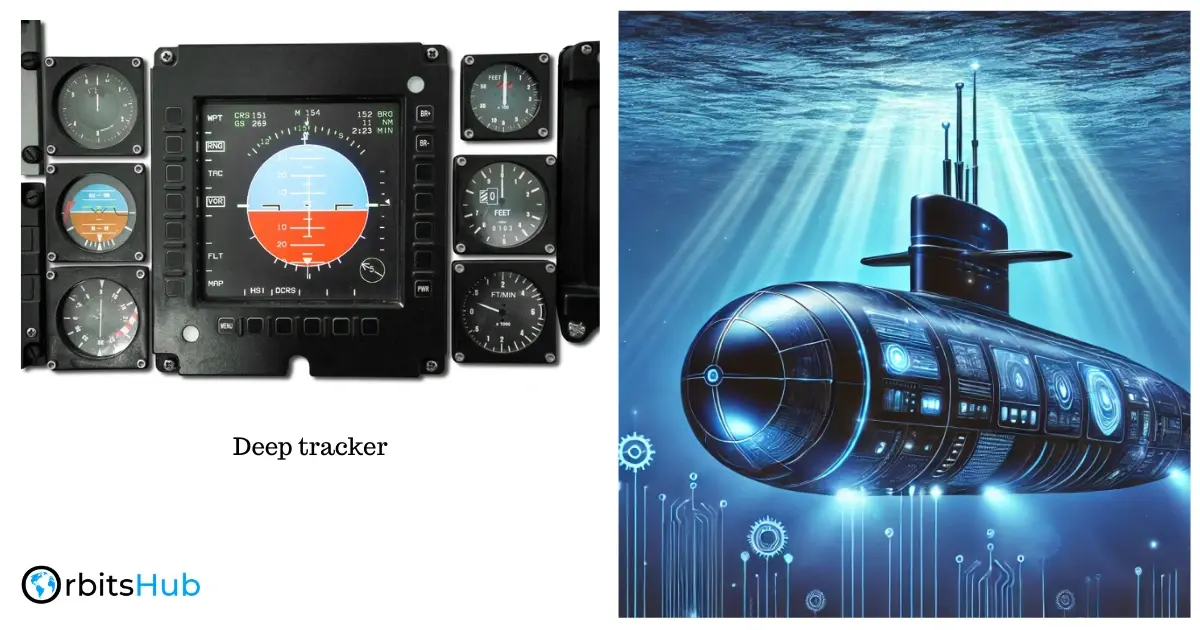
Over the next months, the team will work around the clock to transform their breakthrough into an operational system. They call it the Deep Sea Detective, or DSD for short.
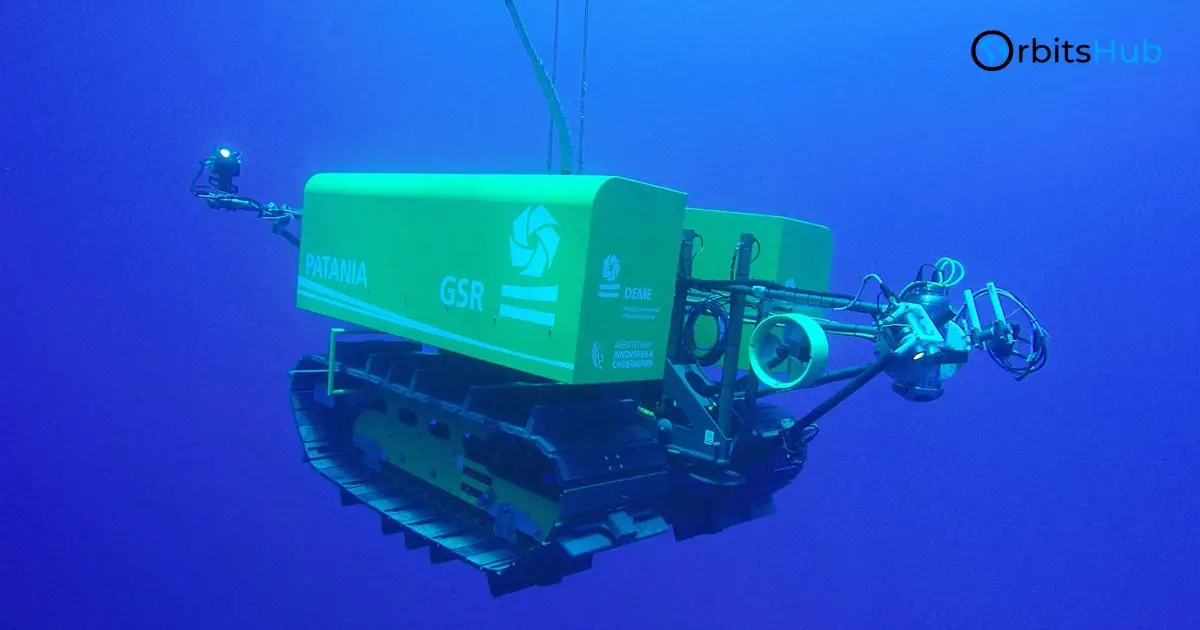
The DSD is a marvel of modern engineering. At its heart lies a network of thousands of autonomous underwater drones, each no larger than a dolphin. Advanced sonar arrays and powerful AI processors equip these drones. They roam the oceans, constantly listening and analyzing.
But the real magic happens back at the command center. Here, a quantum supercomputer processes the tsunami of data from the drones. It creates a real-time 3D map of the world’s oceans, tracking every significant sound source. Submarines, once nearly invisible in the vastness of the sea, now show up as bright points of light on the operators’ screens.
The First Test
The actual test of the Deep Sea Detective comes sooner than anyone expected. Just weeks after the system goes live, tensions flare in the South China Sea. There are suspicions of a hostile nation’s submarine fleet operating in the area, posing a threat to vital shipping lanes.
The world holds its breath as the situation teeters on the brink of conflict. In the DSD command center, operators work feverishly, their faces lit by the glow of their screens. Dr. Hawthorne paces behind them, her hands clasped tightly behind her back.
Suddenly, a junior operator lets out a shout. “Contact! Multiple contacts!” Five bright points of light appear on the main screen, moving in formation through the digital ocean.
“We’ve got them,” Dr. Hawthorne whispers, a mix of pride and awe in her voice. “All five submarines are precisely where our intelligence predicted they would be.”
Armed with this precise information, diplomats can confront the hostile nation within hours. Faced with undeniable evidence of their submarine deployment, they have no choice but to withdraw, averting a potential crisis.
The Game Changer
News of the Deep Sea Detective’s success spreads quickly through naval circles. Admirals and defense ministers worldwide clamor for access to this game-changing technology.
The DSD team, previously operating in secrecy, now finds itself at the epicenter of a geopolitical crisis. Dr. Hawthorne testifies before Congress, explaining in layperson’s terms how her creation works. “Imagine,” she says, “being able to hear a whisper from across a crowded stadium. The Deep Sea Detective does that, but on an oceanic scale.”
The arms race begins
As with any technological advantage in military history, the Deep Sea Detective triggers a new arms race. Nations pour billions into developing similar systems or finding ways to counter the DSD.
Submarine designers work frantically to create quieter propulsion systems and new hull materials that can absorb sonar waves. Some even experiment with biomimicry, studying silent deep-sea creatures for inspiration.
However, the DSD team is not complacent. They continue to refine and improve the system, staying one step ahead of the competition.
Beyond Military Applications
While the Deep Sea Detective’s military implications are profound, its potential extends beyond warfare. Marine biologists use it to track whale migrations with unprecedented accuracy, and oceanographers employ it to map deep-sea currents and monitor the health of aquatic ecosystems.
The DSD even plays a crucial role in climate change research. Its network of drones provides real-time data on ocean temperatures, salinity, and currents, helping scientists refine their climate models and make more accurate predictions.
The Ethical Dilemma
As the Deep Sea Detective’s influence grows, so do concerns about its power. Privacy advocates worry about the potential for abuse. If the DSD can precisely track submarines, what prevents it from monitoring civilian ships or even swimmers?
Dr. Hawthorne grapples with the ethical implications of her creation. “We’ve opened Pandora’s box,” she confides to Raj one late night in the lab. The question is, can we control what we’ve unleashed?
Unexpected Discoveries
The Deep Sea Detective’s unparalleled ability to monitor the oceans leads to some startling discoveries. In the Mariana Trench, the system detects unusual seismic activity. Further investigation reveals a previously unknown underwater volcanic system, providing new insights into the Earth’s geology.
Off the coast of Antarctica, the DSD picks up a series of regular, artificial-sounding pings. These pings lead to the discovery of a long-lost expedition’s base camp, preserved for decades under the ice.
But the most exciting discovery comes from the mid-Atlantic. Unlike anything in its database, the DSD detects a large, fast-moving object. The news sends shockwaves through the scientific community. Could this be evidence of a new, undiscovered marine species?
The Human Element
Despite its advanced AI, the Deep Sea Detective relies heavily on human operators to interpret data and make critical decisions. These men and women become the unsung heroes of the story, working tirelessly behind the scenes to keep the world’s oceans safe and unlock their secrets.
We meet Sarah Chen, a former submarine officer who has become a DSD operator. Her experience at sea gives her an intuitive understanding of submarine tactics that proves invaluable. “The oceans may have become more transparent,” she says, “but the game of cat and mouse continues. Now, the game takes on a distinct dimension.
Then there’s Marcus Okafor, a marine biologist who joins the team to help refine the system’s ability to distinguish between biological and mechanical sounds. His passion for marine life brings a new perspective to the project. “Every day, we’re learning something new about the creatures we share our planet with,” he enthuses. He describes it as a window into a world that has remained hidden from us for millennia.
Global Cooperation and Conflict
The Deep Sea Detective’s capabilities spark intense debate in international forums. Some nations push for it to be under UN control, arguing that such a powerful tool shouldn’t be in the hands of any single country. Others advocate for a treaty similar to the Antarctic Treaty, which would designate the deep oceans as a zone free from military activity.
Meanwhile, countries without access to the technology form alliances to develop their own versions. A new geopolitical map begins to emerge, with nations aligning based on their undersea surveillance capabilities.
The Silent Revolution
The Deep Sea Detective quietly revolutionizes our relationship with the oceans as the years pass. Real-time data on currents and weather patterns optimizes shipping routes, resulting in significant fuel savings and reduced emissions. Once able to operate with impunity in remote areas, illegal fishing operations find themselves easily detected and apprehended.
Search and rescue operations are transformed. When a cruise ship goes missing in a storm, the DSD quickly locates the survivors, guides rescue teams to their location, and saves hundreds of lives.
The Future of the Deep
As our story draws to a close, we find Dr. Hawthorne standing on the deck of a research vessel, gazing out at the seemingly endless expanse of the Pacific. The ship carries the latest generation of DSD drones, prepared for deployment in an ongoing mission to map the ocean floor in unprecedented detail.
“We’ve only scratched the surface,” she muses, her voice barely audible over the sound of the waves. “The oceans still hold so many secrets. But with the Deep Sea Detective, we’re finally beginning to understand this blue heart of our planet.”
Her tablet pings with an alert from the DSD network as if on cue. We’ve detected something intriguing somewhere in the depths below. With a smile, Dr. Hawthorne turns and heads back to the lab. The adventure continues.
Fascinating Statistics
Deep Sea Detective Statistics
| Category | Value | Details |
|---|---|---|
| Ocean Coverage | 97% | Plans to reach 99% by 2035 |
| Detection Accuracy | 99.97% | As of 2034 |
| Data Processing | 5 exabytes/day | Equivalent to 5 million terabytes |
| Drone Network | 50,000+ | Each operates up to 6 months without surfacing |
| New Species Discovered | 500+ | Plus 37 new geological features |
| Climate Model Improvement | 28% | More precise long-term weather predictions |
| Lives Saved | 15,000 | From 1,000+ search and rescue operations |
| Illegal Fishing Reduction | 72% | In monitored areas |
| Submarine Detection Increase | 300%+ | Exact figures classified |
| Annual Fuel Cost Savings | $12 billion | From optimized shipping routes |
Frequently Asked Questions
A: The DSD uses quiet drones with noise-canceling tech, mimics marine life sounds, operates at various depths, and uses a distributed network approach.
Strict protocols, multinational oversight, software safeguards, coastal “blackout zones,” and regular audits ensure proper use.