The delta wing design is one of aviation’s most iconic and significant innovations. Characterized by its triangular shape, the delta wing has been used in various aircraft, from supersonic jets to gliders. Its evolution has been driven by the need for improved aerodynamics, speed, and maneuverability, especially in military aviation. The development and significance of delta-wing aircraft will be discussed in this blog, along with their salient characteristics, benefits, and impact on contemporary aviation.
The Origins of Delta Wing Aircraft
The concept of the delta wing dates back to the early 20th century. German engineers developed the initial ideas during World War II as they sought ways to improve fighter aircraft performance. The delta wing’s distinctive shape allowed for a higher angle of attack without stalling, making it ideal for high-speed flight.
Early Concepts and Designs
The earliest delta-wing aircraft were experimental, often built to test the limits of aerodynamics. One of the first practical applications of the delta wing was the Lippisch P.13a, a German interceptor designed in the 1940s. Although it never saw combat, the P.13a demonstrated the potential of the delta wing design, especially in terms of speed and maneuverability.
Post-War Developments
After World War II, the delta wing concept gained traction, particularly in military aviation. Engineers in the United States, the United Kingdom, and the Soviet Union began experimenting with delta-wing designs to create faster and more agile aircraft. The Cold War era saw a rapid acceleration in the development of delta-wing aircraft as both sides sought to gain air superiority.
The Golden Age of Delta Wing Aircraft
The 1950s and 1960s are often called the golden age of delta-wing aircraft. During this period, several iconic aircraft were developed, each pushing the boundaries of speed and performance.
The Dassault Mirage Series
One of the most famous delta wing aircraft is the Dassault Mirage series, developed by the French aerospace company Dassault Aviation. The Mirage III, introduced in the late 1950s, was among the first supersonic fighters to enter service. Its delta wing design allowed for excellent high-speed performance and agility, making it a favorite among air forces worldwide.
The Mirage III’s success led to the development of several variants, including the Mirage 5 and Mirage 2000, both of which continued to use the delta wing configuration. These aircraft proved to be highly effective in combat, serving in numerous conflicts and earning a reputation for reliability and performance.
The Convair F-102 and F-106
In the United States, the Convair F-102 Delta Dagger and its successor, the F-106 Delta Dart, were among the first delta wing aircraft adopted by the U.S. Air Force. These interceptors were designed to defend against Soviet bombers during the Cold War, and their delta wing configuration allowed them to reach high speeds and altitudes.
The F-106, in particular, became known as the “Ultimate Interceptor” due to its impressive speed and climb rate. Although the delta wing design presented some challenges, such as high landing speeds, these aircraft demonstrated the effectiveness of the delta wing in supersonic flight.
The Avro Vulcan
The Avro Vulcan, a British strategic bomber, is another notable example of a delta-wing aircraft from this era. Designed in the 1950s, the Vulcan was part of the United Kingdom’s nuclear deterrent force during the Cold War. Its delta wing design gave it a unique appearance and allowed it to carry heavy payloads over long distances.
The Vulcan played a crucial role in maintaining the balance of power during the Cold War, and its delta wing design was a significant factor in its success. The aircraft remained in service until the 1980s, and its legacy continues to be celebrated today.
Advancements in Delta Wing Technology
Delta-wing planes got better at what they could do as aviation technology improved. Introducing more powerful engines, advanced materials, and enhanced aerodynamics allowed for even more outstanding performance and versatility.
The Concorde: A Supersonic Marvel
One of the most famous delta wing aircraft ever is the Concorde, a supersonic airliner developed jointly by the United Kingdom and France. Introduced in the 1970s, the Concorde was the first commercial aircraft to travel at speeds of over Mach 2, thanks in part to its delta wing design.
The Concorde’s delta wing allowed it to achieve high speeds while maintaining stability and control. Its sleek design and advanced technology symbolized luxury and innovation, and it remains one of the most iconic aircraft ever built.
The B-58 Hustler
The B-58 Hustler, developed by Convair, was another groundbreaking delta-wing aircraft. Introduced in the 1960s, the B-58 was the first supersonic bomber to enter service with the U.S. Air Force. Its delta wing design enabled it to fly at high speeds and altitudes, making it a formidable strategic bomber.
Although the B-58 had a relatively short service life, it demonstrated the potential of delta wing designs in high-speed, high-altitude flight. The lessons learned from the B-58 helped shape the development of future aircraft, both military and commercial.
The Role of Delta Wings in Modern Aircraft
Delta wing designs continue to play a role in modern aviation, particularly military aircraft. Even better performance has been made possible by improvements in materials and aerodynamics. The delta wing is still a popular choice for some kinds of aircraft.
The Eurofighter Typhoon
The Eurofighter Typhoon, a multirole fighter developed by a consortium of European aerospace companies, is one of the most advanced delta-wing aircraft in service today. Introduced in the 2000s, the Typhoon combines a delta wing configuration with advanced avionics and weapon systems, making it one of the most capable fighters in the world.
The Typhoon’s delta wing design allows excellent maneuverability and speed, giving it a significant advantage in air-to-air combat. Several air forces worldwide have adopted it, and continue to be a key component of NATO’s air defense strategy.
The Saab JAS 39 Gripen
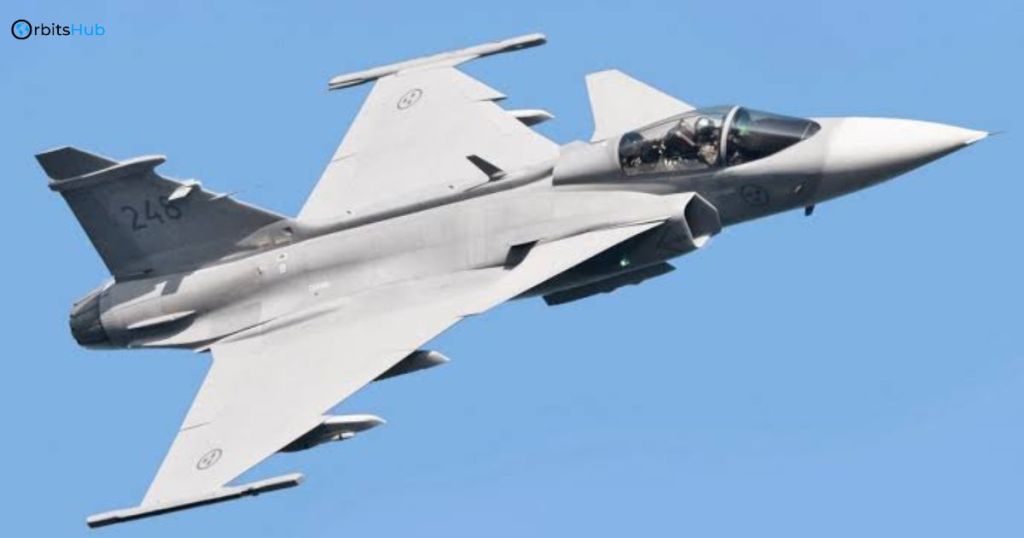
The Saab JAS 39 Gripen, developed by Swedish aerospace company Saab, is another modern delta-wing aircraft. The Gripen is a lightweight, multirole fighter praised for its agility and cost-effectiveness. Its delta wing design allows it to perform well in various roles, from air defense to ground attack.
The Gripen has been adopted by several countries, including Sweden, Brazil, and South Africa, and it continues to be a popular choice for air forces looking for a versatile and affordable fighter.
The Legacy and Future of Delta Wing Aircraft
The delta wing design has left an indelible mark on the history of aviation. The delta wing first emerged during World War II in its early development. Since then, it has proven to be a versatile and practical design in modern fighters.
Challenges and Limitations
Despite its many advantages, the delta wing design has. High landing speeds limit the use of delta-wing aircraft in certain applications. Increased drag at lower speeds is another challenge in controlling delta-wing aircraft. The complexity of controlling a delta-wing aircraft further restricts its use.
Technological advances have helped mitigate many challenges in aviation. The delta wing remains a viable option for high-performance aircraft.
The Future of Delta Wing Designs
As aviation continues to evolve, the delta wing design will likely remain vital to the industry. Ongoing research into aerodynamics, materials, and propulsion systems may lead to new and improved delta-wing aircraft.
The potential for unmanned aerial vehicles (UAVs) with delta wing configurations is also attractive, as these designs offer speed, agility, and payload capacity advantages.
The development and historical significance of delta-wing aircraft is a monument to aerospace engineers’ creativity. The Delta Wing has advanced aviation technology from early experimental designs to modern fighters. The unique combination of its speed, maneuverability, and stability makes it a popular choice for a wide range of aircraft. Its legacy will continue for many years.
The aviation industry continues to push the boundaries of what is possible. The delta wing design will likely remain a vital part of the conversation. For those interested in exploring the fascinating world of aviation, including delta wing aircraft, consider contacting Orbitshub, a leading maritime and aviation consultancy services company, for expert guidance and support.