Dornier is a name that has stood out in the aviation industry for decades. The company’s legacy of designing reliable, high-performance aircraft, especially in the turboprop category, is notable. Explore the background, design, performance, and development of the Dornier aircraft 228—one of Dornier’s most famous designs—in this article.
The Genesis of Dornier
The story of the Dornier aircraft company has its roots in the late 20th century. The German manufacturer Dornier set out to design a new high-technology turboprop aircraft that could serve various roles. The goal was to fill a market gap for a smaller commuter-type airliner with up to 19 passengers. This would be a perfect replacement for the world’s De Havilland Canada (DHC) Twin Otter fleet that was nearing the end of its life.
Birth of the Dornier 228
As a result of their endeavour, the Dornier 228 was conceive. Even in its developmental stages, it was clear that the 228 would not be a typical aircraft. It was design as a twin-engine turboprop capable of transporting up to 19 passengers or cargo. Its unique design features, including its Short take-off and Landing (STOL) capabilities, allowed it to operate from unprepared, unpaved grass surfaces and specialize in hot and high environments.
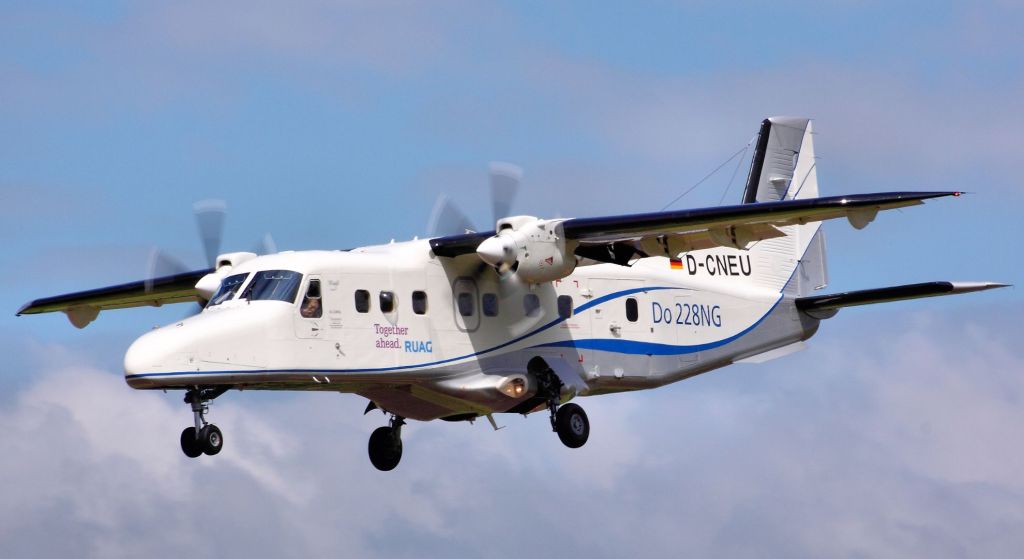
The Dornier 228-200 Specifications
The Dornier 228-200, a variant of the original 228, was a significant leap from its predecessor. With a wingspan of 16.97m, a length of 16.56m, and a height of 4.86m, the Dornier 228-200 presented a formidable figure in the aviation landscape. Its power was derive from two Garrett AiResearch TPE-331 turboprop engines, each capable of delivering a maximum continuous power output of 776shp.
Dornier 228’s Impact on Regional Aviation
Explore how the Dornier 228 revolutionized regional aviation, its role in connecting remote areas, and its contributions to enhancing air transport accessibility.
Dornier 228 in Specialized Missions
Delve into the specialized missions undertaken by the Dornier 228, including its use in law enforcement, paramilitary operations, maritime patrol, and adaptations for unique mission configurations such as surveillance and search and rescue.
Unique Design Features of Dornier 228
The Dornier 228’s design was unique and versatile. Its high-wing monoplane design and rectangular-shaped fuselage offered ample passenger and cargo transportation space. Furthermore, the TNT wing design (‘ Tragflügel neuer Technologie,’ which translates as __ aerofoil new technology) allowed for large amounts of lift at slow speeds, contributing to its STOL capabilities.
Operational History of the Dornier 228
When the Dornier 228 hit the market in the early 1980s, it was embrace by the aviation community. The aircraft saw service with law enforcement, paramilitary, and police agencies such as the Indian Coast Guard, German Coastguard, Netherlands Coastguard, Finnish Border Guard, and Royal Oman Police Air Wing. Military operators included the Bangladesh Navy, Indian Air Force and Navy, Italian Army, Royal Thai Navy, and Royal Bhutan Army.

The Dornier 228NG: A New Generation
The Dornier 228NG (New Generation) was a modernized version of the Dornier 228 aircraft. It incorporated advanced equipment and systems for conducting special mission operations. They are working on making a hydrogen fuel cell engine for the type right now. This new generation model featured an uprated five-blade propeller of composite material, more powerful engines, and an advanced glass cockpit with electronic instrument displays.
The Future of the Dornier 228
The Dornier 228’s future looks promising. The aircraft has found a niche in short inter-island hops. Its rugged and versatile design has made it a favorite for various specialized missions. The Swiss-based aerospace company RUAG took over the production rights for the Dornier 228NG from Fairchild-Dornier. They announced they would launch a modernized aircraft version, the Dornier 228 Next Generation, or Dornier 228NG.
Transforming the Dornier 228 Into a Hydrogen-powered Marvel
General Atomics, an American aerospace and defence giant, bought the Dornier 228NG production rights. They are currently developing a hydrogen fuel cell powertrain for the type. The first flight of General Atomics’ hydrogen-power 228 is expected in 2025. This development signifies a new era for the Dornier 228, transforming it from a turboprop marvel to a beacon of green aviation.
The Dornier aircraft company has left a significant mark on the aviation industry. This is a testament to the company’s commitment to innovation, reliability, and versatility. The Dornier NUM0 continues to evolve and adapt to new technologies. It is set to remain a significant player in the world of aviation for many years to come.
FAQ’s
1. What is Dornier Aircraft?
Dornier Aircraft refers to a line of aircraft manufactured by Dornier Flugzeugwerke, a German aircraft manufacturer founded in 1914. They are known for producing a range of versatile and innovative aircraft models.
2. What types of aircraft does Dornier produce?
Dornier has produced various aircraft types, including commuter airliners, military aircraft, seaplanes, and reconnaissance planes. They are notably recognized for their contributions to regional aviation and maritime patrol.