Port of Shanghai, China

The Port of Shanghai holds the distinction of being the busiest port globally, serving as the main financial, industrial, and commercial center of China. Situated at the mouth of the Yangtze River, the port covers approximately 4 square kilometers and handles a staggering amount of cargo. Coal, metal ores, petroleum, steel, equipment, and machinery are only some of the many things dealt with. There are five distinct areas within the port, each with its own set of amenities. It is an important center for global trade since it processes 582 million metric tons of cargo per year, including 29.5 million TEUs (twenty-foot equivalent units).
Port of Rotterdam, Netherlands
The Port of Rotterdam is not only the largest port in Europe but also one of the busiest in the world. Located at the Rhine-Meuse-Scheldt delta, it serves as a key shipping hub for containerized cargo, bulk commodities, and various other products. With its multiple terminals and berths, including the ECT Delta Terminal, one of Europe’s largest container terminals, the port offers extensive connectivity to over 1000 ports worldwide. In 2022, the Port of Rotterdam handled 467.4 million tonnes of cargo, solidifying its position as a major player in global trade.
Port of Hamburg, Germany
The Elbe River flows into Germany’s biggest port, Hamburg, which acts as the country’s entry point to the rest of the globe. Known for its container and petroleum shipments, the port covers an area of 73.99 square kilometers and boasts more than 320 berths. In addition to its industrial and logistics center, the port is also a major tourist attraction, housing museum ships, restaurants, bars, and theaters. Annually, it handles approximately 121.2 million tonnes of cargo, 8 million TEUs, and accommodates 112,200 passengers.
Port of Antwerp, Belgium
The Port of Antwerp, located on the Scheldt River, has a rich history as a trading hub. Recognized by Napoleon Bonaparte for its seaport potential, it has grown into a multi-product industrial port covering 13,000 hectares. The port handles a diverse range of goods including ores, coal, petroleum, steel products, cereals, paper, sugar, and fruits. With non-tidal terminals and a strategic location, the Port of Antwerp has witnessed rapid expansion and handles approximately 187.2 million tonnes of cargo and 8.6 million TEUs annually.
Port of New Orleans, U.S.

A major crossing point for global trade, the Port of New Orleans is located on the Mississippi River. With cargo handling facilities on both sides of the river, it plays a crucial role in the transportation of steel, poultry, forest products, rubber, coffee, grains, and more. The port also serves as a key container facility, with an annual capacity of over 850,000 TEUs. Annually, the Port of New Orleans handles around 69.7 million tonnes of general and bulk cargo, 477,500 TEUs, and accommodates 750,000 passengers from cruise ships.
Port of Osaka, Japan
Situated within Osaka Bay, the Port of Osaka is a major center for domestic and international maritime trade. The port processes a wide variety of cargoes, including lumber, coal, LPG, crude oil, bananas, chemicals, and miscellaneous merchandise, thanks to its strategically located breakwaters and favorable location. The port consists of three main areas of operation: the Inner Harbor, South Harbor, and North Harbor. With over 70 berths, including 13 dedicated to container handling, the Port of Osaka handles approximately 80.9 million tonnes of cargo, 1.8 million TEUs, and 1.7 million passengers annually.
Port of London, United Kingdom
The Port of London holds a significant position as the principal port facility in the United Kingdom. Located on the Thames River, it encompasses wet docks and riverside terminals that handle a wide range of cargo, including containers, RORO (roll-on/roll-off), project cargo, and bulk commodities. The port stretches over 150 kilometers, and its terminals are used by both commercial and recreational crafts. Annually, the Port of London handles around 10,850 ships, 4.8 million tonnes of cargo, and 850,000 TEUs, making it one of the busiest inland waterways in the UK.
Port of Kolkata, India
Situated on the Hugli River, a tributary of the Ganges River, the Port of Kolkata is a crucial trade hub in India. Among the many commodities imported and exported through the port—which stretches for around 23 nautical miles down the river—are iron, steel, metals, grains, fertilizers, vegetable oil, lumber, and many more. With its various berths and facilities, the port accommodates approximately 3,500 vessels, handles 47.6 million tonnes of cargo, 377,100 TEUs, and serves 63,500 passengers annually.
Port of Nantes-St Nazaire, France
Located at the mouth of the River Loire on the western coast of France, the Port of Nantes-St Nazaire serves as a vital hub for trade in the region. Cattle feed, fruits, cereals, grains, meats, and vegetable oil are among the many commodities that pass through the port. With its extensive terminal network, the Port of Nantes-St Nazaire has a significant impact on the local economy. Various port areas, such as the Atlantic Fruit Terminal and the Refrigerated Cargo Terminal, contribute to the port’s annual throughput.
Port of Tianjin, China
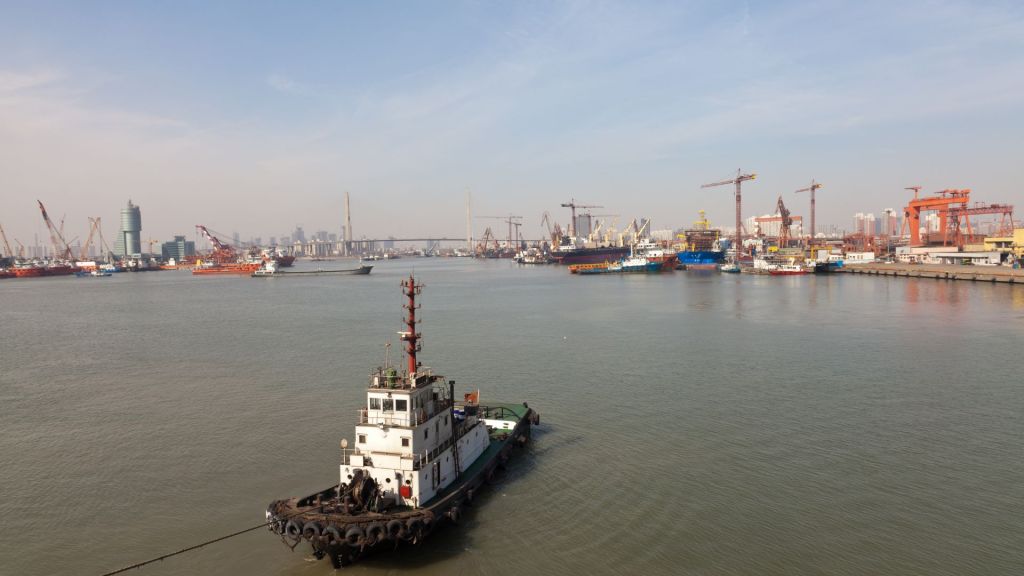
The Port of Tianjin, the largest port in Northern China, occupies a vast area of 131 square kilometers. Connected to approximately 500 ports in nearly 190 countries, the port is a vital trade gateway. With its four main port areas, the Port of Tianjin handles a wide range of cargo, including containers, dry bulk, and liquid bulk. Annually, it handles around 17.2 million TEUs, making it a significant player in global trade.
As hubs for global trade, these 10 river ports connect economies all over the world and allow for the free flow of goods. They are the largest river ports in the world because of their strategic positions, substantial infrastructure, and significant throughput. With the ever-changing nature of global trade, these ports will be more important than ever in boosting economic growth and promoting international collaboration.
The ten biggest river ports in the world play a important role in facilitating global trade. From the bustling Port of Shanghai to the historic Port of London, these ports handle vast amounts of cargo and contribute to the economic development of their respective regions. As international trade continues to evolve, these river ports will remain essential gateways, connecting nations and driving economic growth on a global scale.