The Lockheed Martin C-130 Hercules has long been a cornerstone of tactical airlift, relied upon by global air forces for its proven reliability and versatility. Now, the Embraer C-390 Millennium, with its advanced technology and jet-powered efficiency, emerges as a formidable competitor. For aviation industry professionals, experts, and decision-makers, selecting the optimal aircraft is critical in today’s evolving defense and transport landscape.
The Legacy of the C-130 Hercules
A Proven Workhorse
When it took its first flight in 1954, the C-130 Hercules proved to be a rigid and flexible tactical airlifter. With over 2,600 units built and operations in more than 60 countries, its longevity is unmatched. The latest variant, the C-130J Super Hercules, introduced in 1999, brings modern avionics, improved fuel efficiency, and enhanced performance while retaining the aircraft’s ability to operate from short, unprepared runways. The C-130’s proven track record in combat, humanitarian missions, and special operations makes it a trusted choice for government and defense officials.
Key Features of the C-130J
Four Rolls-Royce AE 2100D3 turboprop engines power the C-130J Super Hercules, making it reliable for various tasks. Its cargo hold can hold up to 42,000 pounds, like cars, troops, or medical evacuation kits. The aircraft’s flexibility shines in aerial refueling, firefighting, intelligence, surveillance, and reconnaissance (ISR). For corporate decision-makers, the C-130J’s global support network and extensive operator base ensure logistical ease and interoperability within NATO and allied forces.
The Rise of the Embraer C-390 Millennium
A Modern Jet-Powered Contender
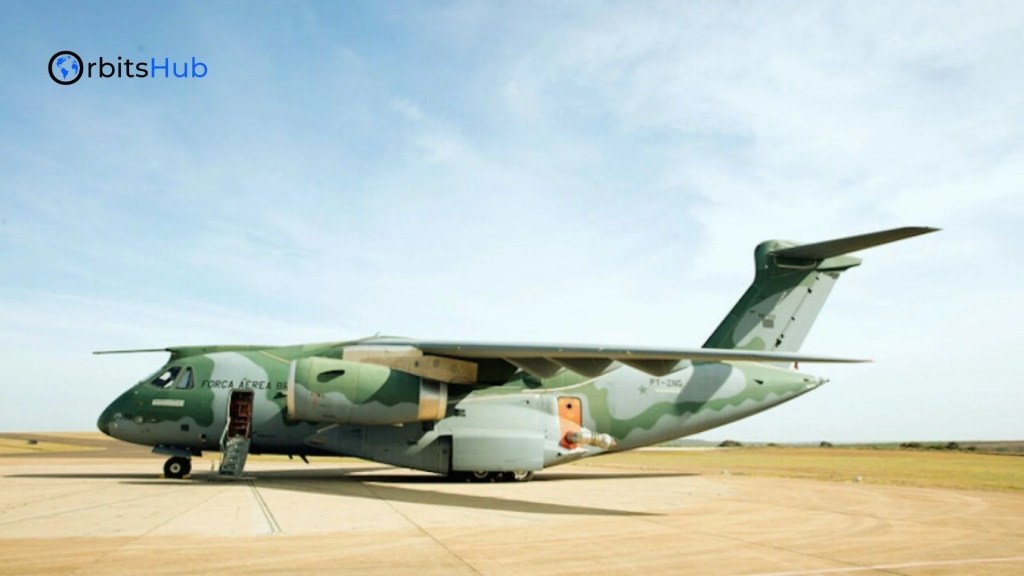
Since its release in 2019, the Embraer C-390 Millennium is a reasonably new plane that has quickly become popular. Designed to surpass the capabilities of legacy airlifters, this twin-engine, jet-powered aircraft leverages technologies from Embraer’s commercial E-Jet series.
Countries like Brazil, Portugal, Hungary, and the Netherlands have embraced the C-390, with Morocco and Sweden recently joining the fold. For technology innovators in aviation, the C-390’s fly-by-wire controls, advanced avionics, and modular design represent a leap forward in tactical airlift.
Standout Capabilities of the C-390
The C-390 is powered by two IAE V2500-E5 turbofan engines, enabling a cruising speed of Mach 0.8, significantly faster than the C-130J’s 416 mph. Its cargo hold supports up to 57,000 pounds, outpacing the C-130J, and can carry 80 troops, 66 paratroopers, or heavy equipment like armored vehicles.
The aircraft’s rear ramp and robust landing gear allow operations on semi-prepared airstrips, while features like aerial refueling and ISR capabilities enhance its versatility. For sustainability advocates, the C-390’s jet engines are optimized for efficiency under normal conditions, potentially reducing fuel consumption on long-range missions.
Head-to-Head Comparison
Performance and Speed
Speed is critical in modern military operations, where rapid deployment can tip the scales. The C-390’s jet engines give it a clear edge, with a maximum speed of 540 mph and the ability to cover a 1,250-nautical-mile search-and-rescue radius two hours faster than the C-130J. This advantage appeals to defense officials prioritizing quick response times.
However, the C-130J’s turboprop design excels in low-speed, low-altitude operations, making it ideal for airdrops and tactical maneuvers in rugged terrain. Its slower speed is offset by exceptional fuel efficiency on shorter missions, a key consideration for corporate planners managing operational budgets.
Payload and Capacity
Regarding payload, the C-390 outshines the C-130J, carrying up to 57,000 pounds compared to the C-130J’s 42,000 pounds. Its more significant cargo hold (18.5 meters long, 3.45 meters wide) accommodates oversized equipment, such as two M113 armored personnel carriers or a Sikorsky H-60 helicopter.
The C-130J, while slightly smaller, remains highly flexible, with a cargo hold that can be rapidly reconfigured for troops, pallets, or medical evacuation. For aviation experts, the C-390’s capacity edge may tip the scales for strategic airlift, while the C-130J’s adaptability suits varied tactical roles.
Operational Versatility
Both aircraft are designed for multi-mission flexibility, but their strengths differ. The C-130J’s extensive variant history, including gunships (AC-130), hurricane hunters, and electronic warfare platforms, demonstrates its adaptability. Its ability to operate from dirt strips and perform niche roles like firefighting makes it a favorite for specialized missions.
The C-390, meanwhile, integrates modern systems like Rockwell Collins Pro Line Fusion avionics and SELEX Galileo tactical radar, offering superior situational awareness. Its aerial refueling capability, standard across all units, contrasts with the C-130J, where it’s limited to specific subvariants. This versatility appeals to technology innovators seeking future-proof platforms.
Maintenance and Availability
Maintenance is a critical concern for air forces balancing readiness and resources. The C-390’s jet-powered design and commercial-derived components reduce maintenance downtime, with Embraer reporting an 80% technical availability rate in Brazilian Air Force operations. The C-130J, while reliable, requires more maintenance due to its four-engine turboprop configuration.
However, its global operator base ensures a robust supply chain and training network, a significant advantage for NATO-aligned nations. For decision-makers, the C-390’s lower maintenance burden may offset the C-130J’s logistical familiarity.
Strategic and Sustainability Considerations
Modernization and Future-Readiness
The C-390’s newer design incorporates digital flight controls, advanced avionics, and modular systems, positioning it as a future-ready platform. Its compatibility with emerging technologies, like autonomous systems or enhanced ISR, appeals to innovators. The C-130J, while modernized, builds on a 1950s airframe, which may limit its adaptability to next-generation upgrades. For government officials, the C-390’s forward-looking design aligns with long-term defense strategies. At the same time, the C-130J’s proven reliability remains a safe bet.
Environmental Impact
Sustainability is increasingly critical in aviation, even for military applications. The C-390’s turbofan engines, while fuel-hungry at low altitudes, offer efficiency on long-range flights, potentially reducing carbon footprints for strategic missions. The C-130J’s turboprop engines are more fuel-efficient for short, tactical operations, aligning with sustainability goals for frequent, localized missions. For advocates, both aircraft present trade-offs, but the C-390’s modern design may better integrate future eco-friendly technologies.
Embraer C-390 Millennium vs. Lockheed Martin C-130J Super Hercules

The Embraer C-390 Millennium and Lockheed Martin C-130J Super Hercules are superior tactical airlifters. The C-390 is an innovative, future-ready platform for air forces that values rapid deployment and modern technologies because of its speed, payload, and technology. In contrast, the C-130J is trusted for different operational needs because of its reliability, global support, and mission diversity.
Strategic priorities determine which aircraft aviation professionals, industry experts, and decision-makers choose: the C-390 for high-performance and capacity missions, the C-130J for tactical flexibility, and established logistics. Both aircraft advance tactical airlift by providing effective defensive and humanitarian options. The best option meets mission and operational goals.
FAQ
1. Which aircraft is faster, the Embraer C-390 or C-130 Hercules?
The C-390 is faster, reaching 540 mph with jet engines, compared to the C-130J’s 416 mph turboprop speed.
2. Can both aircraft operate on unprepared runways?
The C-390 and C-130J are designed to operate on short, semi-prepared airstrips, supporting diverse missions.