


Historical Context
The Dabhol Power Project, one of India’s most controversial infrastructure ventures, shares a complex history with Dabhol Port’s development. Initially conceived in the early 1990s by Enron, GE, and Bechtel, the project aimed to meet India’s rising energy needs through a gas-fired power plant on Maharashtra’s coast. Part of this plan involved building Dabhol Port to import the necessary natural gas.
However, the project soon faced hurdles due to high costs, political resistance, and public scrutiny. Issues over pricing, corruption allegations, and government changes led to significant setbacks, ultimately halting the project. By the early 2000s, the power plant and Dabhol Port’s future remained uncertain.
As India’s energy demands grew, the government saw Dabhol’s potential as a critical site for energy imports. The focus shifted to transforming Dabhol Port into a critical LNG import terminal, aligning with India’s strategy to diversify energy sources and reduce reliance on coal and oil. This shift made Dabhol a reliable entry point for LNG imports, supplying gas-based power plants and industries.
Today, Dabhol Port, now the Ratnagiri Gas and Power Private Limited (RGPPL) terminal, plays an essential role in India’s energy infrastructure. Its evolution from a power plant support facility to an LNG import terminal illustrates the adaptability of infrastructure projects amid changing economic and political climates. The port represents the region’s ambitious drive to meet energy needs and contribute to India’s more sustainable and diversified energy future.
Geographical Advantages
Dabhol Port’s location offers several unique advantages:
1. Natural Deep Harbour: The port boasts a natural depth of up to 14 meters, reducing the need for constant dredging.
2. Sheltered Bay: The port’s location in a sheltered bay offers natural protection from choppy seas.
3. Proximity to major cities: It’s strategically located between Mumbai and Goa, two major economic centers.
4. Hinterland Connectivity: The port has excellent road and rail connections to Maharashtra’s industrial belt.
Port Infrastructure
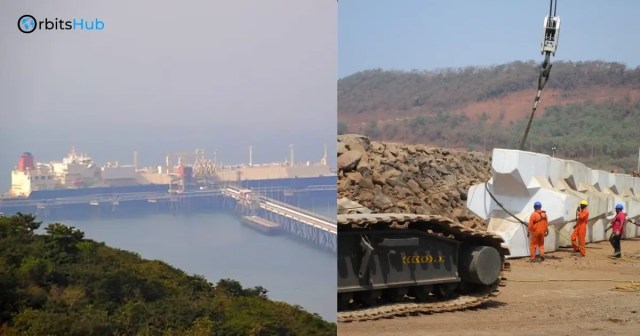
LNG Terminal
The LNG terminal at Dabhol is a marvel of modern engineering.
Jetty length: 1.2 kilometers
The berth capacity can accommodate LNG carriers up to 260,000 cubic meters.
Regasification Facility: State-of-the-art technology capable of processing 5 million metric tonnes per year
Storage: Three cryogenic tanks, each with a capacity of 160,000 cubic meters.
Multi-Purpose Berth
In addition to the LNG terminal, Dabhol Port boasts a multi-purpose berth.
Length: 300 meters
Draft: Up to 12 meters
Cargo Handling: We are equipped to handle bulk, break-bulk, and project cargo.
Storage Facilities
The port offers extensive storage solutions:
Open Storage Area: 50,000 square meters
Covered Warehouses: 10,000 square meters
Cold Storage: 5,000 square meters for perishable goods
OperationalEfficiency
Dabhol Port has implemented several measures to enhance its operational efficiency:
1.The Automated Gate System : reduces truck turnaround time by 40%.
2. RFID technology : for real-time tracking of cargo and vehicles within the port.
3.The Integrated Port Management System : streamlines documentation and customs procedures.
4. Green Port Initiatives : Solar-powered lighting and electric vehicles for internal transport
Economic Impact
The port has had a significant impact on the local and regional economies.
Dabhol Port’s Economic Impact
1. Employment Generation:
Direct Employment: Over 1,000 skilled workers
Indirect Employment: Estimated 5,000 jobs in related sectors
2. Revenue Generation:
Annual Revenue: Approximately ₹500 crore (as of 2023)
Contribution to State GDP: Estimated 0.5% of Maharashtra’s GDP
3. Industrial Development:
Ancillary Industries: Growth in logistics, warehousing, and ship repair services
Foreign Direct Investment: Attracted over $500 million in FDI since 2015
EnvironmentalInitiatives
1. Mangrove Conservation
Dabhol Port has taken a proactive approach to mangrove conservation, recognizing this ecosystem’s vital role in coastal protection, biodiversity, and carbon sequestration. To date, the port has protected and expanded over 500 hectares of mangrove forests. These efforts not only preserve habitat for diverse marine and bird species but also help stabilize the shoreline against erosion and act as a natural buffer against storm surges and rising sea levels.
2. Marine Biodiversity Program
In collaboration with marine biologists and environmental organizations, Dabhol Port has launched a “Marine Biodiversity Program” to safeguard local ecosystems. The port minimises its environmental impact on nearby marine life through regular monitoring, research, and habitat protection efforts. This includes studying fish populations, coral health, and the effects of human activities on delicate marine habitats. Such initiatives contribute to a better understanding of the local ecosystem, helping to protect a wide range of species and support the sustainable use of aquatic resources.
3. Air Quality Management
Recognizing the importance of maintaining clean air, Dabhol Port has implemented a robust “air quality management program.” This includes dust suppression systems across port facilities and regular air quality monitoring to ensure compliance with environmental standards. These efforts help reduce particulate matter emissions, benefiting the health of local communities and port workers while reducing the environmental impact of port operations. Through this program, Dabhol Port aims to set a high standard for air quality in industrial areas, mitigating the effects of port activities on the atmosphere.
4. Waste ManagementZero
Waste-to-Landfill Initiative- Dabhol With its Zero-Waste-to-Landfill Initiative, Dabhol Port has achieved an impressive milestone in waste management by recycling 90% of waste. t has dramatically reduced the amount of waste sent to landfills through extensive recycling programs, composting, and waste-to-energy initiatives. This commitment reflects Dabhol Port’s dedication to sustainable resource use as it explores innovative ways to manage waste responsibly and contribute to a cleaner environment. These sustainability initiatives at Dabhol Port reflect a forward-thinking approach, balancing the demands of port operations with a solid commitment to environmental preservation. By addressing key areas like mangrove conservation, marine biodiversity, air quality, and waste management, Dabhol Port is setting an example for ports worldwide, showcasing how industrial growth can align with ecological responsibility.
Future Developments
The port has ambitious plans for the future:
1. Capacity Expansion:
LNG Terminal: Plans to increase capacity to 10 mtpa by 2026.
The Multi-Purpose Berth will add two new berths by 2025.
2. Technological Advancements:
5G network implementation: improved communication and IoT integration
Autonomous Vehicles: Pilot Project for Autonomous Cargo Handling Vehicles
3. Green Energy Hub:
Offshore Wind Farm: A feasibility study is underway for a 1 GW offshore wind project.
Hydrogen Production Facility: Plans to establish a green hydrogen production and export facility
4. Skill Development:
Maritime Training Institute: Proposed establishment of a world-class training facility for maritime professionals
Challenges and solutions
Despite its success, Dabhol Port is faced with several challenges:
1. Monsoon Disruptions
Challenge: Operations affected during monsoon season
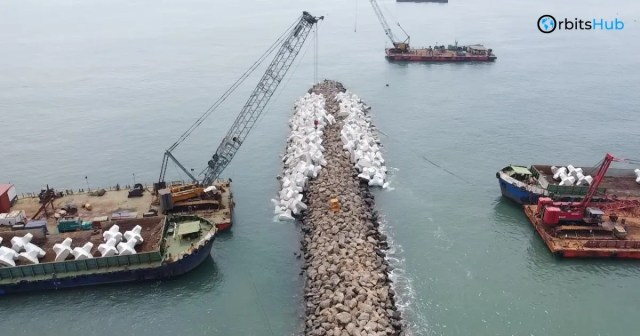
Solution: The ongoing breakwater project is expected to be completed in 2024.
2. Competition from Nearby Ports
Challenge: Intense competition from JNPT and upcoming ports
Solution: Focus on specialized LNG handling and value-added services.
3. Land Acquisition for Expansion
Challenge: Limited available land for port expansion
Solution: Exploring reclamation options and optimizing existing land use.
4. Regulatory Hurdles
Challenge: Complex regulatory environment
Solution: Proactive engagement with authorities and streamlining processes.
Dabhol Port’s journey from a controversial beginning to becoming a vital cog in India’s maritime infrastructure is a testament to strategic planning and adaptability. Dabhol Port’s ongoing growth and evolution position it to assume a more significant role in India’s economic and energy landscape.
Frequently Asked Questions
A: Dabhol Port primarily handles LNG and bulk and break-bulk cargo. Strict pollution control measures, regular impact assessments, and collaboration with local conservation groups address environmental
A: The port is expanding its LNG terminal capacity, constructing a breakwater for year-round operations, and integrating cutting-edge technologies like AI and blockchain for improved efficiency and security.
