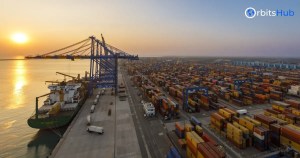
The maritime industry has long been a vital component of global trade and commerce, connecting nations and facilitating the movement of goods and people worldwide. However, like any industry, the maritime sector constantly evolves to meet the changing world’s demands. Emerging technologies have significantly shaped the marine industry’s future in recent years, addressing supply and demand imbalances, environmental concerns, and the need for an expert workforce.

Artificial Intelligence: Revolutionizing Maritime Operations
AI is disrupting many industries, including maritime. Artificial Intelligence is improving the naval sector’s operating efficiency and process optimization. AI has a significant impact on predictive maintenance. It can analyze massive volumes of sensors, public information systems, and asset monitoring data to improve care, downtime, and vessel performance.
Route and fuel optimization is another application of AI in the maritime industry. By processing real-time data on weather conditions, vessel performance, and other factors, AI algorithms can suggest the most efficient routes for ships, minimizing fuel consumption and reducing the environmental impact of maritime operations. Autonomous navigation is also being explored, with AI-powered systems being developed to enable ships to navigate safely and efficiently without human intervention.
Startups like Orca AI, an Israeli company, are developing AI-based collision avoidance systems for ships. By combining high-resolution thermal imaging and deep learning, Orca AI’s system can predict and alert ships to potential hazards, helping prevent collisions and saving lives. The startup also offers a visibility platform for fleet management, ensuring safety and regulatory compliance.
Clean Energy: Decarbonizing Maritime Operations
The maritime industry has faced increasing pressure to reduce its environmental impact, particularly regarding greenhouse gas emissions. There is a growing focus on transitioning to cleaner energy sources in maritime operations to address this challenge. The most prevalent ship propulsion fuel is petroleum-based marine heavy fuel oil (HFO). Startups now offer alternative energy sources to decarbonize the industry.

Alternatives to traditional propulsion fuels include electric propulsion systems, biofuels, wind energy, solar power, and hydrogen fuel. Norwegian firm TECO 2030 creates scalable and flexible fuel cell systems for heavy-duty marine applications to generate zero-emission electricity. Unnmukt Urja, an Indian firm, makes bio-crude, a low-cost, low-carbon naval fuel.
Integrating low-carbon fuels throughout the maritime fleet is crucial for achieving meaningful decarbonization. Biofuels, in particular, offer an economical and environmentally friendly choice for vessel owners, as they can readily replace HFO without requiring significant structural upgrades. By adopting these clean energy solutions, the maritime industry can significantly reduce its carbon footprint while ensuring its operations’ continued efficiency and productivity.
Drone Technology: Enhancing Efficiency and Safety in Maritime Operations
- Search and Rescue: Search and rescue missions at sea can benefit from the use of drones since they can cover more ground in less time than conventional methods.
- Port Security and Surveillance: Drones can provide aerial surveillance of ports and surrounding areas, enhancing security measures and detecting potential threats.
Inspection and Maintenance: Drones can inspect ships, offshore structures, and underwater infrastructure, reducing human risk and improving data collection.
Maritime Robotics: Addressing Workforce Challenges
The maritime industry faces a significant challenge with the need for more skilled workers, particularly in hazardous and remote environments. To overcome this, startups are developing robotics solutions tailored for maritime applications. Maritime robotics compensate for the lack of workforce and improve safety and efficiency in naval operations.
Alicia Bots, a US-based startup, manufactures a multi-purpose robot for vessel cleaning and maintenance. Their Roverclean 1.0 robot can remotely clean hulls, detect corrosion, polish propellers, and remove tank sludge. It also assists with repairs, inspections, and data collection, improving vessel performance and reducing biofouling.
Russian startup MarineRS develops marine robots that carry uncrewed aerial vehicles (UAVs) and underwater robots. These robots enable environmental monitoring, surface and water temperature measurement, wave height calculation, and other functions. By providing carrier services and hydrography capabilities, MarineRS’s robots enhance offshore connectivity and enable 24×7 monitoring and communication.
Energy-Efficient Integrations: Minimizing Environmental Impact
Maritime companies increasingly seek energy-efficient integrations to minimize greenhouse gas emissions and fuel costs. Improving various vessel systems, from scrubber and rudder to lubrication, coatings, and propulsion systems, can significantly reduce the environmental footprint of maritime operations.
British startup CARNOT creates energy-efficient ship engines by replacing metal components with ceramic parts that withstand high temperatures. This innovation diverts energy that would otherwise be required for cooling the engine, increasing energy efficiency. The startup’s machines also run on hydrogen and biofuels, further contributing to decarbonization efforts.
French startup FinX develops bio-inspired boat engines with an undulating elastomer membrane to propel watercraft. This unique design maximizes engine power density and improves hydraulic efficiency, reducing fuel consumption and environmental impact. FinX’s engines are also powered by electric motors, enhancing their sustainability credentials.
Maritime IoT: Enhancing Visibility and Efficiency
Continuous tracking and monitoring of ships’ locations are essential for safe and efficient maritime operations. Maritime IoT integration simplifies location data acquisition and enables monitoring of various parameters, such as emissions, machine conditions, propulsion data, and structural integrity. This extended visibility into processes and assets allows businesses to identify bottlenecks, optimize operations, and avoid downtime.
French startup Wattson Elements offers IoT solutions for ports and boats, enabling real-time boat monitoring, identification, and management. Their FALCO cloud platform uses IoT devices to provide data on boat location, berth occupancy, fire detection, intrusion detection, and theft detection. This connected ecosystem improves visibility into port operations and facilitates data-driven decision-making.
UK-based startup ACUA Ocean builds hydrogen-powered uncrewed surface vehicles (H-USV) that feature onboard power for sensors and AI-based data analysis. These H-USVs support offshore operations, improve efficiency, and reduce operational costs. Integrating IoT technology in maritime operations allows for remote monitoring and data-driven decision-making, paving the way for more efficient and sustainable practices.

Blockchain: Ensuring Transparency and Security
The maritime industry relies heavily on documentation and transactions involving various stakeholders, including vessel owners, operators, and ports. Blockchain technology offers a decentralized and secure solution for storing and sharing information, ensuring transparency and trust in maritime operations.
Singaporean startup Marified provides blockchain-based e-passports for seafarers. Their platform allows for the issuance, storage, management, and verification of documents, protecting against forgery and improving efficiency in document processing. This solution enhances safety, reduces costs, and streamlines operations for ship management companies and seafarers.
German startup Thrymr Digital Insurance Solutions (TDIS) offers a blockchain-powered marine cargo insurance platform. The platform automates insurance processes, from certificate generation to policy management, accounting, and compliance screening. By streamlining communication between insurers, underwriters, and brokers, this solution accelerates insurance data exchange and optimizes the efficiency of maritime companies.
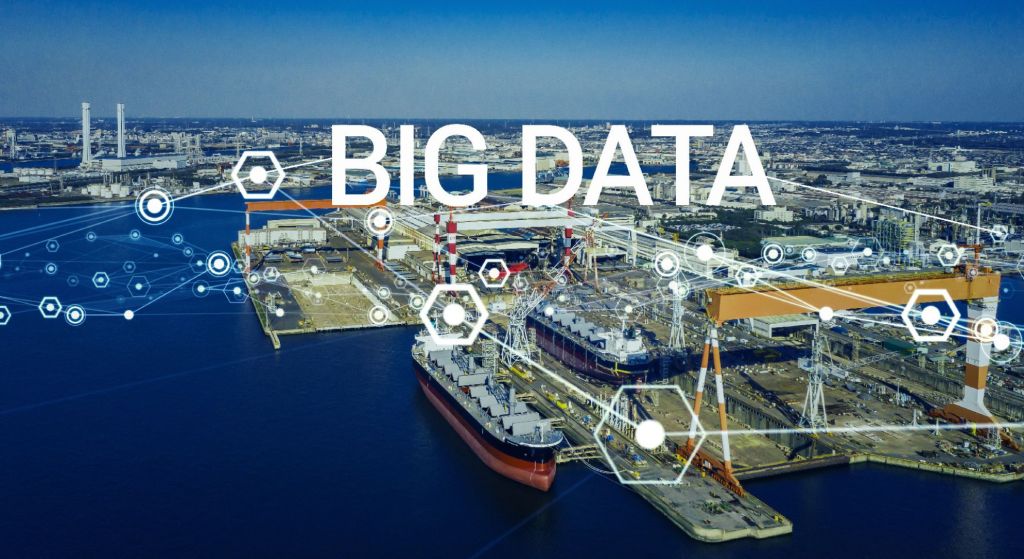
Big Data & Analytics: Optimizing Maritime Operations
The marine industry generates massive volumes of data via sensors, satellites, and ship and port systems. Big data and analytics may streamline maritime operations, improve decision-making, and uncover bottlenecks and threats.
Fleet operators can use maritime information and analytics from US firm OrbitMI. Their AI-based analytics platform provides fleet visibility and predictive modeling by aggregating marine data like bunker pricing, port activity, trading trends, and fleet statistics. OrbitMI boosts fleet performance and ROI by capturing cargo opportunities and lowering bunker costs.

Immersive Reality: Revolutionizing Training and Maintenance
Conventional maritime education and training often need more hands-on experience, affecting the competence of seafarers. Immersive reality technologies, such as augmented reality (AR) and virtual reality (VR), offer solutions that provide realistic and immersive training experiences for operators.
US-based startup Synapse offers immersive safety and security simulations for seafarer training. Trainees navigate simulated scenarios using VR headsets to understand emergency response protocols better. This approach improves productivity and enhances training efficiency for seagoing vessels and maritime institutions.
Polish startup STEELCAD provides marine engineering services using 3D laser scanning and photogrammetry. By creating CAD models from point clouds, STEELCAD accelerates product design and visualization. Their AR and 3D rendering capabilities enable easy tracking of work progress and finalized plans, improving collaboration between engineers and project owners.
5G: Empowering Maritime Connectivity
Integrating IoT devices in maritime operations increases the demand for reliable, high-speed communication networks. 5G technology addresses this need by providing a network system that can handle the high volume of IoT data with low latency, optimizing port operations and vessel traffic management.
Spanish startup TMS Maritime Solutions offers managed 5G connectivity solutions for near-shore communications. Their solution enables robust communication between vessels and ports, allowing real-time data exchange and improved connectivity without excessive upfront costs.

Cybersecurity: Protecting Maritime Infrastructure
Cybersecurity has become a critical concern with the increasing digitization of maritime operations. Startups are developing cybersecurity solutions tailored for the marine industry to protect vessels, communication networks, and critical infrastructure from cyber threats.
Israeli startup CYDOME provides fleet-wide cybersecurity coverage for the maritime industry. Their hardware device connects to the communication network and uses continuous monitoring and deep analysis to detect and mitigate cyber-attacks. CYDOME’s solution ensures the stability of ship operations, navigation systems, and critical communication networks.
Indian startup Byondsec offers cybersecurity solutions to protect vessels from cyber threats. Their centralized management dashboard enables real-time monitoring of security events across fleets while AI technologies detect and roll back ransomware attacks. Blonde’s solution ensures the safety of maritime operations, reduces risks, and optimizes compliance.
The maritime industry is transforming, driven by emerging technologies that solve long-standing challenges. From artificial intelligence and clean energy to marine robotics and blockchain, these technologies are reshaping how the industry operates, improving efficiency, sustainability, and safety. By embracing these trends and innovations, the maritime sector can navigate the future with confidence and adaptability.
FAQ’s
1. What are some key emerging technology trends in the maritime industry?
Autonomous ships, blockchain for supply chain management, Internet of Things (IoT) sensors, predictive maintenance using AI, and green propulsion systems like LNG and hydrogen fuel cells are among the prominent emerging technology trends in the maritime industry.
2. How do autonomous ships impact the maritime industry?
Autonomous ships, also known as uncrewed vessels, revolutionize the maritime industry by reducing human error, improving safety, and optimizing operational efficiency through advanced sensors, artificial intelligence, and automation.