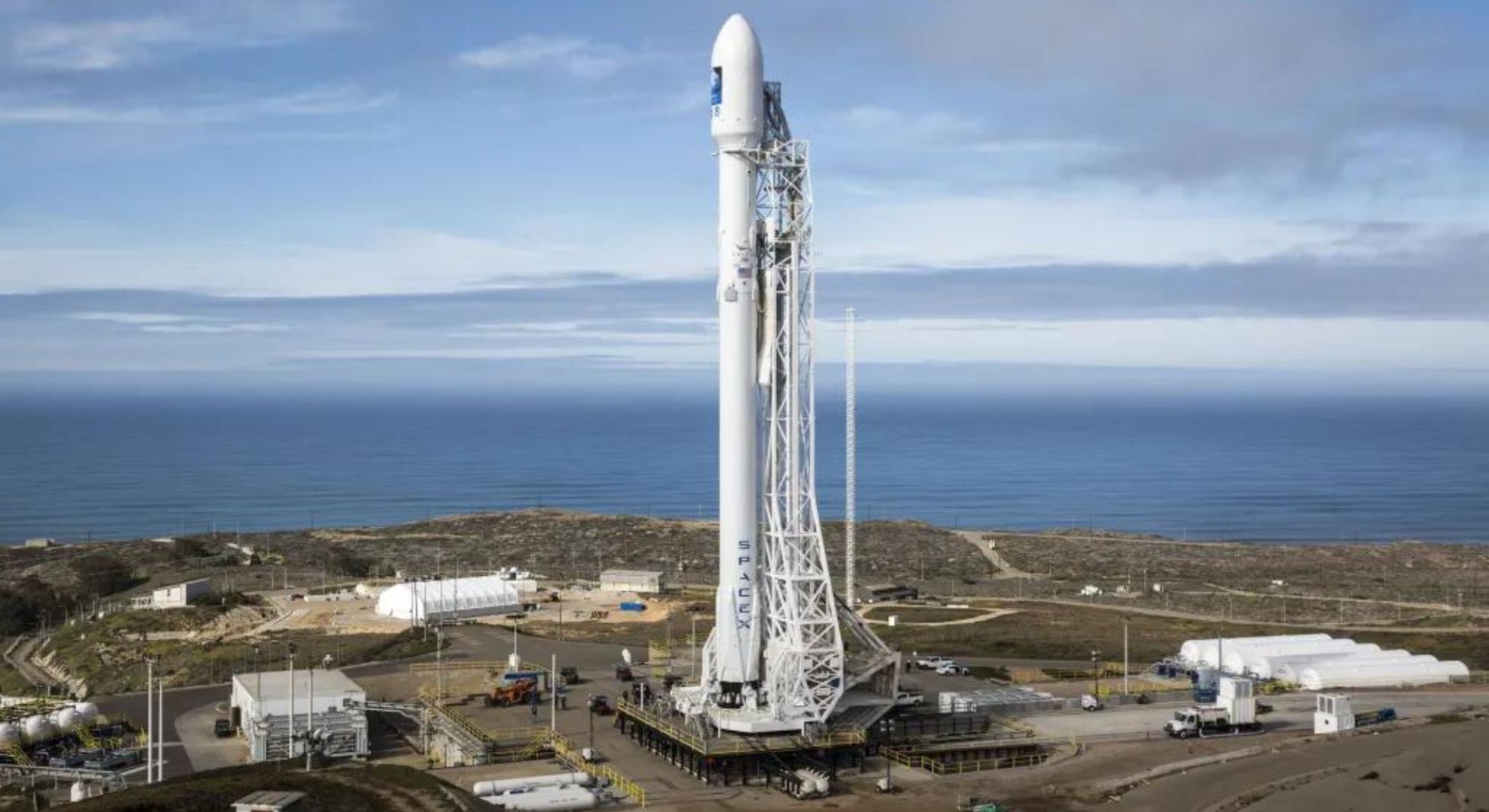

SpaceX developed and produced the reusable, two-stage Falcon 9 rocket to carry people and payloads into Earth orbit and beyond dependably and securely. It is the world’s first orbital-class reusable rocket. Falcon 9 can carry cargo and crew into Earth orbit and beyond. Because SpaceX can reuse the missile’s most costly components, the company can reduce the price of space access.
Falcon 9 Overview
One medium-lift launch vehicle that can transport people and goods into Earth orbit is the Falcon 9, which is partially reusable. American aerospace corporation SpaceX designs manufactures, and launches it. On June 4, 2010, the inaugural Falcon 9 launch took place. At ground level, the Falcon 9 produces thrust exceeding 1.7 million pounds. Its dimensions are 70 meters (229.6 feet) in height and 3.7 meters (12 feet) in diameter, and its mass is 549,054 kg (1,207,920 lb).
Falcon 9 First Stage
Stage one of the Falcon 9 rocket includes nine Merlin engines and oxygen and rocket fuel (RP-1) tanks made of aluminium and lithium. The first stage’s use of nine engines enables SpaceX to deliver on its dependability guarantees. In the event of an engine failure, the remaining operational engines can safely and promptly take over.
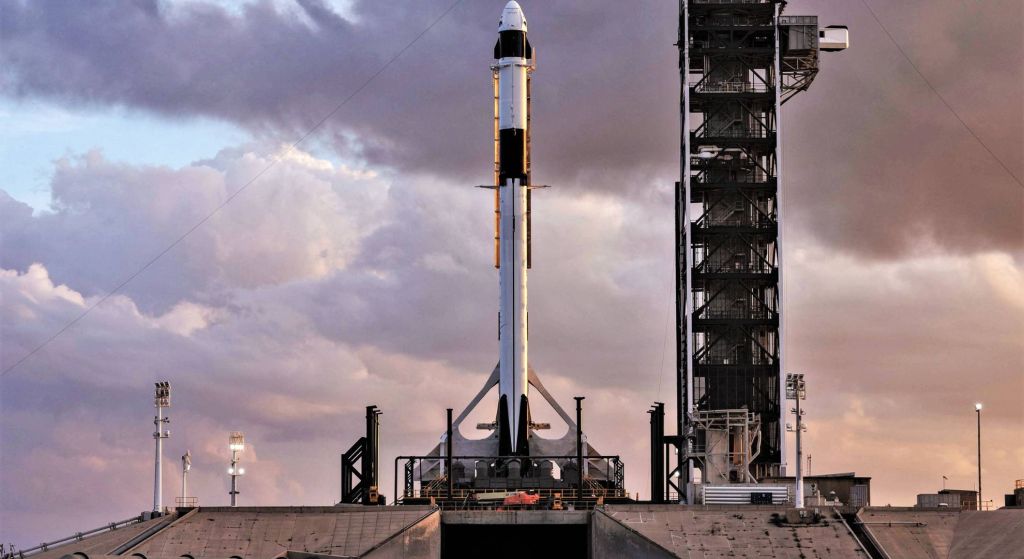
Falcon9’s Second Stage
The second stage of the Falcon 9 rocket uses a single Merlin Vacuum Engine to propel the payload into the orbit of your choice. Multiple restarts of the second-stage engine allow placing various payloads into varied orbits; the engine ignites a few seconds after stage separation.
The Merlin Vacuum Engine operates efficiently in the vacuum of space, providing the necessary thrust to push payloads beyond Earth’s atmosphere. Its reliability and versatility make it a crucial component in SpaceX’s mission to deliver satellites, cargo, and crew to destinations in orbit and beyond. With its ability to perform multiple restarts, the second stage of the Falcon 9 offers flexibility in trajectory, enabling precise placement of payloads into their intended orbits, whether low Earth orbit, geostationary orbit, or beyond.
Falcon 9 Payload Fairing
The fairing, constructed from a carbon composite, shields spacecraft as they enter orbit. The fairing is released around three minutes into the flight, and SpaceX retrieves fairings for subsequent missions. A measurement of 13.1 meters (43 feet) in height and 5.2 meters (17.1 feet) in circumference describes it.
What is the difference between Falcon 9 and Falcon Heavy?
Fa9’sn 9 and Falcon Heavy are both rockets designed and manufactured by SpaceX. Falcon 9 is a reusable, two-stage rocket carrying cargo and crew into Earth orbit and beyond. Its height is 70 meters (229.6 feet) and it can lift 22,800 kilograms (50,300 lbs). On the other hand, Falcon Heavy is a giant rocket that combines three Falcon 9 boosters to triple the rocket’s power at liftoff. It has a height of 70 meters (230 feet) and can lift a payload of 64000 kilograms or 141,000 lbs. Falcon Heavy has two boosters, while Falcon 9 has zero. The Falcon Heavy weighs in at 1.421 million kg, whereas the Falcon 9 weighs at 505,806 kilograms. Launching a Falcon Heavy rocket costs $90 million, but establishing a Falcon 9 rocket costs $62 million.

Elon Musk’s vision for space exploration
According to Elon Musk’s plans, space travel will one day be as frequent as flying from Chicago to New York City, and everyone can afford it. His goals include securing the sentence of life and enjoying a promising future. His goals include sending people to Mars, making space travel cheaper, inspiring the next generation to think big, and making humankind a multi-planetary species.
Maintaining a permanent human settlement on Mars is Musk’s overarching goal for SpaceX. He thinks humans should diversify into a multi-planet species rather than musk’sng on just one. Launching massive spacecraft into Earth orbit, Musk intends to refuel them multiple times with boosters recovered from the ground before sending them on a mission to Mars. In the next 40 to 100 years, Musk plans to launch 1,000 of these spacecraft, each capable of carrying 100 people, allowing one million to escape Earth.
Elon Musk’s vision for space exploration is to make space travel affordable and feasible for everyone, establish security for life itself, inspire kids about the future, make humans a multi-planetary species, and send people to Mars. He aims to establish a permanent human presence on Mars and has plans to launch enormous spaceships into orbit around Earth to achieve this goal.
FAQ’s
1. What is SpaceX Falcon 9?
The SpaceX Falcon 9 is a reusable, two-stage rocket that the company develops and produces with the goal of safely and dependablely delivering cargo and humans into Earth orbit and beyond. This robust is the first orbital-class reusable rocket in history.

2. How does Falcon 9 work?
The Falcon 9 is a medium-lift launch vehicle that can transport people and cargo into Earth orbit. It is partially reusable. In the first stage, you can find nine Merlin engines together with tanks made of aluminium and lithium that hold rocket fuel and liquid oxygen. A single Merlin Vacuum Engine powers the second stage of the Falcon 9, which is responsible for delivering the payload to the target orbit.
3. What is the height of Falcon 9?
Falcon 9 has a height of 70 meters (229.6 feet) 1.
4. What is the payload capacity of Falcon 9?
Falcon 9 has a payload capacity of 18,300 pounds for geostationary transfer orbit (GTO) and 50,300 pounds for low-Earth orbit.
5. What is the cost of a Falcon 9 launch?
The cost of a Falcon 9 launch varies depending on the mission requirements. SpaceX’s reusability characteristic allows it to reuse the rocket’s most expensive components, making space travel cheaper.

The groundbreaking SpaceX Falcon 9 rocket has opened space travel to a broader audience at a lower cost. Musk’s reusability has allowed SpaceX to reuse the missile’s most costly components, reducing the overall cost of accessing space. With dimensions of 70 meters (229.6 feet) in height, 3.7 meters (12 feet) in diameter, and 549,054 kilograms (1,207,920 lb) in mass, Falcon 9 produces over 1.7 million pounds of thrust at sea level.
Nine Merlin engines, FAQsnum, and lithium-lithium alloy tanks hold liquid oxygen and rocket-grade kerosene (RP-1) throughout the first stage. The second stage of the SpaceX Falcon 9 rocket uses a single Merlin Vacuum Engine to propel the payload. The fairing, constructed from a carbon composite, shields spacecraft as they enter orbit. The fairing is released around three minutes into the flight, and SpaceX retrieves fairings for subsequent missions.