There is an impressive fleet of specially developed aircraft in the United States Air Force (USAF). The USAF arsenal ensures American airpower projection globally, from the sleek and agile fighter jets that dominate the skies to the colossal bombers capable of delivering long-range payloads. This provides a brief synopsis of the leading aircraft types in the United States Air Force’s remarkable inventory.
Fighters: Guardians of the Skies- US Air Force Aircraft
Fighters are the undisputed masters of air combat. Their primary function is to establish air superiority by eliminating enemy aircraft. These technologically advanced jets are high-speed, manoeuvrable, and heavily armed. Here’s a look at some prominent USAF fighters:
- F-15 Eagle: A legend in its own right, the F-15 Eagle is a twin-engine, all-weather fighter renowned for its unmatched air-to-air combat prowess.
- F-16 Fighting Falcon: A versatile and cost-effective fighter, the F-16 is a multi-role aircraft capable of air-to-air combat, ground attack, and reconnaissance missions.
- F-22 Raptor: The pinnacle of fighter jet technology, the F-22 Raptor is a stealth aircraft designed to evade enemy radar detection.
Bombers: Delivering Precision Power- US Air Force Aircraft

Bombers are the US Air Force Aircraft heavy hitters, responsible for delivering a wide range of artillery, from conventional bombs to precision-guided missiles. These long-range aircraft can strike targets deep within enemy territory. Let’s delve into some notable USAF bombers:
- B-52 Stratofortress: A true aviation icon, the B-52 Stratofortress is a strategic bomber that has seen service since the Cold War. It’s famous for its eight-engine design and immense payload capacity.
- B-1B Lancer: The B-1B Lancer is a versatile bomber adept at delivering conventional and nuclear payloads over long distances. Its variable-sweep wings allow for high speed and manoeuvrability.
- B-2 Spirit: The B-2 Spirit is a marvel of stealth technology designed to penetrate heavily defended airspace undetected. This bat-winged bomber is a vital asset for high-priority missions.
Beyond Fighters and Bombers: Expanding the Inventory
The USAF’s capabilities extend far beyond fighter jets and bombers. Here’s a glimpse into some other vital aircraft categories:
- Attack Aircraft: These specialized aircraft provide close air support to ground troops, engaging enemy positions and vehicles with heavy firepower. A prime example is the A-10 Thunderbolt II, affectionately nicknamed the “Warthog.”
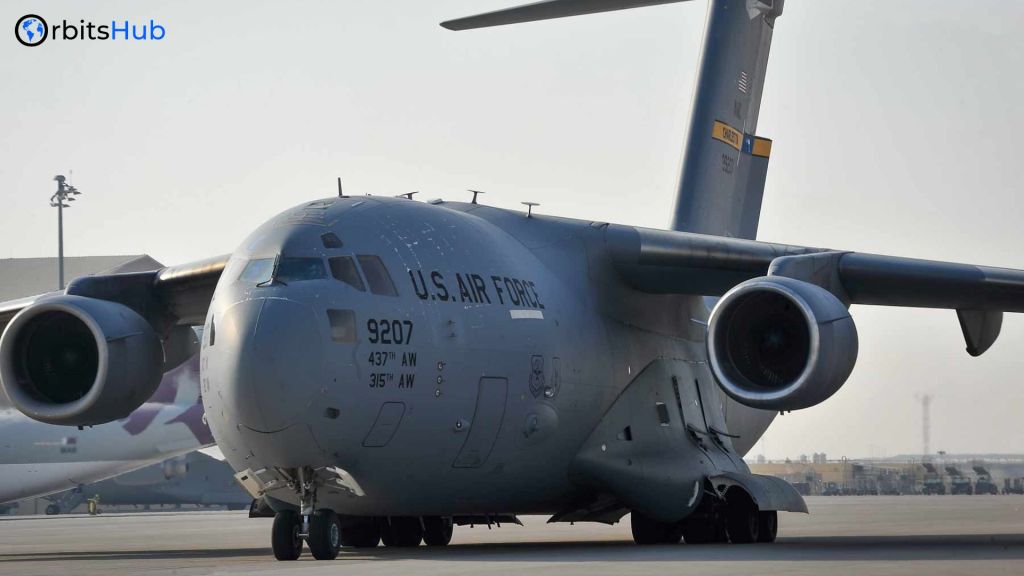
- Transport Aircraft: The USAF relies on a robust fleet of transport aircraft like the C-17 Globemaster III to deploy troops and equipment across vast distances.
- Tanker Aircraft: Aerial refuelling is a critical capability, and tanker aircraft like the KC-135 Stratotanker ensure fighters and bombers can extend their range and stay airborne for extended periods.
- Uncrewed Aerial Vehicles (UAVs): Also known as drones, UAVs provide intelligence gathering, surveillance, and even combat capabilities without risking human pilots. The USAF utilizes drones like the MQ-9 Reaper for various missions.
Force Multipliers: Supporting Aircraft of the USAF
This section can delve into the critical support aircraft complementing fighter and bomber capabilities. Here’s how you can elaborate:
- Electronic Warfare Aircraft: These specialized aircraft disrupt enemy communication and radar systems, providing a significant advantage to US forces. Examples include the EA-18G Growler, a formidable electronic attack aircraft.
- Intelligence, Surveillance, and Reconnaissance (ISR) Aircraft: Gathering crucial intel is vital for successful missions. The USAF utilizes aircraft like the U-2 Dragon Lady and the RQ-4 Global Hawk for high-altitude surveillance and reconnaissance.
- Helicopters: Helicopters provide unique advantages for troop transport, medical evacuation, and close air support in specific environments. The UH-60 Black Hawk is a workhorse utility helicopter fulfilling diverse roles.
- Search and Rescue (SAR) Aircraft: Saving lives is crucial. The USAF deploys helicopters like the HH-60 Pave Hawk for combat search and rescue missions, bringing downed pilots and personnel back to safety.
The Future of USAF Aircraft: Innovation and Adaptation
This section can discuss the USAF’s ongoing efforts to maintain its technological edge:
- Next-Generation Fighters: The F-35 aircraft Lightning II is a prime example, boasting advanced stealth capabilities and sensor fusion technology. Future fighter programs like the Next Generation Air Dominance (NGAD) aim to push the boundaries of aerial combat.
- Uncrewed Combat Aerial Vehicles (UCAVs): Drones are transforming warfare. The USAF is actively developing and deploying UCAVs with increasingly sophisticated weaponry and autonomous capabilities.
- Directed Energy Weapons Integration: Research is ongoing to integrate directed energy weapons like lasers onto aircraft, potentially revolutionizing air combat tactics.
- Hypersonic Technology: Hypersonic missiles and vehicles promise unmatched speed and manoeuvrability. The USAF is exploring this technology for potential future applications.
The USAF’s airpower rests on a foundation of cutting-edge technology and a vast array of specialized aircraft. Each category plays a crucial role, from the fighters’ dominance to the bombers’ strategic might. Supporting aircraft like intelligence gatherers and helicopters further extends this reach. As the future unfolds, the USAF relentlessly innovates, with next-generation fighters, unmanned combatants, and hypersonic technology on the horizon. This unwavering commitment ensures that the USAF will remain dominant in the skies for years.
Are you considering a career in aviation or maritime operations? Or may your business need expert consultancy in these sectors? OrbitsHub, a leading marine and aviation consultancy services company, can be your one-stop shop. Explore their website for comprehensive services to empower your aviation or maritime endeavours.