The F-111 Aardvark, an iconic aircraft in aviation history, is renowned for its groundbreaking design and versatile capabilities. Developed during the 1960s, this tactical strike aircraft served various roles, including strategic bombing, surveillance, and electronic warfare. Its unique features and advanced technology made it a significant asset for the United States Air Force (USAF). This delves into the rich history of the F-111 Aardvark, exploring its development, key features, and operational legacy.
Development of the F-111 Aardvark
The Birth of a Revolutionary Aircraft
The F-111 Aardvark was conceived during rapid technological advancements and changing military needs. The USAF sought an aircraft capable of low-level, high-speed penetration of enemy defenses, with a secondary role in naval operations. This led to the development of the Tactical Fighter Experimental (TFX) program in 1961.
Key Milestones in Development
During its development, the F-111 project encountered several obstacles. Design concessions were made to accommodate the needs of the United States Air Force and the Navy. Despite these hurdles, the F-111A made its maiden flight on December 21, 1964. It featured variable-sweep wings, allowing it to perform efficiently at various speeds and altitudes.
Key Features and Innovations
Variable-Sweep Wings
One of the most distinctive features of the F-111 Aardvark was its variable-sweep wings. This innovation allowed the wings to be adjust between 16 and 72.5 degrees, enabling the aircraft to perform optimally in diverse flight conditions. The wings could be swept back at high speeds, while at low speeds, they could be extend for takeoffs and maneuvers.
Terrain-Following Radar
The F-111 was equip with a sophisticate terrain-following radar system, allowing it to fly at low altitudes while automatically adjusting its flight path to avoid obstacles. This capability was crucial for penetrating enemy defenses undetected and performing precise strike missions.
Advanced Avionics and Engines
The F-111 featured state-of-the-art avionics, including digital flight control and radar-based navigation systems. Two Pratt & Whitney TF30 after-burning turbofan engines powered it, providing the necessary thrust for its varied missions.
Operational History of F-111 Aardvark
Combat Deployments
The F-111 saw extensive combat use, beginning with its deployment to Vietnam in 1968. It conducted long-range bombing missions, leveraging its speed and low-altitude flight capabilities. The aircraft played a vital role in Operation Linebacker during the Vietnam War, delivering precision strikes against key targets.
Peacetime Contributions
In addition to its combat roles, the F-111 Aardvark was instrumental in various peacetime operations. It participated in numerous training exercises and showcased its versatility in reconnaissance and electronic warfare missions. The aircraft also played a crucial role in demonstrating the effectiveness of variable-sweep wing technology.
Retirement and Legacy
The F-111 Aardvark was gradually phase out of service in the 1990s, with the last USAF unit retiring the aircraft in 1998. Despite its retirement, the F-111 left a lasting legacy in aviation history. Its innovative design and operational successes paved the way for future advancements in military aircraft technology.
Design Philosophy and Concept
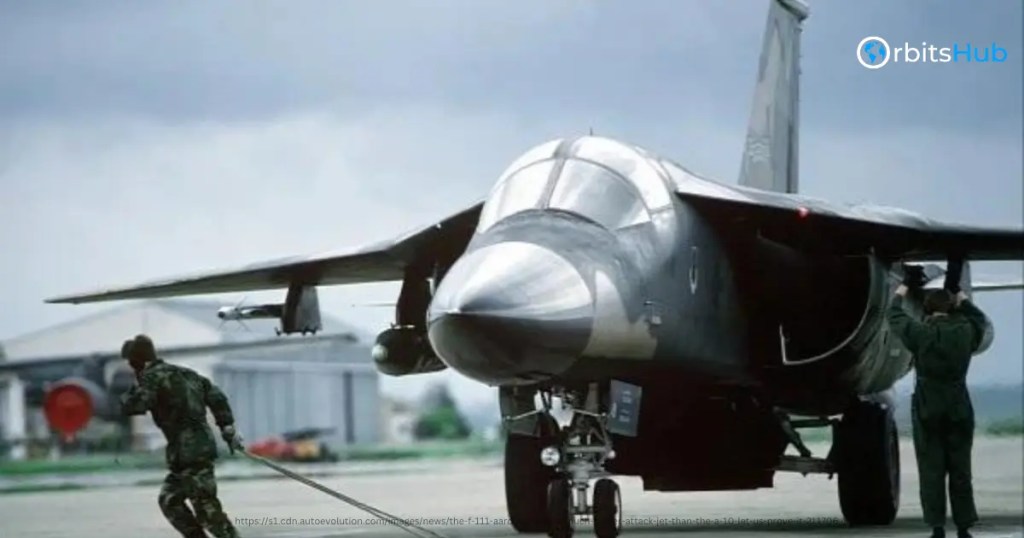
- Innovative Approach: The F-111 Aardvark was design to fulfill multiple roles, a revolutionary concept at the time. This required a balance between the needs of tactical strike missions and strategic bombing.
- Variable-Sweep Wings: Central to its design was the variable-sweep wing technology. This allowed the aircraft to adjust its wing configuration for optimal performance at various speeds and altitudes.
- Crew Protection: The cockpit was design to focus on crew safety, featuring an escape pod that could be eject as a whole unit, ensuring the pilot’s and weapons officer’s survival.
- Versatility: The design philosophy emphasized versatility, enabling the F-111 to perform low-altitude penetration missions, surveillance, and electronic warfare, making it a highly adaptable aircraft.
Notable Variants of the F-111
- F-111A: The initial production version, equipped with Pratt & Whitney TF30 engines and advanced avionics.
- F-111E: An upgraded version with improved avionics and enhanced engine performance designed for better reliability and efficiency.
- F-111F: The most advanced variant, featuring more powerful engines and upgraded radar systems, significantly enhancing its combat capabilities.
- EF-111A Raven: A specialized electronic warfare variant equipped with sophisticated electronic countermeasure systems to disrupt enemy radar and communications.
- FB-111A: A strategic bomber variant capable of carrying nuclear weapons, extending the F-111’s role into strategic deterrence.
Technological Impact on Modern Aircraft
- Advancement in Avionics: The F-111 introduced advanced avionics systems, including digital flight controls and radar navigation, which have influenced the development of modern fighter and bomber aircraft.
- Terrain-Following Radar: Its terrain-following radar system set a new standard for low-altitude flight, enhancing the ability of aircraft to perform precise strike missions under the radar.
- Afterburning Turbofan Engines: The TF30 engines with afterburners provided the F-111 with exceptional speed and performance, a technology refined and adopted in later aircraft designs.
- Variable-Sweep Wing Design: This technology demonstrated the benefits of adjustable wing configurations, influencing aircraft designs like the F-14 Tomcat and the B-1 Lancer.
Training and Deployment Challenges
- Complex Training Programs: Pilots and crew required extensive training to master the sophisticated systems of the F-111, including its variable-sweep wings and advanced avionics.
- Maintenance Demands: The complexity of the aircraft’s systems made maintenance a significant challenge, necessitating specialized training for ground crews.
- Operational Readiness: Ensuring the operational readiness of the F-111 fleet required constant updates and modifications, often leading to logistical challenges.
- Adaptation to Combat Environments: Deploying the F-111 in various combat environments required adaptability and thorough preparation to leverage its capabilities thoroughly.
Legacy and Cultural Significance: F-111 Aardvark
- Historical Milestone: The F-111 remains a significant milestone in military aviation history, known for its innovative design and versatile capabilities.
- Pop Culture Presence: The aircraft has appeared in numerous films, documentaries, and books, cementing its place in popular culture as a symbol of technological prowess.
- Influence on Future Designs: The legacy of the F-111 can be see in subsequent aircraft designs, influencing the development of multi-role fighters and bombers.
- Tributes and Memorials: Various museums and memorials pay tribute to the F-111, preserving its history and educating future generations about its contributions to aviation and military history.
The F-111 Aardvark remains a symbol of innovation and versatility in military aviation. From its revolutionary variable-sweep wings to its advanced avionics, the F-111 set new standards for tactical strike aircraft. Its contributions during combat and peacetime operations underscore its significance in aviation history.
To delve deeper into the fascinating world of aviation history and explore our consultancy services, visit Orbitshub. Our team of specialists is here to help you in every way possible regarding marine and aviation issues. Look around our site right now to see how we can help.