

Raytheon Technologies (RTX) stands at the forefront of innovation in the aerospace and defense industry, driving transformative changes that reshape the future of air travel, space exploration, and global security. With a rich history of groundbreaking achievements and a forward-looking approach to research and development, Raytheon Technologies is positioning itself as a key player in defining the next era of technological advancement.
Pioneering Sustainable Aviation Solutions
Commitment to Greener Skies
RTX is tackling the challenge of sustainable aviation head-on through various innovative approaches:
Geared Turbofan (GTF) Engine Sustainability Impact
These innovations are vital because aviation accounts for approximately 2% of global CO2 emissions. The GTF engine’s success is clear, with over 10,000 orders and commitments from more than 80 customers, including major airlines worldwide.
At the same time, RTX is exploring electric and hybrid-electric propulsion systems for smaller aircraft and urban air mobility vehicles. For example, their Project 804 demonstrator aims to test a 1-megawatt hybrid-electric propulsion system, which could reduce fuel consumption by up to 30% on regional aircraft.
Moreover, these efforts underscore RTX’s commitment to sustainable solutions across various segments of the aviation industry. In addition, such technologies could play a key role in reducing emissions and improving efficiency in both regional and urban air travel.
Advancing Defense Technologies for a Safer World
Cutting-Edge Defense Systems
RTX is pushing the boundaries of defense technology through significant investments and innovative solutions:
- Annual R&D budget: $7.3 billion (over 10% of total revenue in 2023)
- GaN-based radar systems offer a 30% increased detection range compared to traditional systems.
- In 2023, they successfully tested air-breathing hypersonic weapons, achieving speeds that surpass Mach 5.
The company’s advanced radar systems, like the AN/SPY-6 family, provide unprecedented capabilities in detecting and tracking multiple threats simultaneously. Naval vessels are integrating these systems, thereby enhancing maritime security globally.
In missile defense, RTX’s Standard Missile-3 (SM-3) interceptor has achieved over 30 successful intercepts in space, providing a critical layer of defense against ballistic missile threats.
Moreover, the company is also developing directed energy weapons. Impressively, their High Energy Laser Weapon System (HELWS) has demonstrated the ability to neutralize multiple drones in operational tests.
Revolutionizing space exploration and satellite technology
Contributions to the Final Frontier
RTX is making significant strides in space and satellite technology:
- We are developing next-generation space suits and life support systems for NASA’s Artemis program.
- We are pioneering small, capable satellites for global communication networks.
- Goal: Deploy over 1,000 advanced satellites by 2025 to enhance global connectivity.
The company’s Collins Aerospace division is developing the next-generation spacesuit, the Extravehicular Mobility Unit (xEMU), which will allow astronauts to work more efficiently on the lunar surface. This suit incorporates advanced materials and life support systems that withstand extreme temperatures and radiation.
In satellite technology, RTX is developing Blue Canyon Technologies’ X-SAT Saturn-class microsatellites, which offer high performance in a compact form factor.
These satellites are designed for diverse applications such as earth observation, communications, and scientific research.
Similarly, RTX’s advanced sensor technologies play a critical role in space exploration.
For instance, NASA’s James Webb Space Telescope utilizes their infrared sensors to enable unprecedented observations of distant celestial objects.
Moreover, these innovations showcase RTX’s ability to deliver cutting-edge solutions that push the boundaries of space technology.
In addition, they highlight the company’s contributions to both commercial and scientific advancements in the aerospace sector.
Embracing digital transformation and AI

Integration of Smart Technologies
RTX leverages AI and digital transformation across its operations to enhance efficiency and capabilities:
- Predictive maintenance solutions reduce unscheduled engine removals by up to 20%, saving airlines millions in operational costs.
- AI-powered systems enhance situational awareness in defense applications, processing vast amounts of real-time data.
- Digital twin technology accelerates product development cycles by up to 30%, allowing for virtual testing and optimization.
The company’s FOMAX (Flight Operations and Maintenance Exchanger) system exemplifies this approach, collecting and analyzing over 100,000 aircraft parameters in real time. This data-driven solution enables proactive maintenance, reducing downtime and improving fleet efficiency.
Similarly, in defense applications, RTX’s AI-driven battle management systems enhance commanders’ decision-making capabilities.
These systems process data from multiple sensors and sources, presenting a comprehensive operational picture and suggesting optimal courses of action.
Moreover, this integration of AI reduces response time, allowing for quicker and more informed decisions in critical scenarios.
In addition, such innovations highlight RTX’s commitment to leveraging advanced technologies to optimize both civil and military operations.
Furthermore, these solutions demonstrate how data and AI can work hand-in-hand to improve reliability, efficiency, and situational awareness across industries.
Fostering innovation through collaboration and investment.
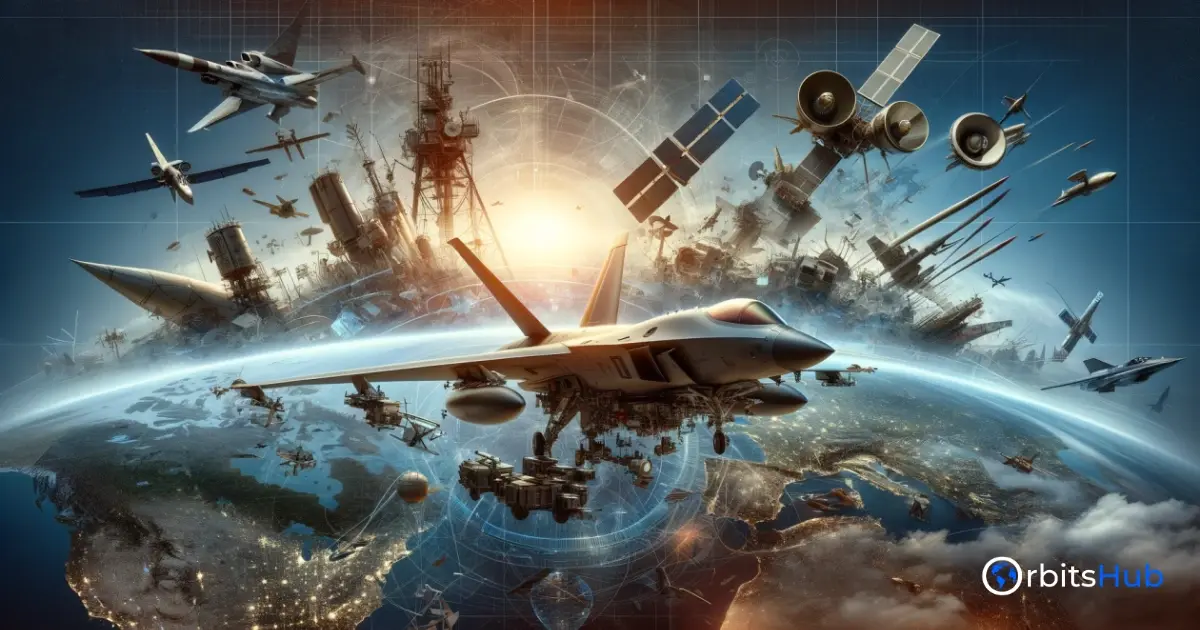
Ecosystem of Innovation
RTX cultivates innovation through strategic partnerships and investments:
- RTX Ventures commits over $500 million to early-stage companies working on cutting-edge technologies.
- Employs 60,000+ engineers and scientists worldwide, fostering a diverse and inclusive environment.
- The individual files over 2,000 patents annually, demonstrating a strong commitment to intellectual property development.
The company’s innovation ecosystem extends beyond internal resources.
To begin with, through its University Research Initiative, RTX collaborates with leading universities, funding advanced research in areas such as quantum computing, advanced materials, and hypersonics.
Furthermore, RTX operates several global innovation hubs. Notably, this includes the Raytheon BBN Technologies division, which is renowned for its groundbreaking work in quantum information science and cybersecurity.
The Road Ahead: Raytheon Technologies’ Vision for the Future
Raytheon Technologies (RTX) aims to spearhead innovation in the aerospace and defense sectors. Their approach to global challenges positions them as a key driver of industry progress.
FAQs About Raytheon Technologies
A: RTX develops fuel-efficient engines like the GTF, invests in sustainable aviation fuels, and works on electric propulsion systems to significantly reduce aviation’s environmental impact.
A: RTX integrates AI across its products to enhance performance, enable predictive maintenance, and improve decision-making in both commercial aviation and defense applications, leading to increased efficiency and capabilities.


