Have you ever gazed skyward, mesmerized by the contrails of a jetliner carving a path across the vast canvas of blue? Does the thrill of flight stir something profound within you, a yearning to pilot a magnificent machine and connect people and places across the globe? If so, then a career as a commercial aircraft pilot might be your perfect flight path. To help you achieve your goal of becoming a commercial aircraft pilot, this blog will walk you through each step of the process. Get ready for takeoff by fastening your seatbelts!
Ignition – Cultivating the Right Skills
Becoming a commercial pilot demands a unique blend of technical proficiency, leadership, and decision-making abilities. Here’s what you’ll need to focus on:
- Academic Foundation: While a specific degree is not mandatory, a strong foundation in science, mathematics, and physics will prove invaluable. These subjects equip you with a deep understanding of the principles of flight, meteorology, and aircraft systems.
- Medical Fitness: Pilots are entrusted with the safety of hundreds of passengers. To guarantee their mental and physical condition, they must undergo an exhaustive medical evaluation by a trained aviation medical examiner (AME).
- Discipline and Focus: Pilot t training is rigorous and requires unwavering dedication. You’ll need exceptional time management skills, the ability to absorb complex information quickly, and the discipline to consistently perform at your peak.
- Communication and Teamwork: Commercial aircraft are complex machines operated by a well-coordinated crew. Excellent communication skills and collaboration with air traffic controllers and fellow pilots are paramount.
Lift-off – Acquiring the Necessary Licenses
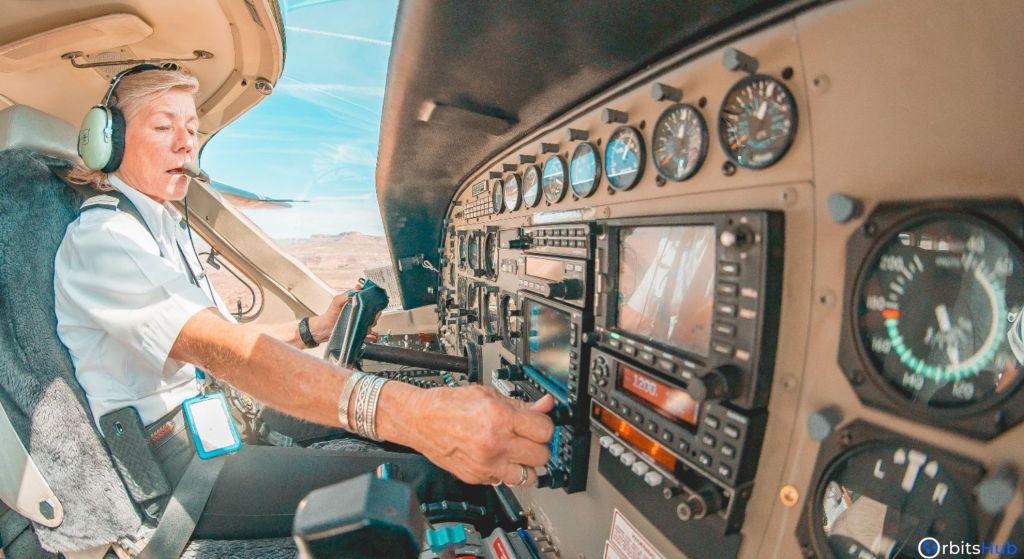
Becoming a commercial pilot is progressive, attained through a series of licenses demonstrating your flying competence. Here’s the roadmap:
- Private Pilot License (PPL): This is your foundation, allowing you to fly single-engine airplanes for pleasure. It typically involves at least 40 hours of flight training and passing a written knowledge test.
- Instrument Rating (IR): This crucial rating equips you with the skills to navigate and operate an aircraft solely relying on instruments, enabling flight in low-visibility conditions.
- Commercial Pilot License (CPL): This license elevates you to professional flying. It requires a minimum of 200 flight hours, passing a written exam, and a rigorous practical flight test. With a CPL, you can be compensate for piloting cargo or carrying passengers.
Additional Ratings: While not mandatory for all airlines, some may require additional certifications, such as:
- Mul i-Engine Rating (MEL): This allows you to fly airplanes with multiple engines, significantly expanding your career prospects.
- Type Rating: Specific airlines often require pilots to obtain a type rating for the particular aircraft model they’ll be flying.
Navigation – Building Flight Experience
Obtaining your licenses is just the beginning. Airlines seek pilots with demonstrable experience in the cockpit. Here’s how to gain those crucial flying hours:
- Flight Instruction: Becoming a Certified Flight Instructor (CFI) is an excellent way to accumulate flight time while sharing your knowledge with aspiring pilots.
- Banner Towing involves towing advertising banners behind an aircraft, providing valuable experience in low-level flying and precise maneuvers.
- Air Charter: Working for air charter companies allows you to fly passengers and cargo to various destinations, building experience in different environments.
Cruising Altitude – Landing Your Dream Job
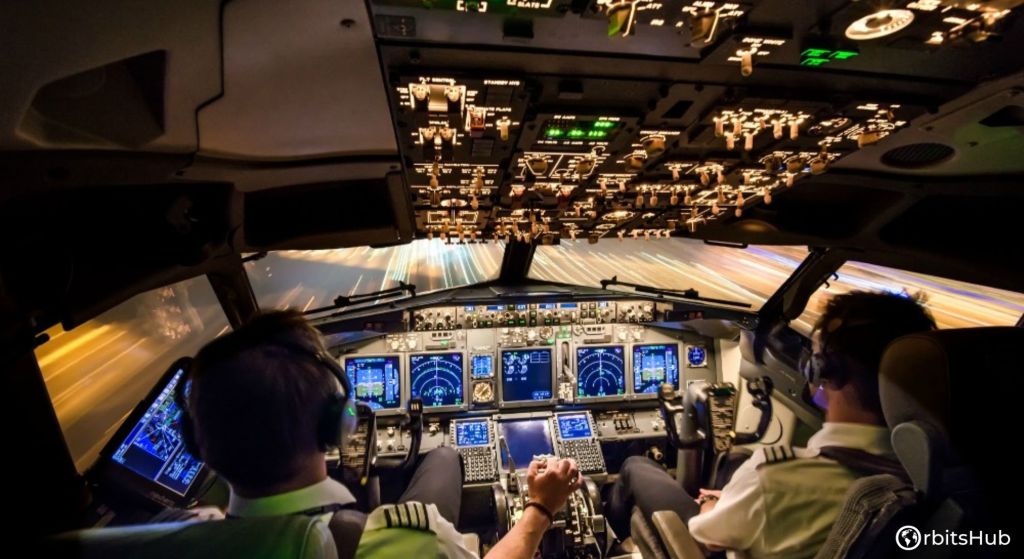
With the necessary licenses and flight hours under your belt, it’s time to explore career opportunities. Here are some tips for a successful job search:
- Targeted Applications: Research airlines and tailor your resume and cover letter to their requirements and fleet types.
- Networking: Attend aviation industry events and connect with pilots and industry professionals to gain valuable insights and potential leads.
- Flight Simulator Experience: Many airlines utilize advanced flight simulators during interviews. Demonstrating proficiency in these simulators can significantly improve your chances of getting hired.
Embarking on the path to becoming a commercial aircraft pilot is a journey filled with challenges and rewards. Each step requires dedication, discipline, and a deep passion for flight, from cultivating the necessary skills and acquiring licenses to building flight experience and landing your dream job. With perseverance and determination, you can soar to new heights and fulfill your aspirations of piloting magnificent machines across the globe. The sky is not the limit; it’s just the beginning of an extraordinary career in aviation.
Discover the possibilities with OrbitsHub for personalized instruction and support throughout this thrilling journey. To begin your journey towards a fulfilling profession as a commercial aircraft pilot, visit our website today.
FAQ’s
1. What qualifications are required to become a commercial aircraft pilot?
Becoming a commercial aircraft pilot typically requires a bachelor’s degree in aviation or a related field, which is a significant milestone. This is followed by the attainment of a commercial pilot’s license (CPL), a testament to your dedication and skill issued by the aviation authority of the country where you intend to work. It would help if you also accumulated specific flight hours, passed medical exams, and underwent rigorous training, contributing to your personal and professional growth.
2. What is the difference between a private pilot and a commercial pilot?
Flying for fun and relaxation is possible with a private pilot’s license. However, as a commercial pilot, you open up professional opportunities. You can fly for hire and receive payment for your services, a testament to your skills and expertise. Commercial pilots typically undergo more extensive training and have higher certification requirements compared to private pilots, a journey that leads to significant personal and professional growth.