Icebreaker ship, an epitome of human innovation and engineering, are designed to conquer one of the most formidable adversaries of maritime navigation – ice. These specialized vessels are purpose-built to navigate through ice-laden waters by breaking the ice into manageable fragments, paving a clear path for other sea vessels.
With an impressive array of features such as an extra-strengthened hull, unique shape, and super-powerful engines, these ships have allowed humans to navigate through icy waters, otherwise deemed impossible.
The Functionality of an Icebreaker Ship
The icebreaker ship has many uses, ranging from facilitating maritime trade to serving scientific research purposes. Some of their critical applications include:
- Path Creation: The primary function of an icebreaker ship is to pave a clear path for other sea vessels by breaking the ice blocks in their way.
- Scientific Research: They also play a critical role in aiding scientific research in the Arctic, which would be otherwise inaccessible due to the harsh icy conditions.
- Trade: Icebreakers are pivotal in ensuring trade continuity by maintaining open waterways, thus preventing disruption in the supply chain during the icy months.
- Search and Rescue: These ships are also use for search and rescue operations in ice-infested waters.
- Tourism: In recent years, icebreaker ships have opened the doors for Arctic tourism, providing adventure enthusiasts with an opportunity to experience the breathtaking beauty of the icy landscapes.

The Construction of an Icebreaker Ship
An icebreaker ship’s construction is a marvel characterize by a series of specialize features design to withstand the harsh conditions of the icy seas. These features include:
Strengthened Hull
The hull of the ship is reinforce to handle the impact of ice. This reinforcement is primarily located at the bow, stern, and waterline, where the hull meets the sea surface. These strengthen areas are also cover with unique polymer materials to reduce friction.
Unique Shape
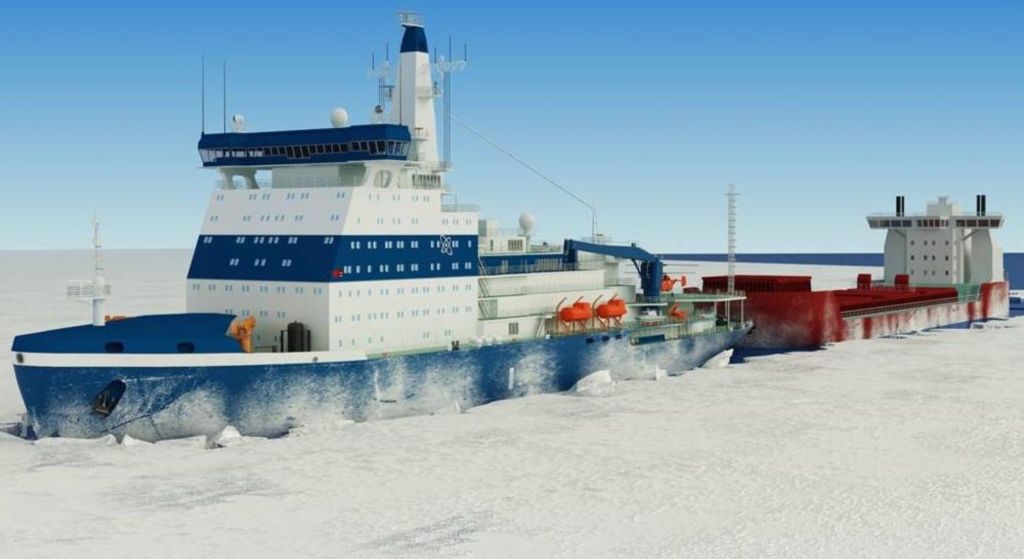
The hull of an icebreaker ship is uniquely design with a gradual slope at the bow. This design serves two purposes – it allows the vessel to break the ice using its weight and helps push the broken ice away, thus preventing build-up.
The gradual slope reduces resistance against the ice, enabling the ship to navigate through thick ice more efficiently. This design feature enhances the icebreaker’s ability to maintain forward momentum, which is crucial for traversing frozen waterways and ensuring safe passage for other vessels in icy conditions.
Ultra-Powerful Engines
Icebreaker ships are equip with powerful engines to navigate the ice-laden waters safely. These engines provide the additional strength required for breaking the ice and protect the ship’s unique navigation and propulsion systems from potential damage caused by the ice.
The Evolution of Icebreaker Ships: From Early Designs to Modern Marvels
Icebreakers have evolved from early wooden ships with metal reinforcements to advanced vessels. The first purpose-built icebreaker, the Russian Pilot, launched in 1864, featured a reinforced hull and a specialized bow.
Technological Advancements Modern icebreakers use cutting-edge technology, including nuclear propulsion, for unlimited range and power. Innovations like double-acting icebreakers, which break ice forwards and backwards, enhance efficiency.
Impact on Exploration and Trade Advancements in icebreaker technology have enabled safer navigation and opened up previously inaccessible regions for scientific research, exploration, and trade, transforming global shipping routes and economic activities in polar areas.
Environmental Impact and Sustainability Measures in Icebreaker Operations
Emission Reduction Strategies Modern icebreakers are adopting cleaner propulsion technologies, such as LNG and hybrid systems, to reduce their environmental footprint. Nuclear-powered icebreakers, though controversial, offer a zero-emission option.
Regulations and Compliance Icebreaker operations follow strict international regulations, such as the IMO Polar Code, which covers ship design, construction, equipment, operational training, search and rescue, and environmental protection in polar waters.
Conservation Efforts Operators collaborate with environmental organizations and local communities to minimize their impact on wildlife and ecosystems. This includes conducting environmental impact assessments and implementing measures to avoid disturbances to marine habitats.
The Strategic Design Philosophy of Icebreaker Ships
Designing an icebreaker ship is a strategic endeavor that involves close collaboration with the client. The design process primarily focuses on safety, efficiency, environmental protection, and ensuring the comfort of all persons on board. Moreover, each ship is uniquely design to cater to the client’s specific requirements, thus delivering the utmost value for the cost.
This collaborative approach ensures a design that offers the most significant operational benefit while adhering to shipyard construction requirements and being produce within the client’s time and cost framework.

A Sustainable Approach to Icebreaker Ship Design
In the design and operation of icebreaker ships, considerable attention is given to minimizing the potential impact on local environments and communities. This requires weighing the pros and disadvantages of various features and variables, such as fuel efficiency and mission duration, about one another.
Moreover, the expertise of icebreaker ship designers is often sought out by regulatory bodies for consultation on standards and regulations for polar shipping, such as the IMO Polar Code, Canadian Arctic Shipping Regulations (ASPPR), and the Arctic Council. Local stakeholders and NGOs also consult with them once stakeholders and NGOs also consult with them on sustainable development, environmental protection, and other regulatory and policy concerns.
FAQ’s
1. What is an icebreaker ship?
An icebreaker ship is design to navigate through ice-covered waters, breaking the ice to create a passage for other ships.
2. How does an icebreaker ship work?
Icebreakers are built with reinforce hulls and powerful engines. They break the ice by riding on it and using their weight to crack it or cutting through it with a specially designed bow.
3. Why are icebreaker ships important?
Trade, community resupply, and research in ice-locked areas depend on icebreaker ships.
4. Can icebreaker ships operate on any ice?
Icebreakers are design to operate in various ice conditions, but extreme thickness and hardness of ice can limit their effectiveness. Each vessel has specific capabilities.
5. What countries operate icebreaker ships?
Countries interested in polar or subpolar regions, such as Russia, Canada, the United States, Finland, and Sweden, typically operate icebreakers.
6. Are icebreaker ships use for tourism?
Some icebreakers are use for tourism, taking passengers on expeditions to remote polar regions.
7. How are icebreaker ships power?
Most icebreakers are power by diesel-electric or nuclear engines, providing the power to break through ice and endure lengthy missions.
8. Do icebreaker ships conduct scientific research?
Many icebreakers have laboratories and equipment, allowing scientists to research oceanography, meteorology, and glaciology.
9. What is the largest icebreaker ship in the world?
The largest icebreaker is often a title that changes with new developments. Still, as of my last update, Russia’s nuclear-power icebreaker Arktika is known to be one of the largest.
10. How long can icebreaker ships operate without resupply?
Icebreakers can operate for months at a time, depending on storage capacity and onboard facilities.
The icebreaker ship is a testament to human ingenuity and the will to succeed in harsh Arctic conditions. These mechanical wonders enable safe and efficient passage over ice-infested waterways for SAR, scientific study, and tourism. The icebreaker’s design and operation depend on understanding its mission, operating environment, and impacts on nearby inhabitants and the environment. Combining this insight with collaborative design and sustainability, icebreaker ships push the frontiers of what is possible in difficult environments.