The escalating tensions along the Sino-Indian border have thrust the aerial capabilities of both nations into the global spotlight. As India fortifies its defences with formidable Rafale fighter jets, these state-of-the-art aircraft face a formidable adversary in China’s J-20 stealth fighters. This high-stakes confrontation has ignited a debate among military analysts and aviation enthusiasts, sparking discussions about these cutting-edge warplanes’ relative strengths and potential vulnerabilities.
A Clash of Titans: Rafale vs. J-20
The Indian Rafale, a twin-engine, multi-role fighter jet developed by Dassault Aviation, has garnered widespread acclaim for its advanced avionics, potent armaments, and proven combat record. Hailed as a game-changer for the Indian Air Force (IAF), the Rafale boasts an impressive array of features, including:
- Meteor Beyond Visual Range (BVR) Air-to-Air Missile: This cutting-edge missile system can engage targets at exceptional distances, giving the Rafale a significant advantage in aerial combat scenarios.
- SCALP Air-to-Ground Cruise Missile: Designed for precision strikes against ground targets, the SCALP offers the Rafale a formidable deep-strike capability, enhancing its versatility in multi-role operations.
- SPECTRA Electronic Warfare Suite: This advanced suite of countermeasures and jamming systems effectively protects the Rafale from airborne and ground-based threats, making it a challenging target for adversaries.
On the other hand, China’s J-20 “Mighty Dragon” is a fifth-generation, single-seat, twinjet, all-weather stealth fighter aircraft developed by the Chengdu Aerospace Corporation. Touted as a direct response to the Rafale’s capabilities, the J-20 boasts several impressive features of its own:
- Stealth Design: The J-20 incorporates advanced stealth technology to evade detection by radar systems, giving it a potential edge in surprise attacks and evasive manoeuvres.
- Advanced Avionics: The J-20 improves situational awareness and target acquisition with an AESA radar and EOTS.
- Long-Range Strike Potential: With a reported combat radius of approximately 1,200 miles (1,931 km), the J-20 can project its power over vast distances, making it a formidable long-range strike asset.
While both aircraft boast cutting-edge technologies and impressive performance specifications, the actual test of their capabilities lies in their real-world performance, particularly in the challenging high-altitude environments along the Sino-Indian border.
High-Altitude Challenges: Putting the Indian Rafale and J-20 to the Test
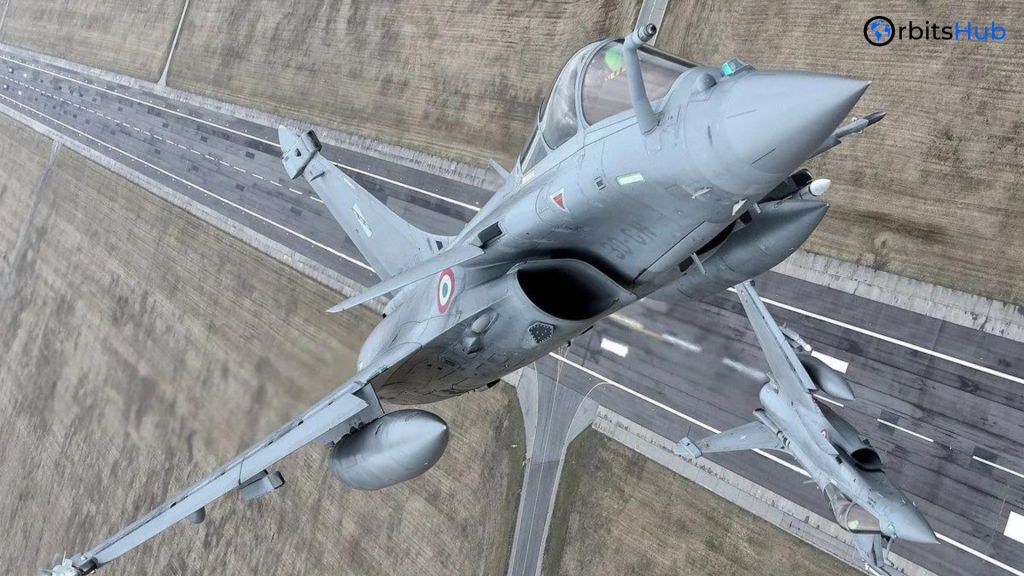
In the rugged Himalayas, Indian Rafale and Chinese J-20 have different issues. Modern fighter jets can struggle at 4,000 meters due to thin air and limited oxygen. Indian military experts claim Rafale is better. It can launch with a full payload of weapons and fuel from lower-altitude air bases near the LOC, improving combat effectiveness. Low air density at high altitudes may limit Tibetan Plateau J-20s. The J-20’s power and payload capacity could decline 60-70% from these high-altitude bases, decreasing its mission effectiveness, warn Indian experts. Due to the J-20’s single-wheel design and harsh runway conditions on the Tibetan Plateau, its landing gear may wear out.
Battle-Proven Prowess: The Rafale’s Combat Experience
While the J-20’s capabilities remain primarily untested in real-world combat scenarios, the Rafale has already established itself as a battle-hardened and combat-proven aircraft. Since its introduction into service in the early 2000s, the Rafale has participated in numerous military operations, including:
- Operation Enduring Freedom (Afghanistan): The Rafale conducted air-to-ground and air-to-air missions, demonstrating its versatility and effectiveness in a complex combat environment.
- Operation Unified Protector (Libya): During the NATO-led intervention in Libya, the Rafale played a crucial role in enforcing the no-fly zone and conducting precision strikes against ground targets.
- Operation Serval (Mali): The Rafale was instrumental in supporting French and allied forces during the military intervention in Mali, conducting close air support and reconnaissance missions.
- Operation Chammal (Iraq and Syria): As part of the international coalition against ISIS, the Rafale conducted numerous airstrikes and provided air support to ground forces, showcasing its capabilities in the fight against terrorism.
This extensive combat experience has validated the Rafale’s performance in real-world scenarios and allowed the IAF to refine its tactics, training, and maintenance procedures, ensuring optimal utilization of the aircraft’s capabilities.
Stealth Skepticism: Questioning the J-20’s Radar Signature
While China has touted the J-20’s stealth capabilities as a significant advantage over its adversaries, some Indian military experts have scepticism regarding the effectiveness of the aircraft’s radar cross-section (RCS) reduction measures.
Retired Indian Air Force Air Marshal Anil Chopra highlighted concerns about the J-20’s “crudely shaped, radar signals reflecting canard controls,” suggesting that these design elements could compromise the aircraft’s stealth characteristics.
Furthermore, Indian radars have reportedly been able to detect and track the J-20 during exercises, casting doubt on the aircraft’s ability to evade detection effectively. This scepticism is fueled by the lack of real-world combat data on the J-20’s stealth performance, as opposed to the Rafale’s proven track record in various operational theatres.
Engine Enigma: The J-20’s Power Plant Conundrum
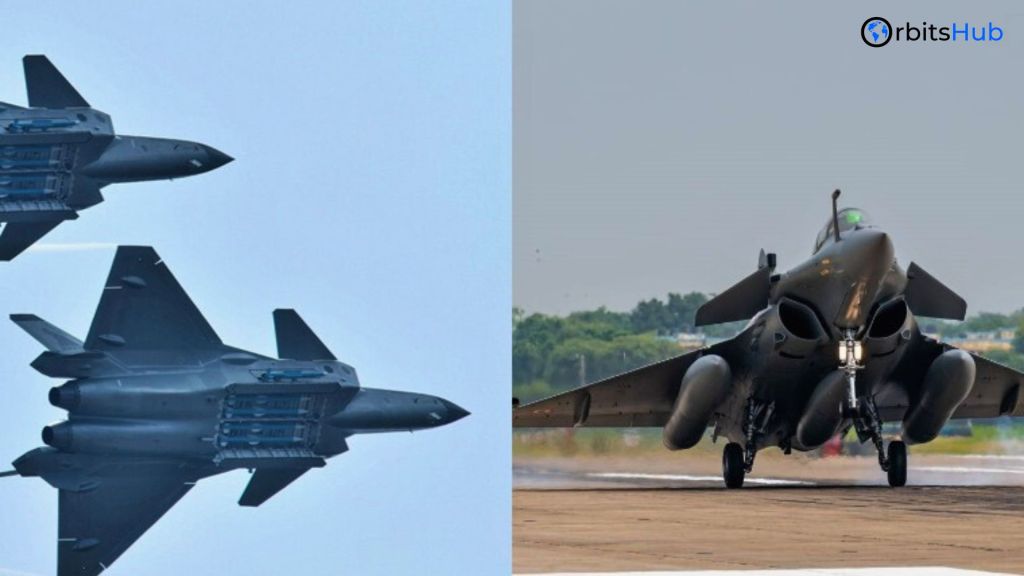
One of the most significant challenges facing the J-20 is the performance and reliability of its engines. Initially relying on imported Russian engines, the J-20 program has faced delays and setbacks in developing and integrating domestically produced powerplants.
The WS-15 engine, intended to replace the Russian-made engines, has been plagued by development issues and performance concerns. According to Indian analysts, the WS-15 lags behind its American counterparts, such as the F119 engine used in the F-22 Raptor, by at least a decade in terms of overall performance.
This engine problem has raised questions about the J-20’s ability to achieve its advertised performance specifications, particularly in demanding high-altitude environments where engine thrust and efficiency are critical.
Electronic Warfare Supremacy: The Rafale’s SPECTRA Advantage
Rafale’s sophisticated SPECTRA electronic warfare system protects against aerial and ground threats. Thales and Dassault’s SPECTRA system analyzes and counters threats using detection, jamming, decoying, and reprogrammable technologies. French manufacturers value electronic warfare capabilities since Rafale’s radar and SPECTRA system account for 30% of its cost. The J-20 has superior avionics and electronic warfare equipment, but its capabilities have yet to be discovered. Due to probable vulnerabilities, Indian military analysts are concerned about the reliability and efficacy of the J-20’s electronic warfare suite in contested airspace.
Tactical Flexibility: The Rafale’s Multi-Role Versatility
The Rafale’s multi-role fighter aircraft versatility helps in the ever-changing battlespace. Rafale gives the IAF unequalled tactical versatility in air-to-air combat, air-to-ground strikes, surveillance, and nuclear deterrence. Rafale’s robust sensor suite, including the RBE2 AESA radar and Front Sector Optronics (FSO) system, can detect and track multiple targets for effective target engagement and situational awareness. The Rafale’s precision-guided missiles and stand-off armaments make it a potent force multiplier in cooperative operations with ground and naval personnel. Though envisioned as an air superiority fighter, the J-20’s further mission functions still need to be discovered. J-20 operational adaptability may need to be improved in complicated, multi-domain missions.
Logistical Challenges: Sustaining High-Altitude Operations
Sustaining prolonged high-altitude operations along the Sino-Indian border presents significant logistical challenges for both air forces: the harsh environmental conditions and the region’s remoteness demand robust supply chains and well-established maintenance infrastructure.
India’s strategic positioning of air bases near the LAC and its experience operating in the Himalayan terrain provide a distinct advantage. The IAF has long been accustomed to the unique challenges posed by high-altitude operations, enabling it to optimize its logistics and maintenance procedures accordingly.
On the other hand, China’s reliance on a limited number of high-altitude air bases on the Tibetan Plateau could strain its logistical capabilities, particularly during a prolonged conflict. The transportation of personnel, equipment, and supplies over vast distances and through challenging terrain is a significant hurdle for the People’s Liberation Army Air Force (PLAAF).
Training and Doctrine: Adapting to High-Altitude Combat
High-altitude combat operations require training and doctrine for rarefied air and harsh weather. The IAF and PLAAF have invested heavily in training and operational plans to prepare their pilots and ground troops for such eventualities. The IAF’s lengthy history in the Himalayas has helped it perfect its training methods and tactics, ensuring its pilots are well-versed in high-altitude aerial combat. This comprises specialized takeoff, landing, thin-air manoeuvring, fuel efficiency, and weapon use. While the PLAAF’s high-altitude combat experience could be enhanced, it may need to improve its operational readiness and pilot proficiency. The PLAAF has invested in training to close this gap, but a real fight will show its true capabilities.
Beyond the Hardware: Human Factors in Aerial Combat

While the technological capabilities of the Rafale and J-20 are critical to their combat efficiency, human elements are crucial to aerial warfare. Pilot training, skill, decision-making, and ground crew performance can significantly affect engagement outcomes. The IAF has a long history of producing professional, battle-hardened pilots with considerable operational experience. Combat experience and intensive training have instilled professionalism and situational awareness that could be crucial in high-stakes aerial confrontations. At the same time, the PLAAF’s well-trained pilots may need battle experience like the IAF. This operational skill gap could affect critical decision-making when split-second assessments and intuitive responses can determine success.
Geopolitical Implications: Maintaining Regional Stability
Sino-Indian high-altitude border tensions affect geopolitics beyond war. Rafale and J-20 represent both nations’ military might, altering the region’s delicate balance. Rafale planes upgrade India’s air force and deter aggression. India’s confidence in its territorial integrity and regional might has increased due to the aircraft’s improved capabilities and war record. China sees the J-20 stealth aircraft as proof of its regional military and technological power. China wants regional domination. Therefore, J-20 deterrence helps. Both governments seek to assert their positions and protect their strategic interests, but blunders and escalation are hazards. Maintaining regional peace requires diplomacy, open communication, and deescalation commitment.
Rafale and J-20 have shown their aviation capability in Chinese-Indian high-altitude tensions. Despite their performance and technology, both aircraft are contentious fighters. In Indian Air Force electronic warfare and other tasks, Rafale excels. Stealth and long-range assault are vital for the J-20 Fighter Jet due to China’s aggression. Pilot skill, logistics, and high-altitude combat adaption determine aircraft encounters. Both countries’ air power investments will strain the region’s fragile power balance. Peace in the region requires deescalation, diplomacy, and communication. High-altitude Sino-Indian tensions show modern warfare and aviation’s geopolitical importance. The area can only maintain the fragile peace in dangerous times by recognizing these cutting-edge fighter jets’ capabilities and limitations and maintaining a proper military posture.
Do you want to learn more about cutting-edge aviation and maritime technology advancements? OrbitsHub, a leading consultancy service company specializing in these domains, can be your one-stop shop. Explore OrbitsHub to discover how their expertise can empower your organization.