In the vast, cerulean expanse of the Indian Ocean, a silent game of cat and mouse unfolds beneath the waves. As the geopolitical chessboard of the 21st century becomes increasingly complex, India finds itself at the forefront of a maritime revolution. With underwater threats looming, the nation has embarked on an ambitious journey to fortify its defenses and assert its dominance in anti-submarine warfare (ASW).
The rising tide of underwater challenges
Submarines now lurk in India’s waters, turning the once-calm Indian Ocean into a hub of underwater activity. This shift stems from changing global power dynamics, with China’s naval expansion and regional rivals’ submarine fleets growing. India must adapt to protect its sea lanes, economic interests, and sovereignty. The stakes are high as India faces this new underwater challenge in its backyard.
The First Pillar: Cutting-Edge Technology
Cutting-Edge Technology: India’s First Pillar of ASW
The Sonobuoy Revolution
India’s recent $52.8 million acquisition of state-of-the-art sonobuoys from the United States, therefore, marks a significant leap in its ASW capabilities. These underwater sentinels form a network of electronic ears across the ocean, constantly listening for submarine activity and transmitting acoustic data to nearby ships or aircraft.
Types of Sonobuoys in India’s Arsenal
1. AN/SSQ-53G: A passive sonobuoy using Directional Frequency Analysis and Recording (DIFAR) technology
2. AN/SSQ-62F: An active sonobuoy equipped with a Directional, Coherent, Active Sonar System (DICASS)
3. AN/SSQ-36: A specialized sonobuoy providing crucial water temperature data
Beyond Sonobuoys: Expanding ASW Assets
Strategic Implications
- Bolstering India’s strategic autonomy
- Positioning India as a potential exporter of ASW technology
The Second Pillar: A Formidable Fleet
As we sail further into India’s ASW strategy, we encounter the second pillar—a formidable and ever-growing fleet of ASW-capable vessels and aircraft. This pillar represents the physical embodiment of India’s commitment to securing its maritime borders.
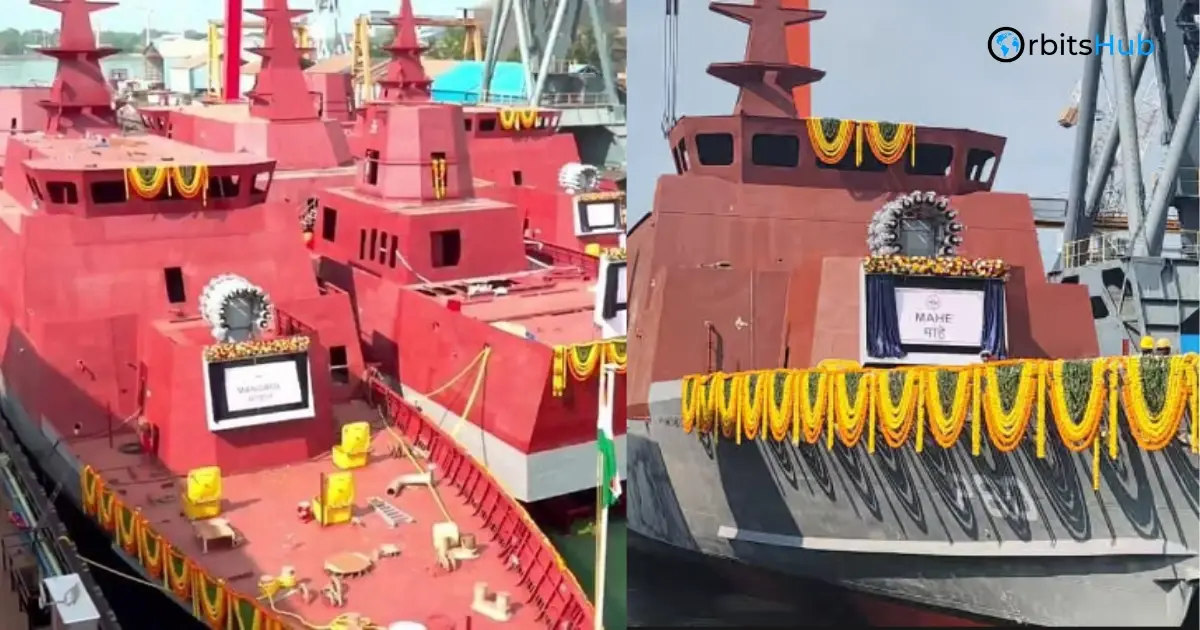
At the forefront of this fleet are the Indian Navy’s newest destroyers, the Visakhapatnam-class. Equipped with a formidable array of ASW weapons and sensors, these behemoths of the sea displace over 7,400 tons. Picture a floating city bristling with advanced sonar systems, anti-submarine rockets, and torpedoes, all dedicated to hunting down undersea threats.
However, the true game-changer in India’s ASW arsenal is the recent acquisition of MH-60R Seahawk helicopters. These versatile rotorcraft are the perfect complement to surface ships, extending the reach and effectiveness of ASW operations. With their dipping sonars, sonobuoys, and torpedoes, the Seahawks can quickly respond to submarine threats, even in areas where larger ships might struggle to operate.
Let’s add some numbers to this impressive buildup. As of 2024, India has:
- There are 24 MH-60R Seahawk helicopters on order, with six already delivered.
- There are currently 8 P-8I Neptune maritime patrol aircraft in service, and four more are on order.
- There are plans for four destroyers of the Visakhapatnam class, with two already in commission.
This represents a substantial investment in ASW capabilities, with the total value of these acquisitions surpassing $6 billion. It’s a clear declaration—India is deeply committed to safeguarding its maritime interests.
It’s not just about the number of assets; quality and integration are crucial. India is developing a networked ASW environment for seamless data sharing across platforms. This “sensor fusion” approach enhances each asset’s effectiveness, creating a detection network that’s tough for submarines to evade.
The Third Pillar: human expertise and training
India’s advancements in ASW technology and fleet expansion are impressive; however, human expertise remains crucial. To address this, India has launched programs to train ASW specialists at the Anti-Submarine Warfare School in Kochi, where personnel develop skills in submarine detection, tracking, and tactical operations.
Furthermore, training goes beyond the classroom, as India conducts large-scale naval exercises with allies like the U.S., Japan, and Australia during the annual Malabar drills. Ultimately, in the high-stakes realm of ASW, quick, informed decisions are essential—it’s not just about technology but also about understanding and anticipating an adversary’s moves.
The Synergy of the Trident
As we’ve explored each pillar of India’s ASW strategy, a clear picture emerges—these are not isolated efforts but parts of a cohesive whole. Like the three prongs of Poseidon’s trident, each element reinforces and complements the others, creating a formidable defense against underwater threats.
In essence advanced technology provides the tools, a modern fleet delivers them where needed, and skilled personnel employ them to maximum effect. This synergy sets India’s ASW capabilities apart and positions the country as a rising maritime power in the Indo-Pacific region.
Emerging Threats
Consequently, the underwater domain is evolving rapidly, with potential adversaries developing increasingly sophisticated submarine technologies. Quieter propulsion systems, advanced acoustic absorption materials, and non-acoustic detection methods pose new challenges for ASW operations. India must continuously adapt its strategies and technologies to stay ahead of these emerging threats.
Unmanned Systems and AI Integration
Looking ahead, the future of ASW is taking an exciting turn. Unmanned systems and AI are becoming game-changers in this field. India is jumping on board and investing in cutting-edge tech that could shake up its ASW abilities.

Imagine underwater robots (AUVs) and bright boats (USVs) patrolling the seas nonstop, covering vast areas without risking sailors’ lives—tireless scouts always on watch. Adding to this, AI and machine learning enable fast data processing, spotting submarine threats that might elude human operators, effectively giving ASW teams “superpowers” for quicker, more accurate detection.
By adopting these technologies, India is poised to stay ahead in the underwater cat-and-mouse game, giving its naval forces a strategic edge in securing its waters.
Regional Cooperation
As more countries compete in the Indo-Pacific region, working together to find submarines becomes very important. India is making friends with countries like the United States, Japan, and Australia. They practice together and share information about submarines. If India works more with these countries and creates a team to find submarines in the area, it could get much better at spotting and stopping enemy submarines.
Environmental Considerations
The unique underwater environment of the Indian Ocean presents both challenges and opportunities for ASW operations. Factors such as varying water temperatures, salinity levels, and underwater topography can affect sonar performance and submarine detection. India is investing in oceanographic research to better understand these environmental factors and optimize its ASW strategies accordingly.
Balancing Act: ASW and Strategic Deterrence
As India enhances its ASW capabilities, it must also maintain a delicate balance with its own submarine-based nuclear deterrent. The country needs to ensure that its ASW advancements do not inadvertently compromise the stealth and survivability of its own submarine fleet, which forms a crucial component of India’s strategic deterrence posture.
By addressing these challenges and capitalizing on future prospects, India aims to solidify its position as a leading ASW force in the Indo-Pacific region, ensuring the security of its maritime interests and contributing to regional stability.
Looking to the Future
As we look toward the horizon, it becomes increasingly evident that India’s journey to Anti-Submarine Warfare (ASW) excellence is far from complete. Indeed, the nation remains fully committed to investing in research and development, constantly pushing the boundaries of submarine detection and engagement technologies.
One promising area of focus, moreover, is the advancement of uncrewed underwater vehicles (UUVs) for ASW missions. These autonomous submarines have the potential to patrol vast ocean areas for extended periods, offering persistent surveillance without putting human lives at risk. Consequently, this capability could revolutionize how India monitors its waters.
Additionally, integrating artificial intelligence and machine learning into ASW systems is another exciting prospect. These cutting-edge technologies could significantly enhance the processing of the massive data sets generated by sensors, enabling the identification of submarine signatures that might otherwise go unnoticed by human operators.
As India builds on its three pillars of ASW, it is not merely enhancing its own security but, moreover, strengthening the stability of the Indo-Pacific region. In a world where undersea threats continue to evolve, India’s ASW capabilities thus act as a powerful deterrent, ensuring that the vast reaches of the Indian Ocean remain free and open for all.
Frequently asked questions
It’s crucial for protecting sea trade routes, energy imports, and maintaining maritime sovereignty against the increasing presence of foreign submarines in the Indian Ocean.
2 Q: How does India’s ASW capability compare regionally?
India is a leading ASW force in the Indo-Pacific, with advanced technology, a growing fleet, and well-trained personnel. However, challenges remain, especially compared to China’s expanding submarine fleet.