Location & Advantages
Located halfway between Asia and the western coast of North America, the Port of Prince Rupert boasts a prime position on the Pacific Great Circle Route. The city of Prince Rupert boasts less municipal congestion than other West Coast ports, and additional rail infrastructure investments have made it an attractive option for cargo transportation. Its location is advantageous as it is closer to Asia, reducing sea travel time. Prince Rupert is a desirable option for cargo transportation because it is the North American port closest to Asia, with a sailing distance of up to three days.
Historical Overview
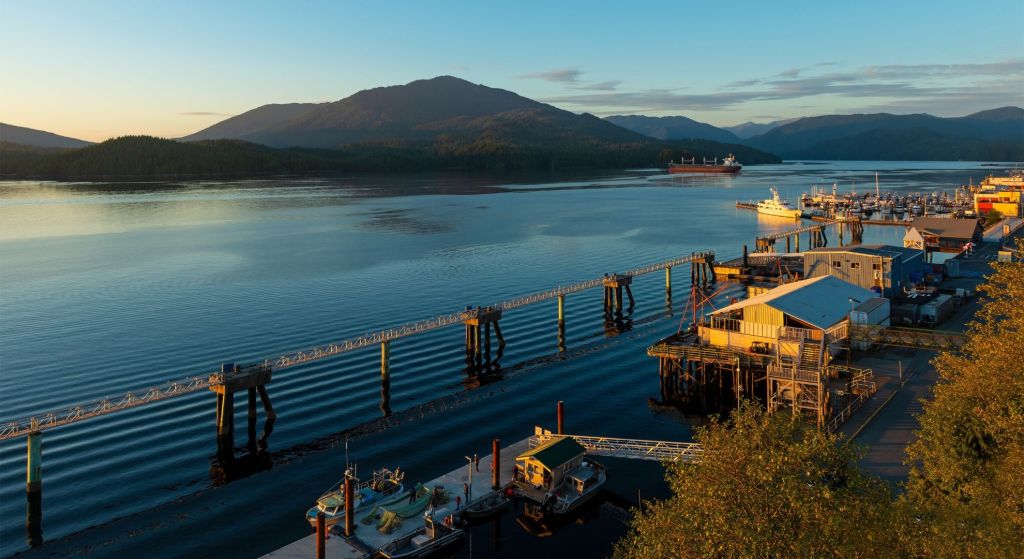
The Port of Prince Rupert was established in 1914 upon the completion of the Grand Trunk Pacific Railway. It was developed as an alternative to the Port of Vancouver. The Grand Trunk Pacific fell into bankruptcy in 1919, and the federal government nationalized and merged it into Canadian National Railways (CNR). The port saw expansion during World War II to support military action in the Pacific Theatre.
Current Operations
Currently, Prince Rupert is a major gateway port for Canada, handling nearly 18 million tonnes of foreign cargo in the first nine months of 2023. The diverse operations with a container terminal, bulk, gain, and wood pellet terminals, coupled with its advantageous location and extensive rail access, have made it a preferred choice for cargo transportation.
Cruise Port Operations
Notably, the Port of Prince Rupert is also a cruise port, welcoming thousands of cruise passengers every year. It is located just 40 miles from Alaska, one of the largest cruise markets in the world. The port offers immersive programs spotlighting local heritage, culture, gastronomy, and the diverse plant, animal, and marine life of the Great Bear Rainforest.
New Logistics Project
The Port Authority has announced a new large-scale logistics project, the Ridley Island Export Logistics Project. This project aims to provide expanded capacity and capabilities for rail-to-container transloading of multiple export products. With the new facility, the Port of Prince Rupert hopes to see an increase in the number of loaded export containers passing through the port.
Port Management
The management of the Port of Prince Rupert is undertaken by the Prince Rupert Port Authority. The Authority was created on May 1, 1999, and it reports to the Minister of Transport. The Board of Directors usually consists of local business and community figures.
Prince Rupert Port Facilities
The Port of Prince Rupert has multiple facilities, including a dedicated cruise pier to handle large ships and significant passenger volumes. These facilities include Atlin Terminal, a passenger terminal located in downtown Prince Rupert; Fairview Terminal, a container terminal located just south of the city; and Ridley Island Terminal, a bulk cargo terminal located just west of Port Edward.
Future Plans

Looking at the future, the Port of Prince Rupert is planning to invest C$750 million in a project that will consist of a 108-acre greenfield development on Ridley Island. This project, which is expected to commence operation in the third quarter of 2026, will provide innovative capacities for Canadian exporters to Asia Pacific markets.
Social Media Presence
A robust social media presence, including Facebook, is maintained by the Port of Prince Rupert. They regularly update their followers about ongoing projects, community initiatives, and other important developments.
The Port of Prince Rupert plays a pivotal role in Canada’s export operations to Asia. With its strategic location, diverse operations, and future expansion plans, the port is poised to continue its growth and contribution to the global shipping industry.